
Malo More
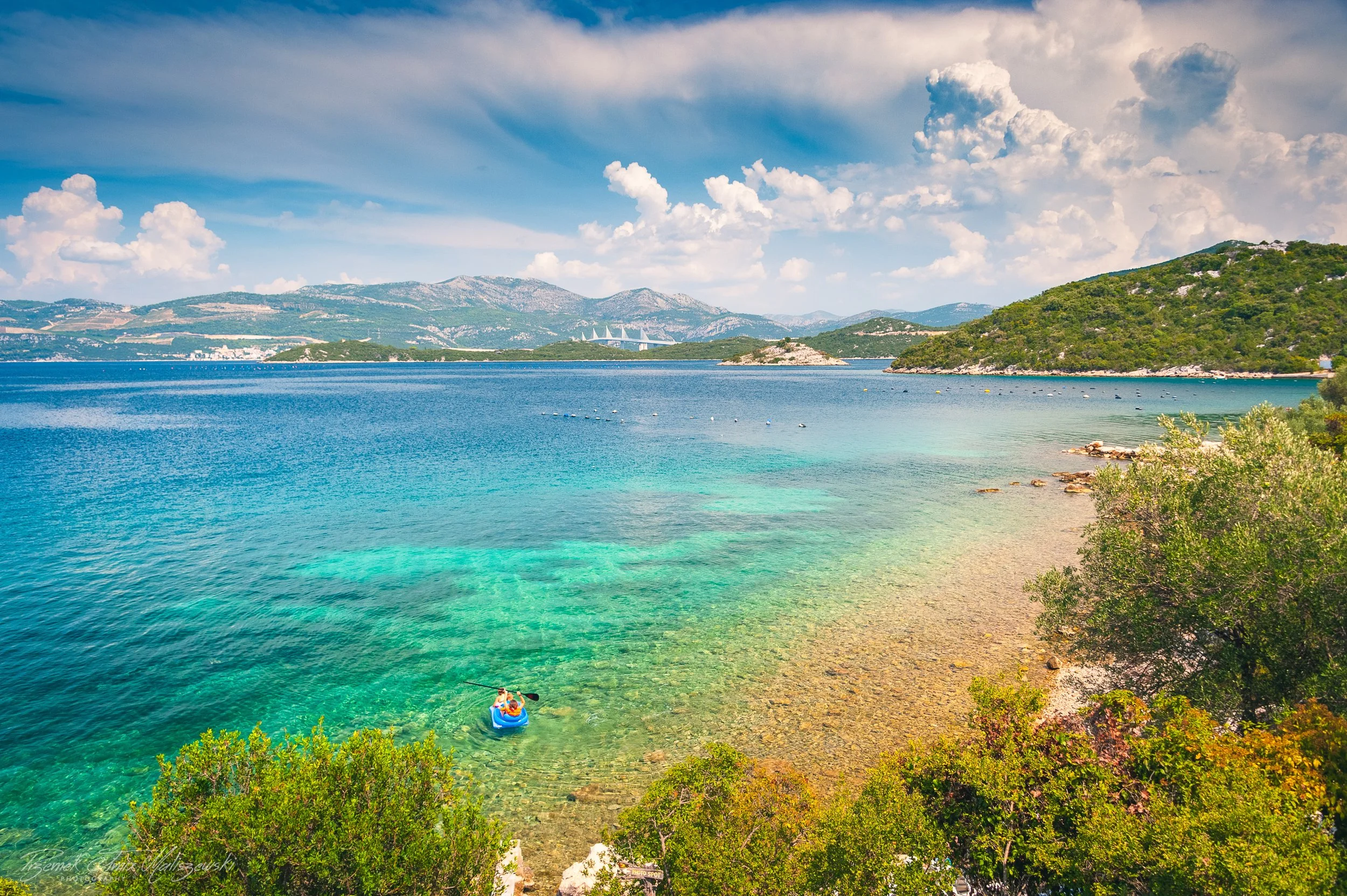
View towards the west looking at the Pelješac Peninsula. In the distance on the right, the Biokovo mountain range looms with its highest peak, Sv. Jure, and a fragment of Hvar Island is also visible. In the foreground, we can see small islands scattered across the Malo More. From left to right: Otočić Gubavac, Otočić Maslinovac, with Otok Dubovac rising above it, to the right (lower down) Otočić Lovorikovac, then directly above it the tiny Otočić Geravac, followed by a larger island, Otok Galičak, and just to its left, Otočić Ljesević. At the very end, three small islets can be seen next to each other. These are (from left to right): Otočić Gospin Školj (a distinctive islet located closest to the village of Sreser, featuring a statue of the Virgin Mary), Otočić Srednjak, and Otočić Goljak. In the foreground, you can see so-called fish farms (the circular structures used for aquaculture) and rows of buoys (mussel farms).
Pelješac Bridge. We are entering the Pelješac Peninsula.
I thought it would be a good idea to start my second blog, entirely dedicated to the Pelješac Peninsula and its surroundings, by describing the region I saw first when, back in 2021, I headed from the Island of Čiovo for a brief reconnaissance of southern Dalmatia, and which is also the first thing most visitors to the Peninsula see. At that time, the Pelješac Bridge was still under construction, so to reach the Peninsula, one had to drive along the "Jadranka"* (in Croatian: Jadranska Magistrala) to the Croatian-Bosnian border. After crossing it and driving through nine kilometers of Bosnia and Herzegovina and the town of Neum, you re-entered Croatia and, shortly after, turned right onto the Peninsula. Compared to how people usually enter the Peninsula today, back then it was a detour that added quite a bit of driving. Therefore, if someone needed to get to the Peninsula, and their destination was its interior or Orebić, for instance, it meant a good few dozen extra kilometers. For this reason, many people ended their drive in Ploče, where a Jadrolinija ferry would take them further to the town of Trpanj on the Peninsula. Although the ferry ride takes about fifty minutes, if you are exhausted from the journey and have also been driving along the Jadranka, it offers an opportunity to shorten the distance and get some rest. A ferry crossing, even a 15-minute one like from Orebić to Korčula, is very relaxing, especially when the weather is good.
The ferry from Ploče to Trpanj on the Peninsula. The Biokovo mountain range in the background.
Pelješac Bridge. This cable-stayed bridge, 2,404 meters long and opened on July 26, 2022, significantly shortened travel time to the Peninsula. It essentially opened the region up to more tourist traffic, streamlined road transport while making it safer and more efficient, and enabled Croatia to join the Schengen Area. Thanks to the bridge, Croatia's transport network was finally unified into a single whole; prior to its completion, the country was split into two parts by a nine-kilometer strip belonging to Bosnia and Herzegovina, leaving the Dubrovnik region as an exclave. The bridge itself, designed by Marjan Pipenbacher—a Slovenian architect specializing in bridge design and construction—is an exceptional piece of engineering. The pylons visible in the photo are built on platforms (also visible), each supported by over a dozen steel tubular piles. Building a bridge in this specific location presented numerous engineering challenges, as it must withstand strong winds and tides, is anchored in a seabed with a highly varied geological structure, and must ensure structural stability and safety in a seismically active zone where earthquakes are not uncommon. Additionally, it has to endure a harsh marine environment, characterized by sea salt and brine-laden sea breezes. Constructing such a monument under these conditions is a magnificent engineering achievement. Bravo, Croatia!
View of the Malo More from above the village of Sreser, from the road connecting Sreser with the village of Janjina. The beautiful silhouette of the Pelješac Bridge can be seen in the background.
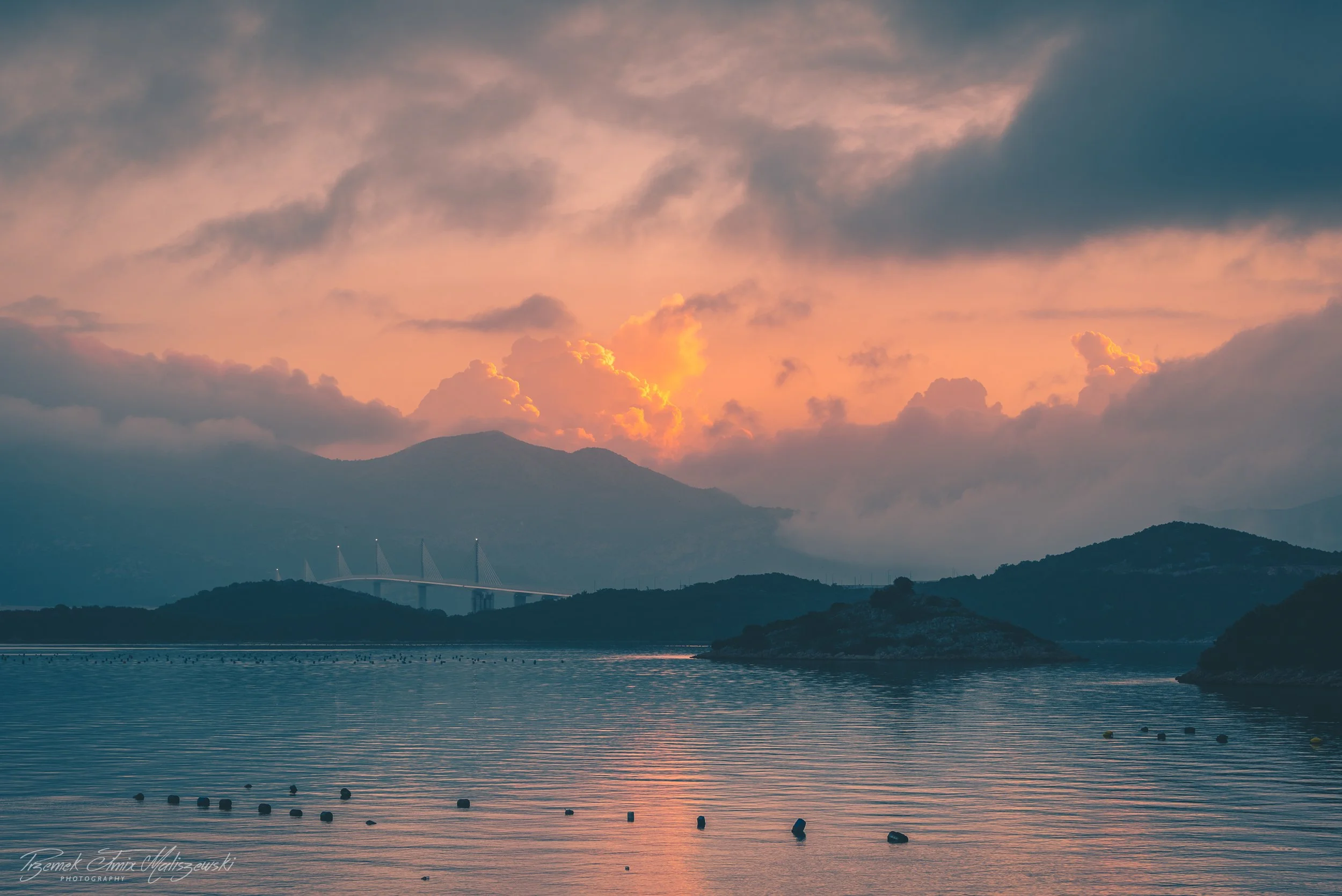
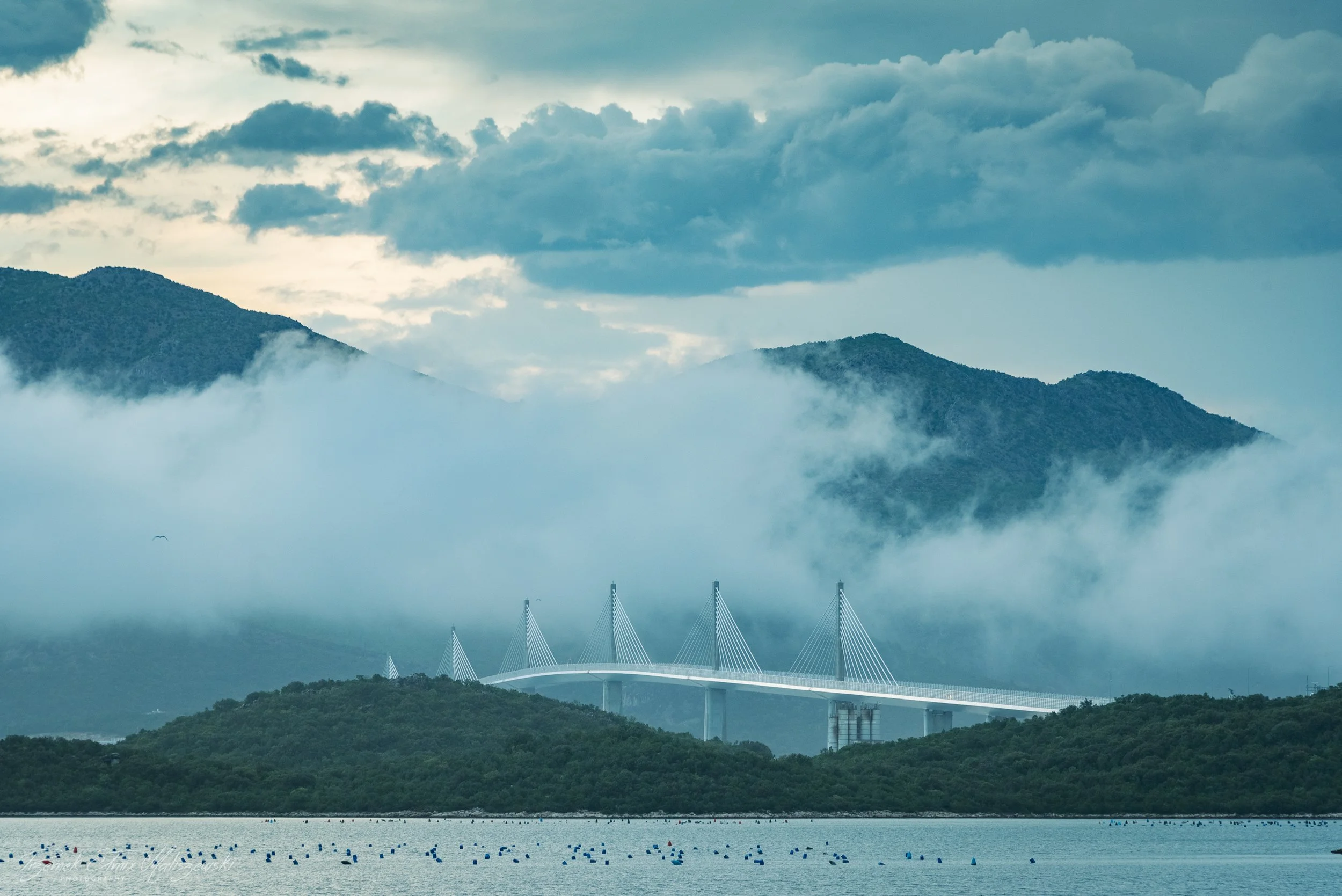
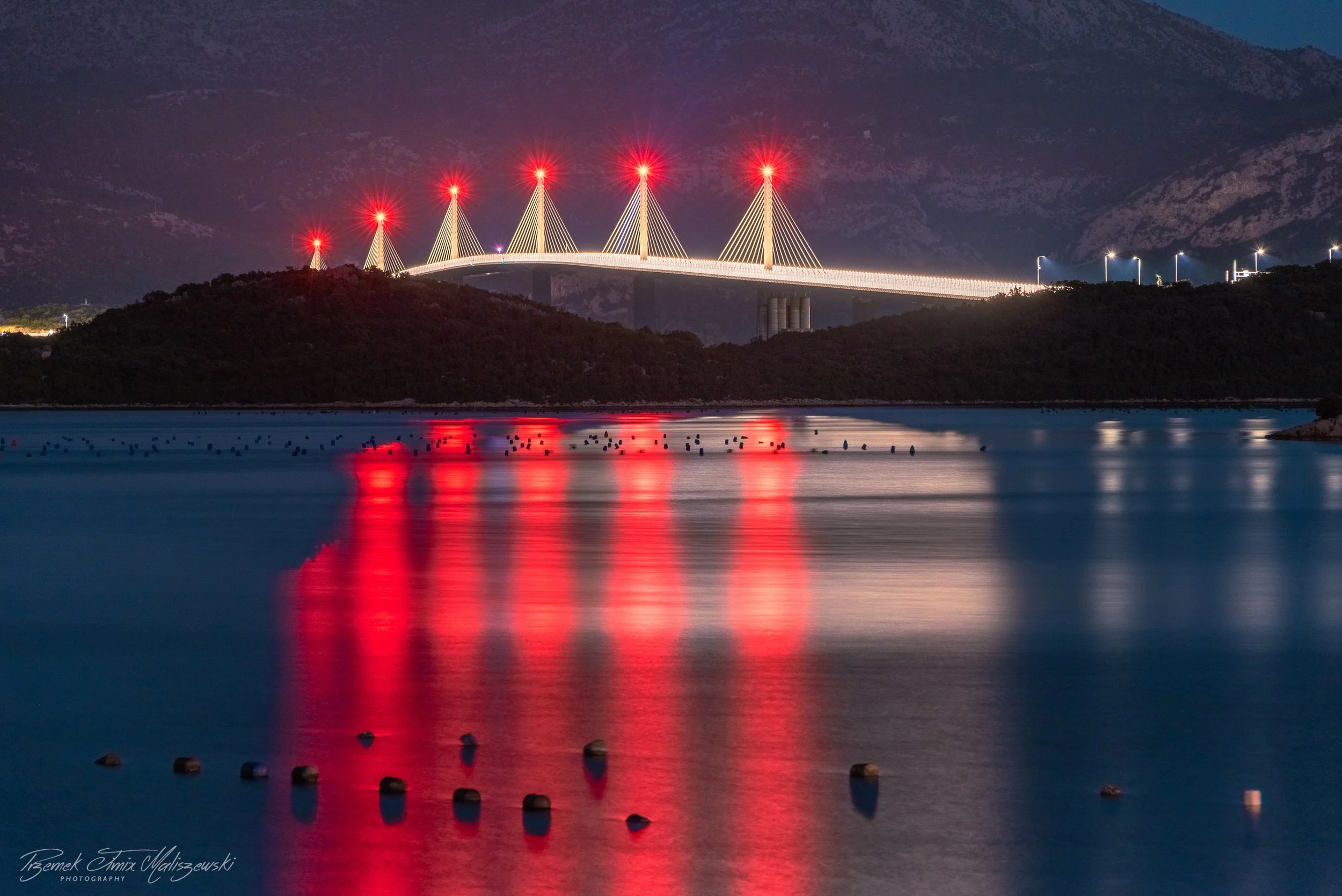
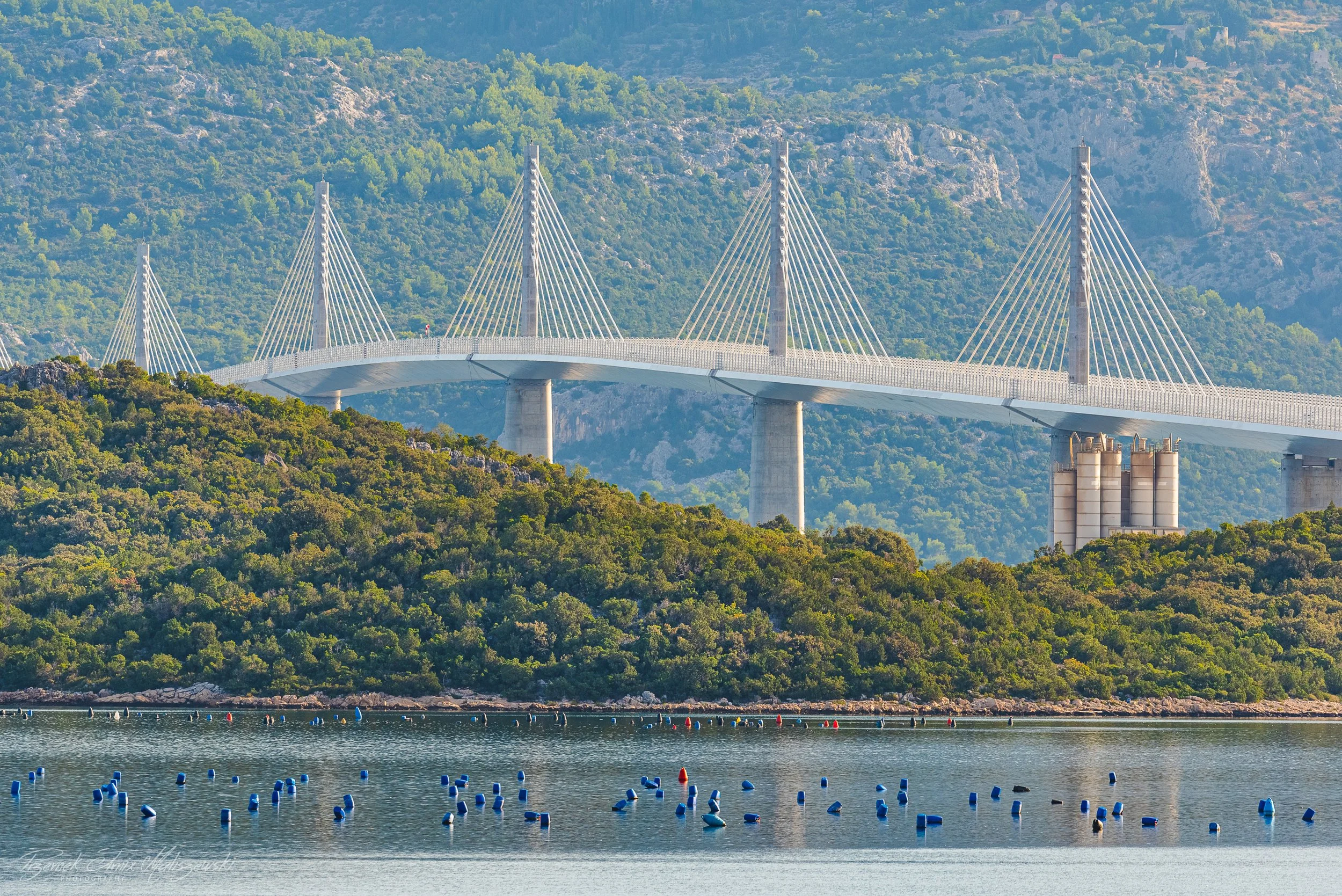
Thus, after crossing the aforementioned nine kilometers of Bosnia and Herzegovina, you would enter the very beginning of the Peninsula. Bosnian Neum and the small Klek peninsula are the only areas where Bosnia and Herzegovina touches the sea. I will have to write about Neum some other time, especially since so far I only have good experiences with this town, and there is a great mechanic there, Mr. Matuško.
View of the town of Ston.
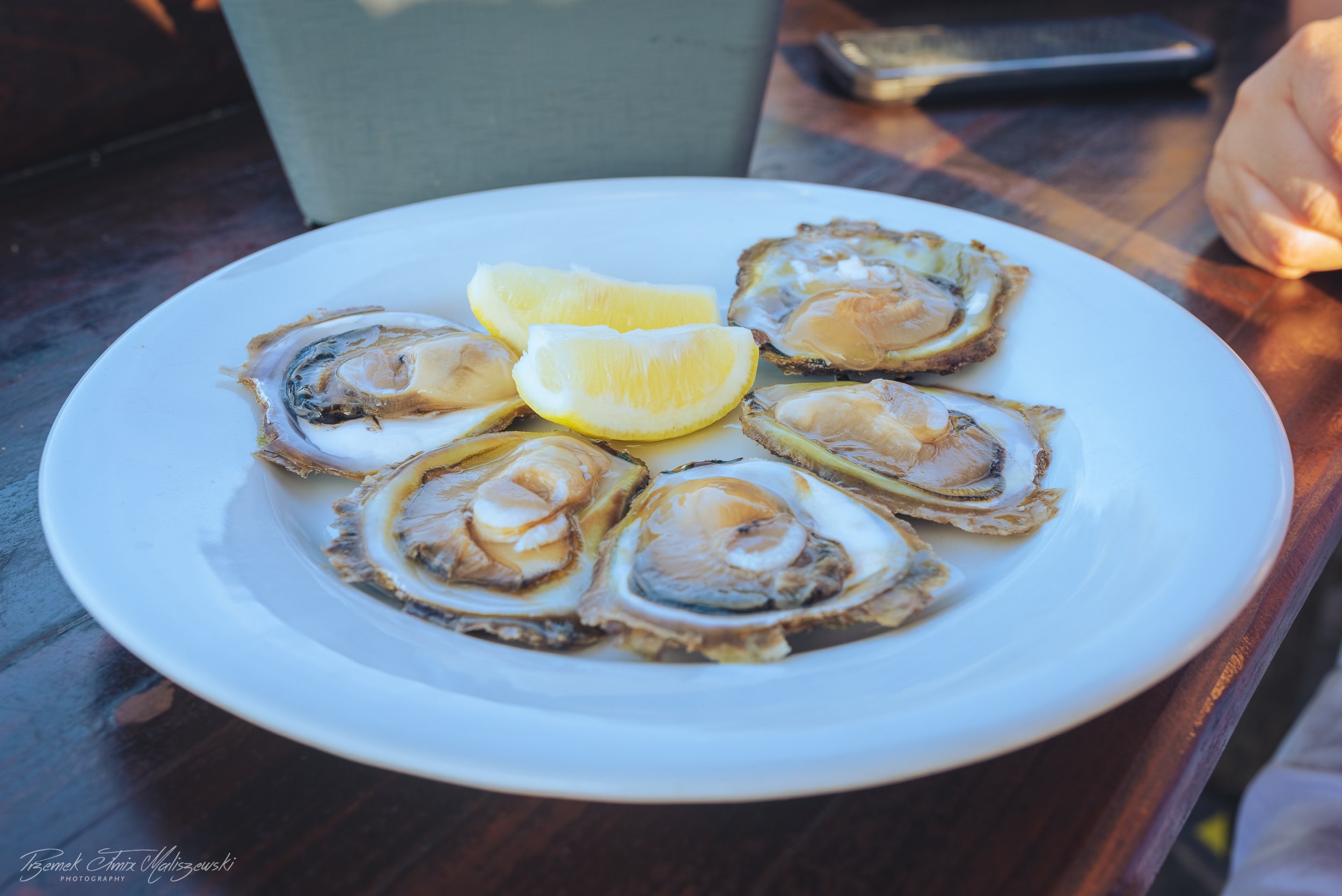
Peninsulas usually have the characteristic that they can only be reached by land from one side. Pelješac is no exception. Of course, you can reach it by sea, by ferry via the neighboring island of Korčula, or, as I already mentioned, by ferry from the town of Ploče to Trpanj. But no matter how you travel, coming from the "mainland" side, you always first enter a land known as Malo More ("Little Sea"). Geographically, this is an area stretching from the point where the peninsula begins to "grow" out of the sea, about two kilometers in a straight line southeast of Mali Ston, to the tip of the Klek Peninsula (a small peninsula whose existence many forget, which grows between the mainland and the Pelješac Peninsula itself). In common parlance, however, the Malo More area "stretches" a bit northwest, almost to the village of Drače. This seems to be related to one of the main branches of local economic activity in the region: the farming of mussels, oysters, and fish, and mainly mussels (in Croatian: mušule, školjke) and oysters (in Croatian: kamenice). Visiting the peninsula quite often, several times a year, I have noticed that in the local understanding, the boundary of Malo More is quite conventional, but it can be assumed that it runs where the mussel and oyster farms end.
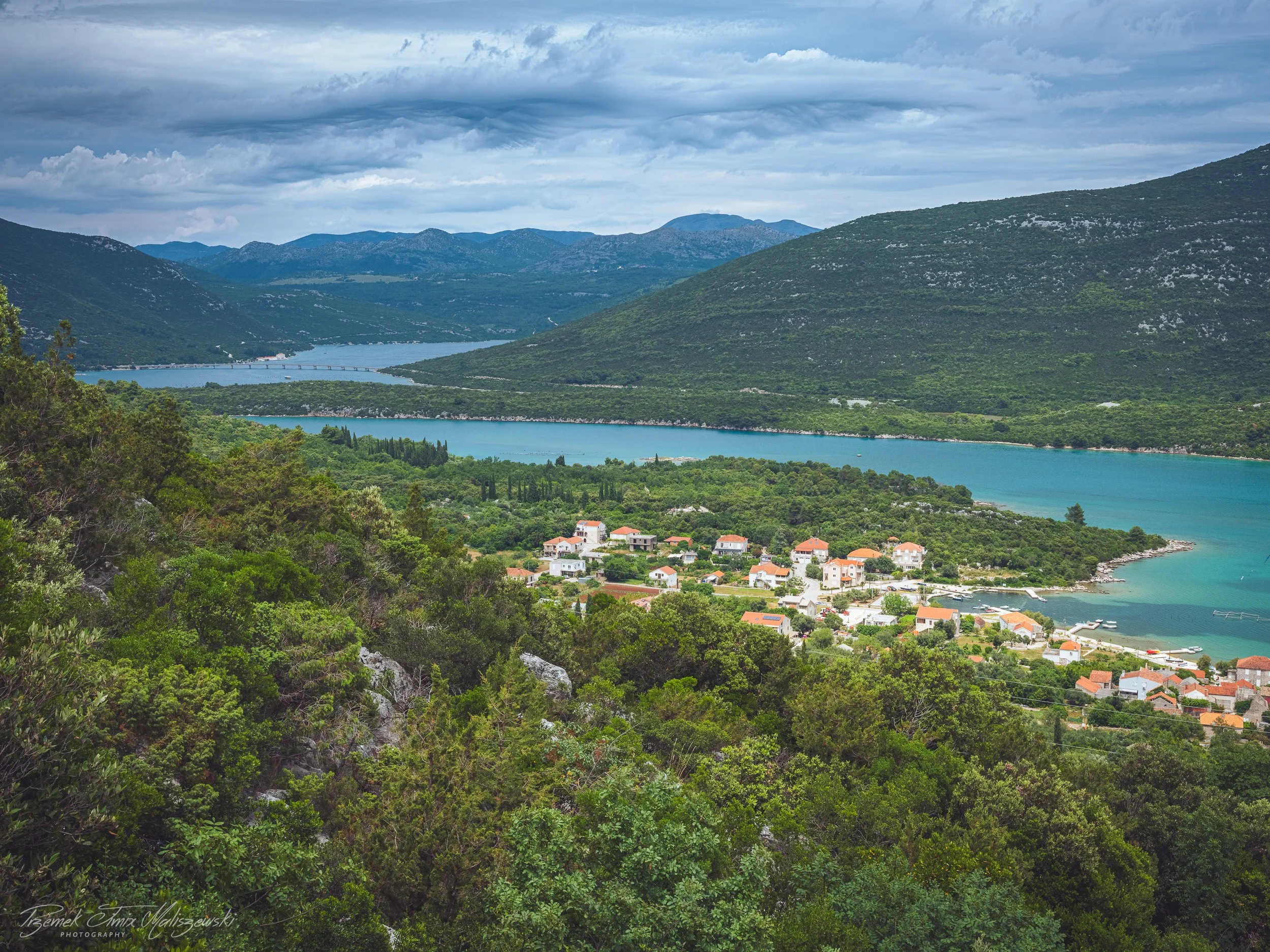
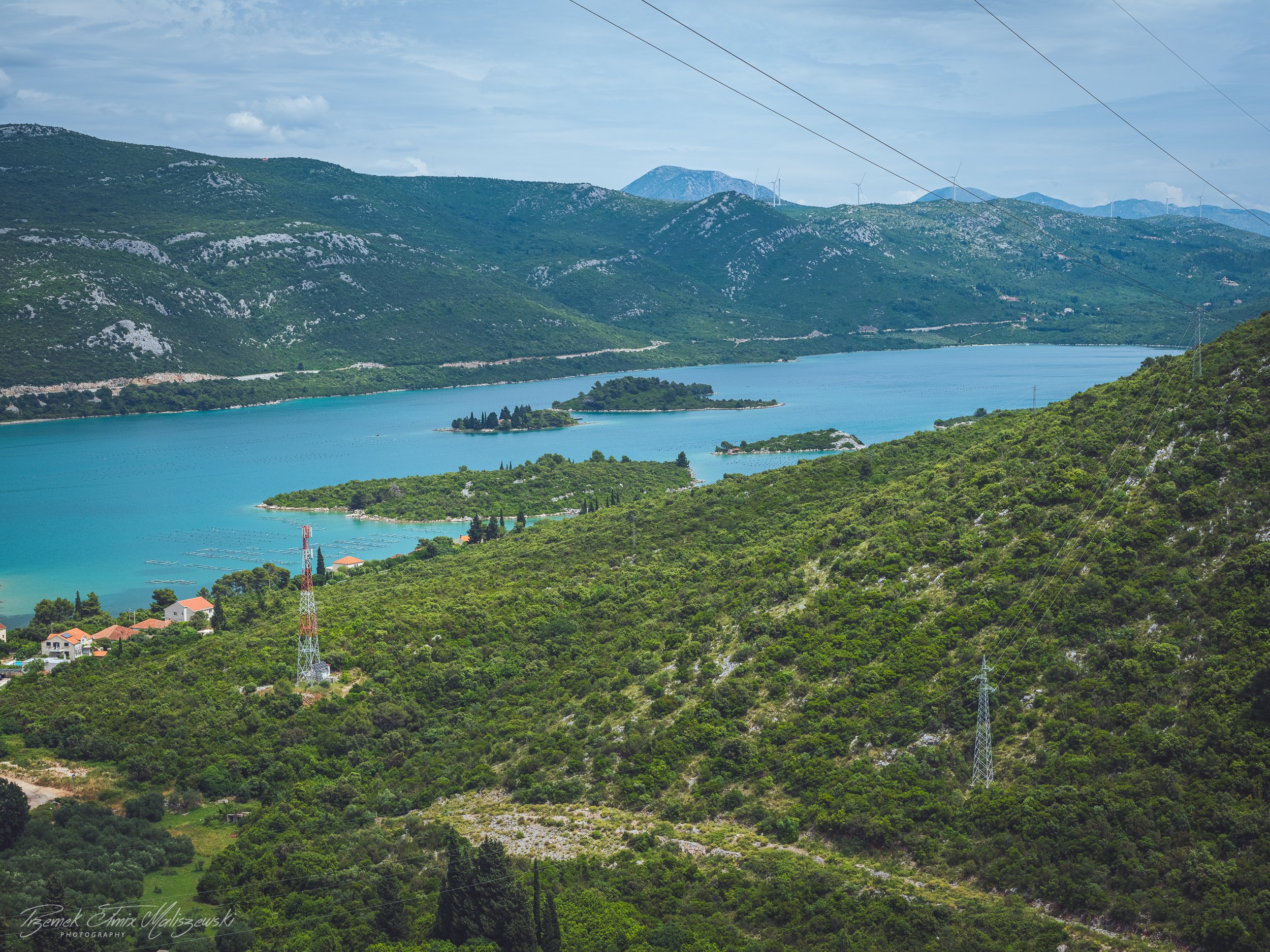
(above) The area around the village of Mali Ston. The beginning of the Malo More.
Malo More viewed from the exit off the new route, towards the village of Brijesta.
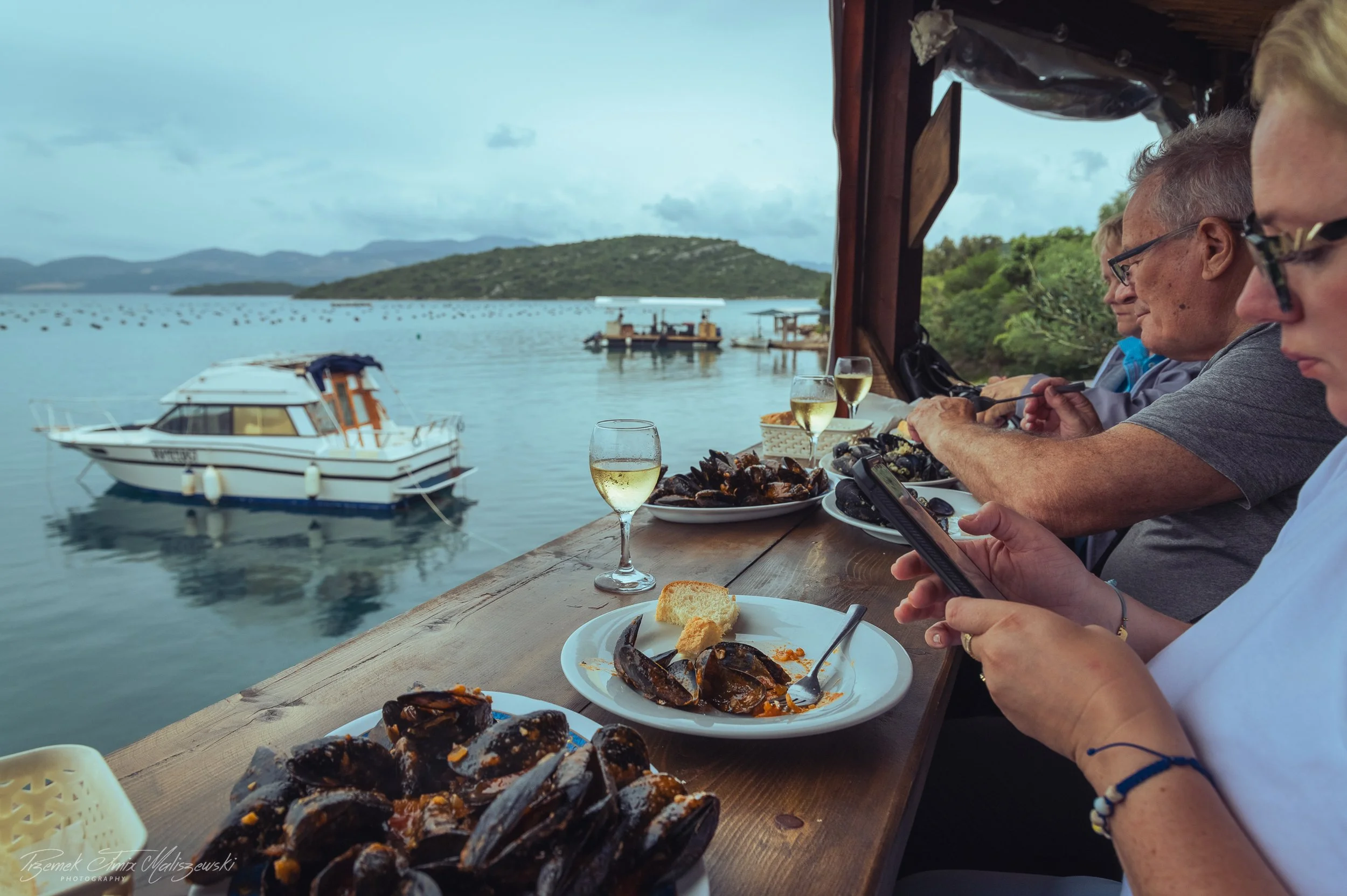
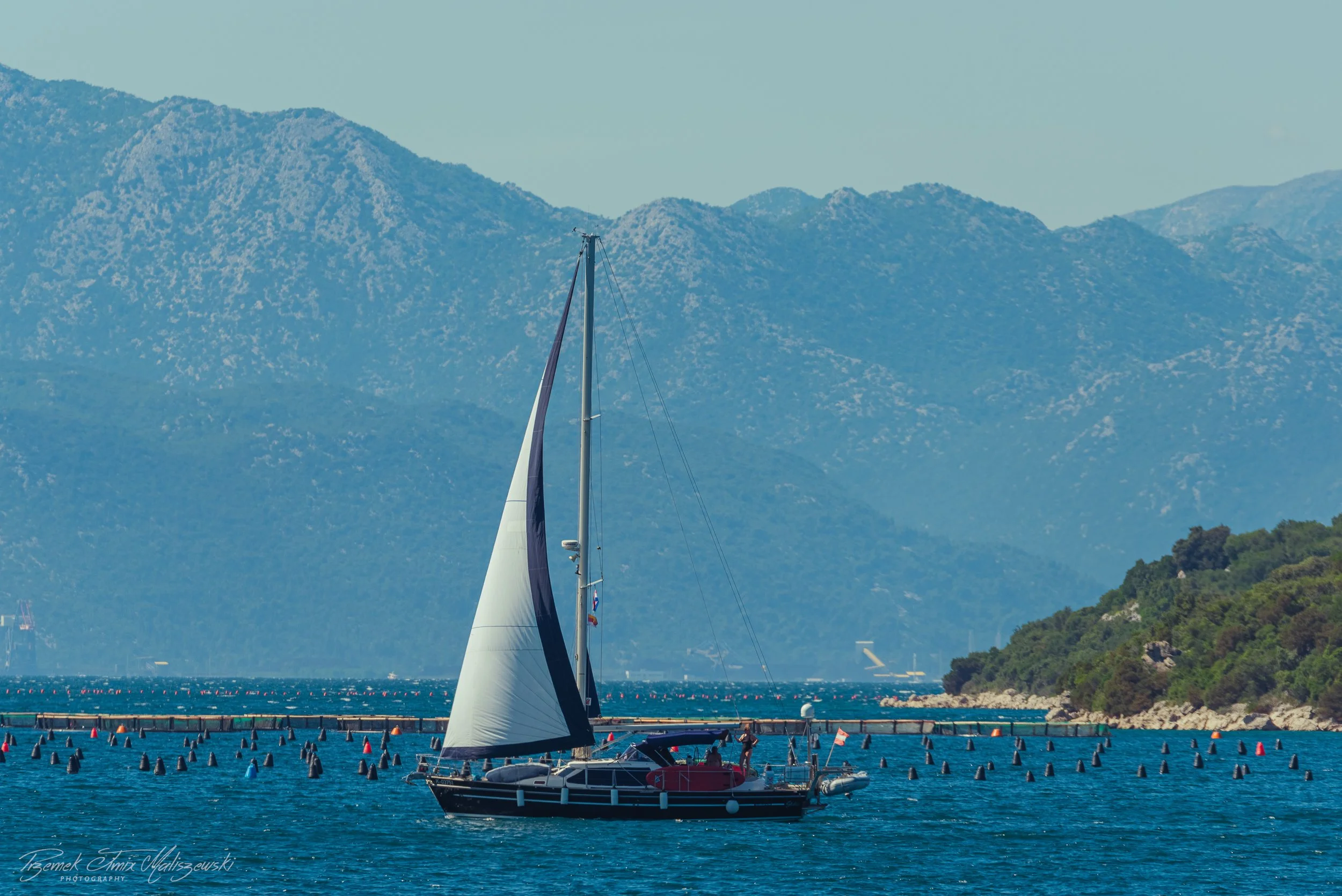
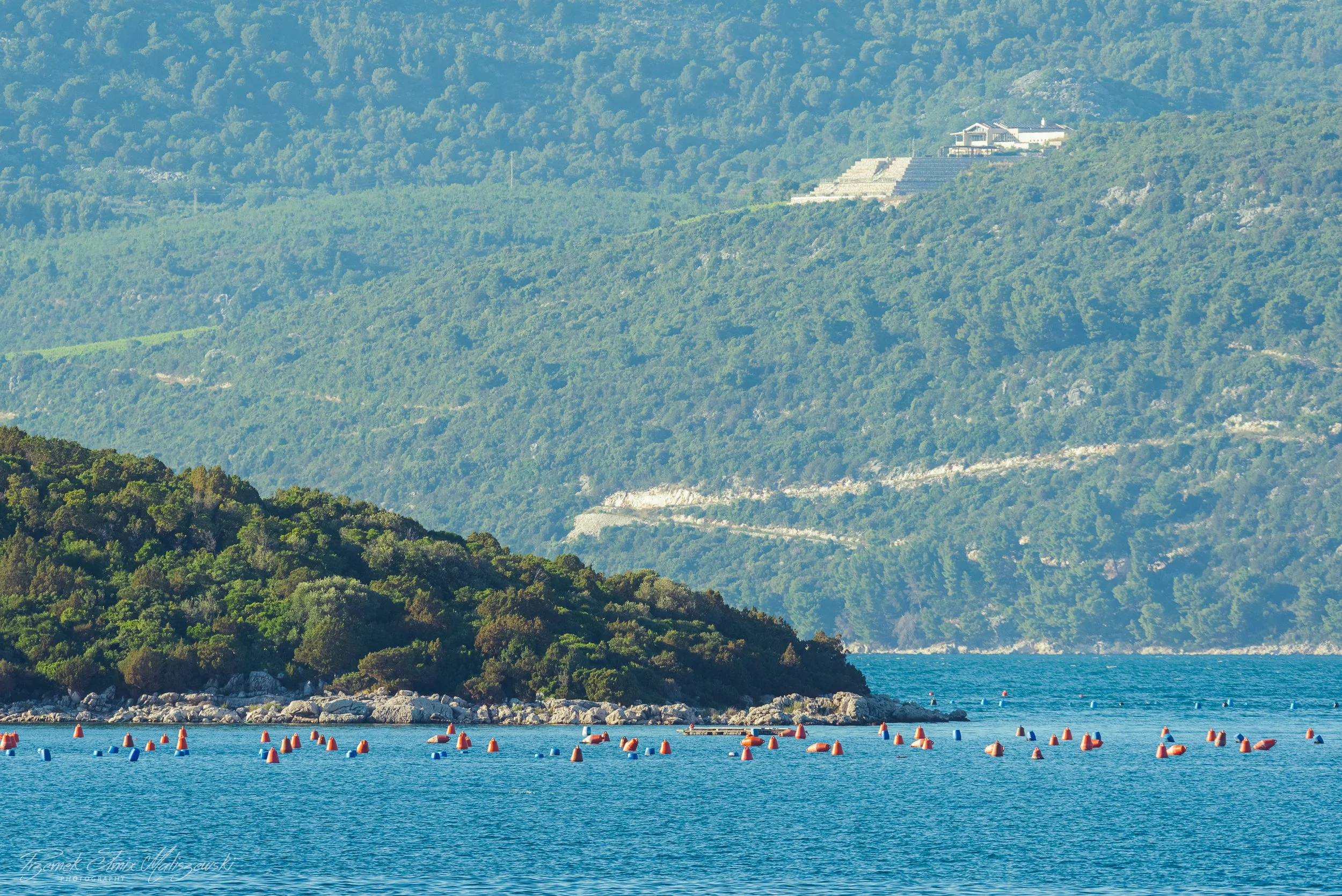
If you enter the peninsula via the new bridge or from the direction of Dubrovnik, your eyes will surely catch the regular rows of thousands of buoys spread across the waters at some point. They are connected to each other, and from each of them, several meters of rope hang down into the depths of the sea. It is to this rope that the mussels attach themselves, with their growth cycle lasting about two years. Almost every day, you can see local farmers setting out for the harvest on special motorized platforms. One of my favorite dishes is precisely mušule na buzaru (mussels in buzara sauce), served with a glass of white wine of the Pošip variety.
Harvesting oysters.
Pulling up a rope overgrown with mussels.
Vinko at the helm of his over a century-old boat (albeit with a solar upgrade) sets out in the morning to check the nets.
Returning from the morning catch with Vinko.
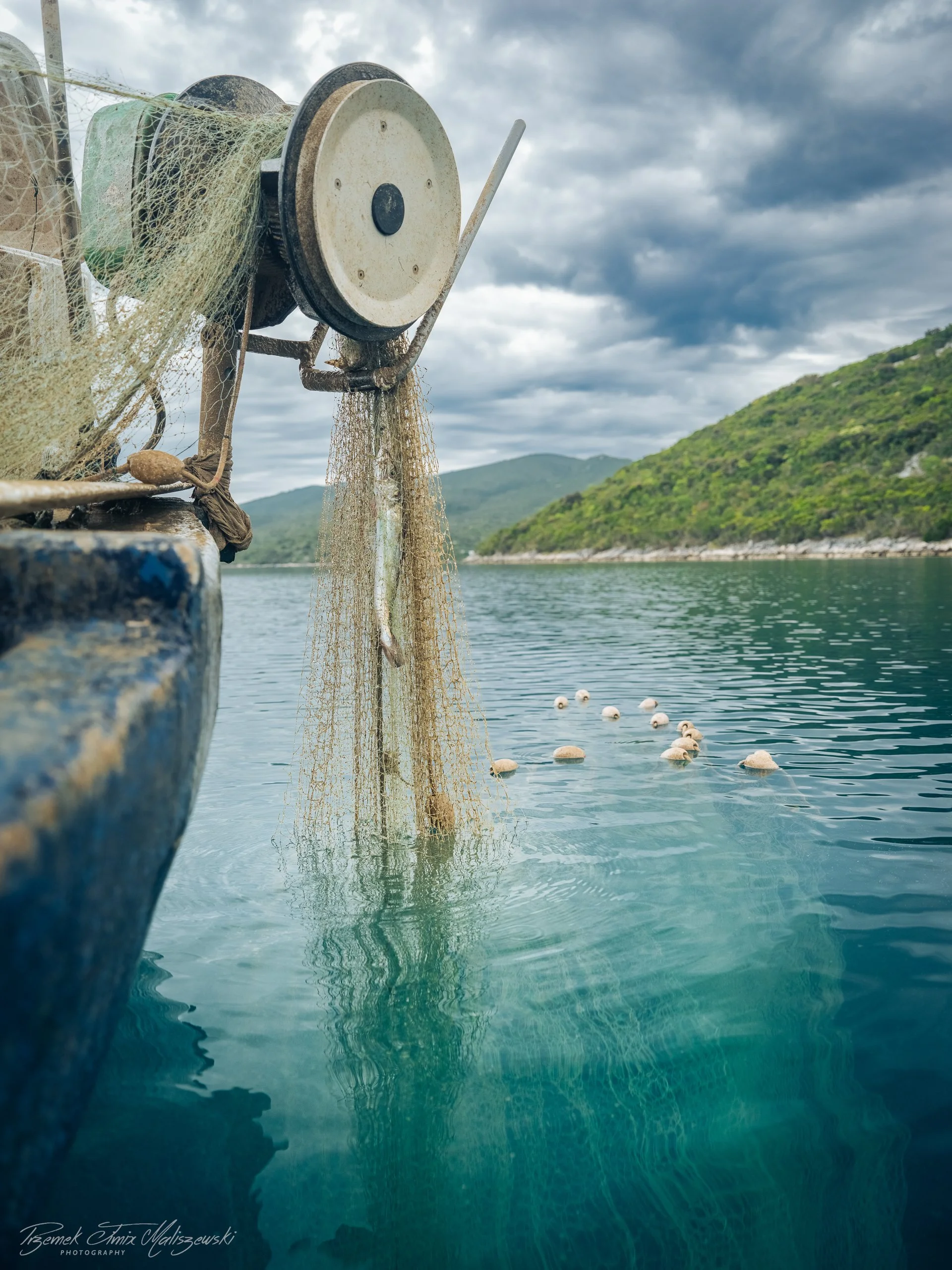
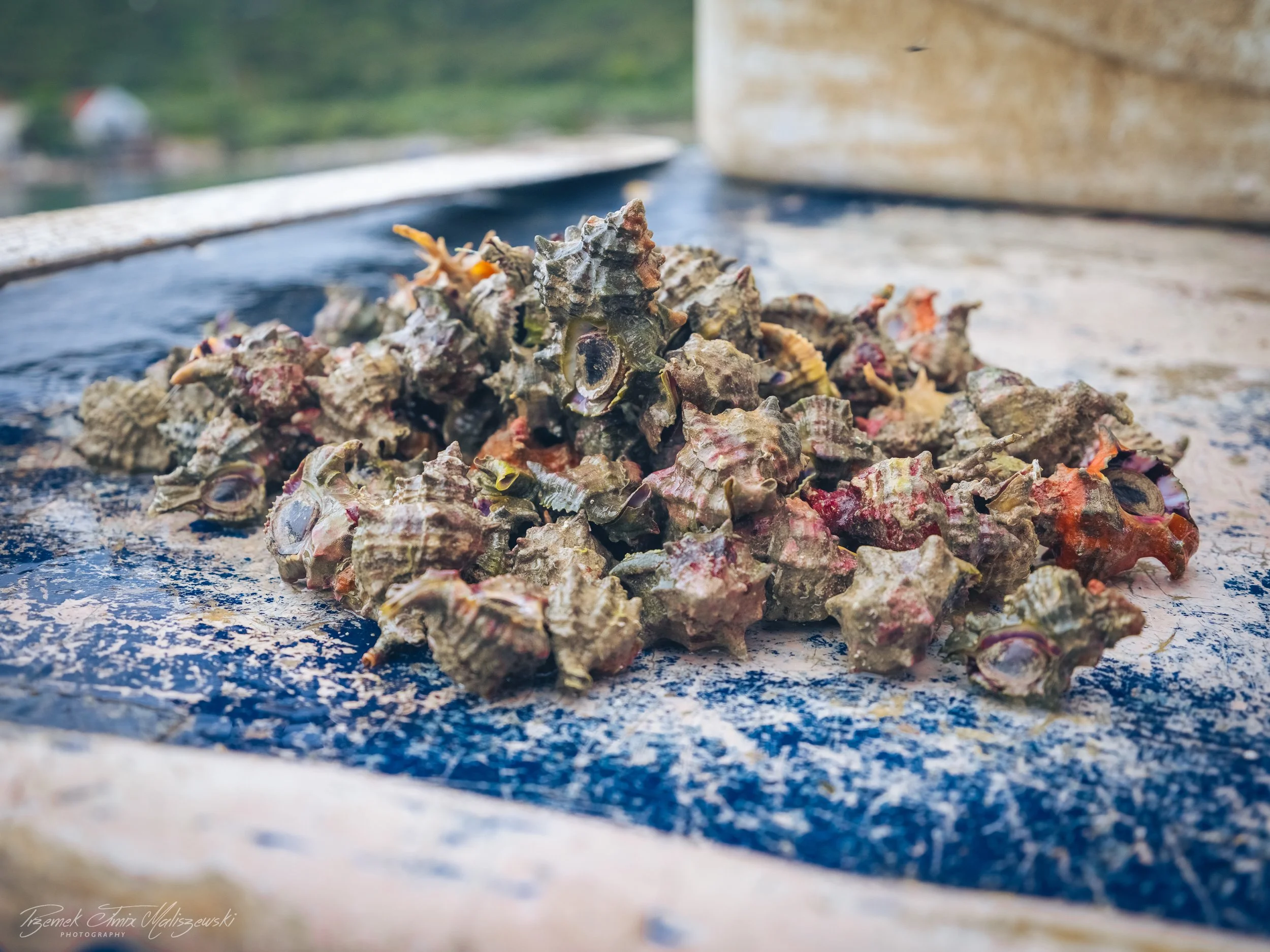
These farms are an inherent element of the local landscape. It is worth knowing that right after France, which is the absolute dominant force, and Ireland and the Netherlands, this region of Croatia is also one of the largest suppliers of oysters in Europe. Although the local production lacks the mass scale of the Atlantic giants, it is an absolutely unique place. The Bay of Mali Ston (in Croatian: Malostonski Zaljev) is characterized by a unique microclimate – sea water mixes here with freshwater springs and the waters of the Neretva River. Mali Ston is one of the few places in the world where the cultivation of the native European flat oyster (Ostrea edulis) has survived and thrives without issues.
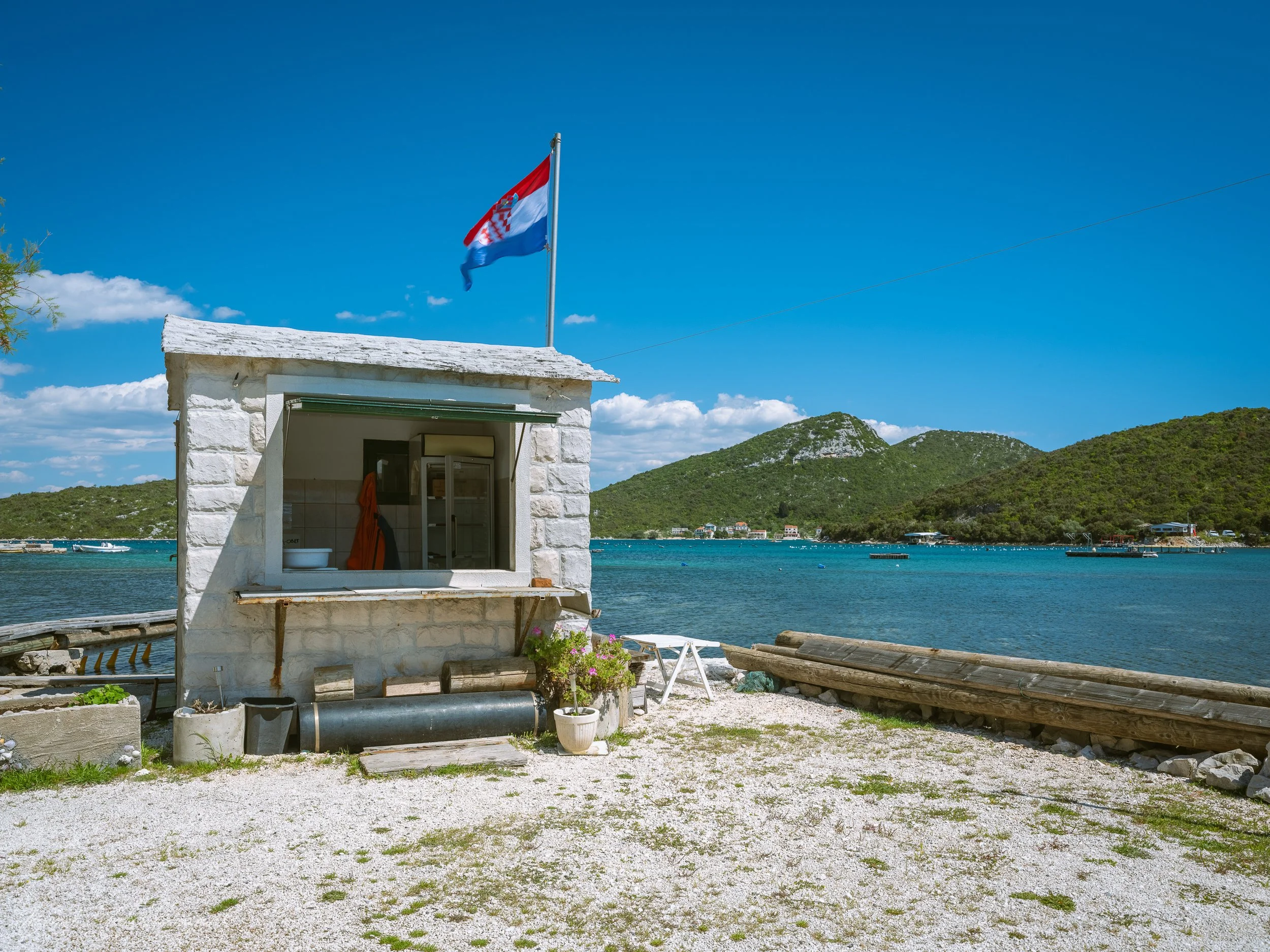
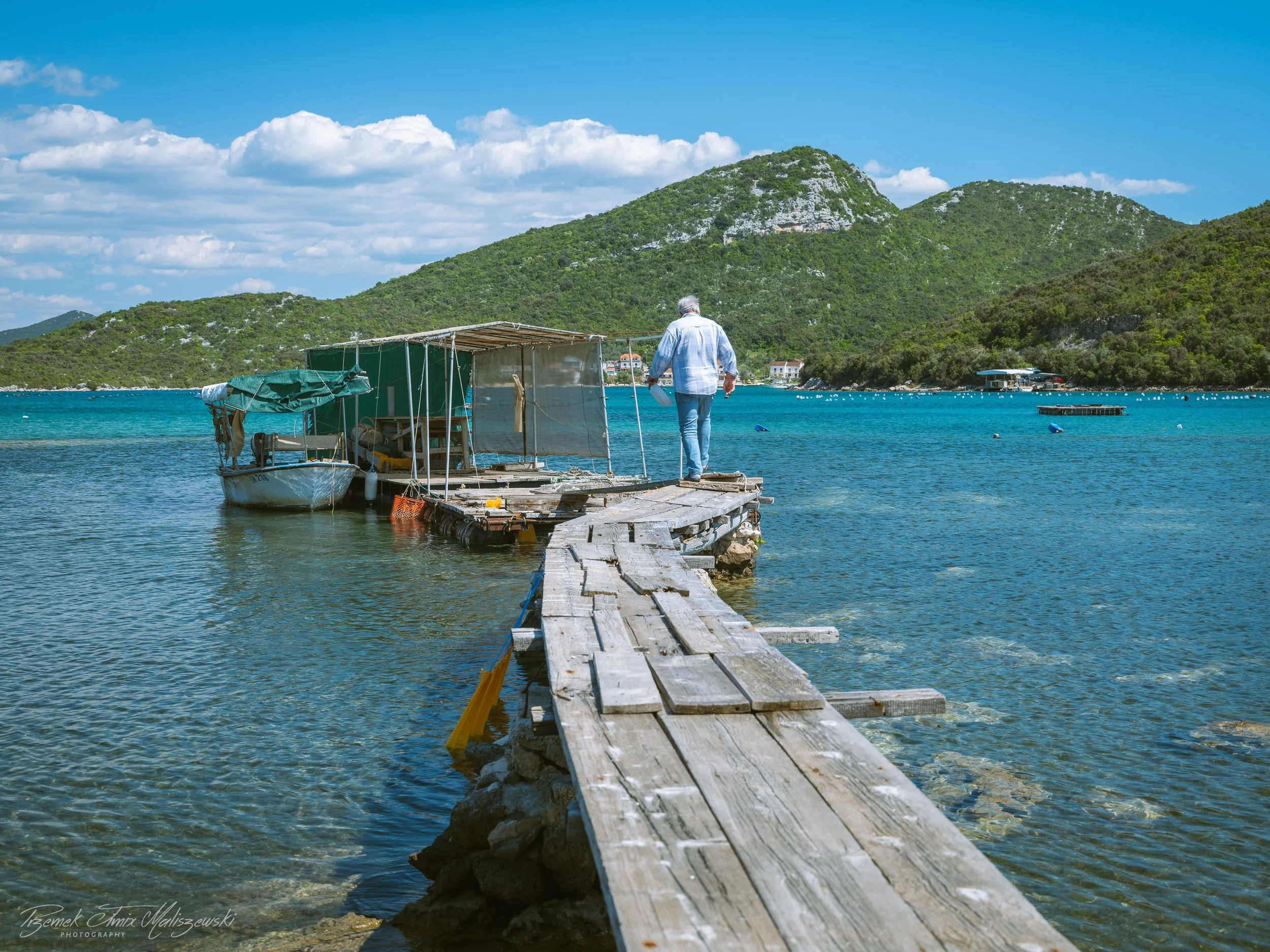
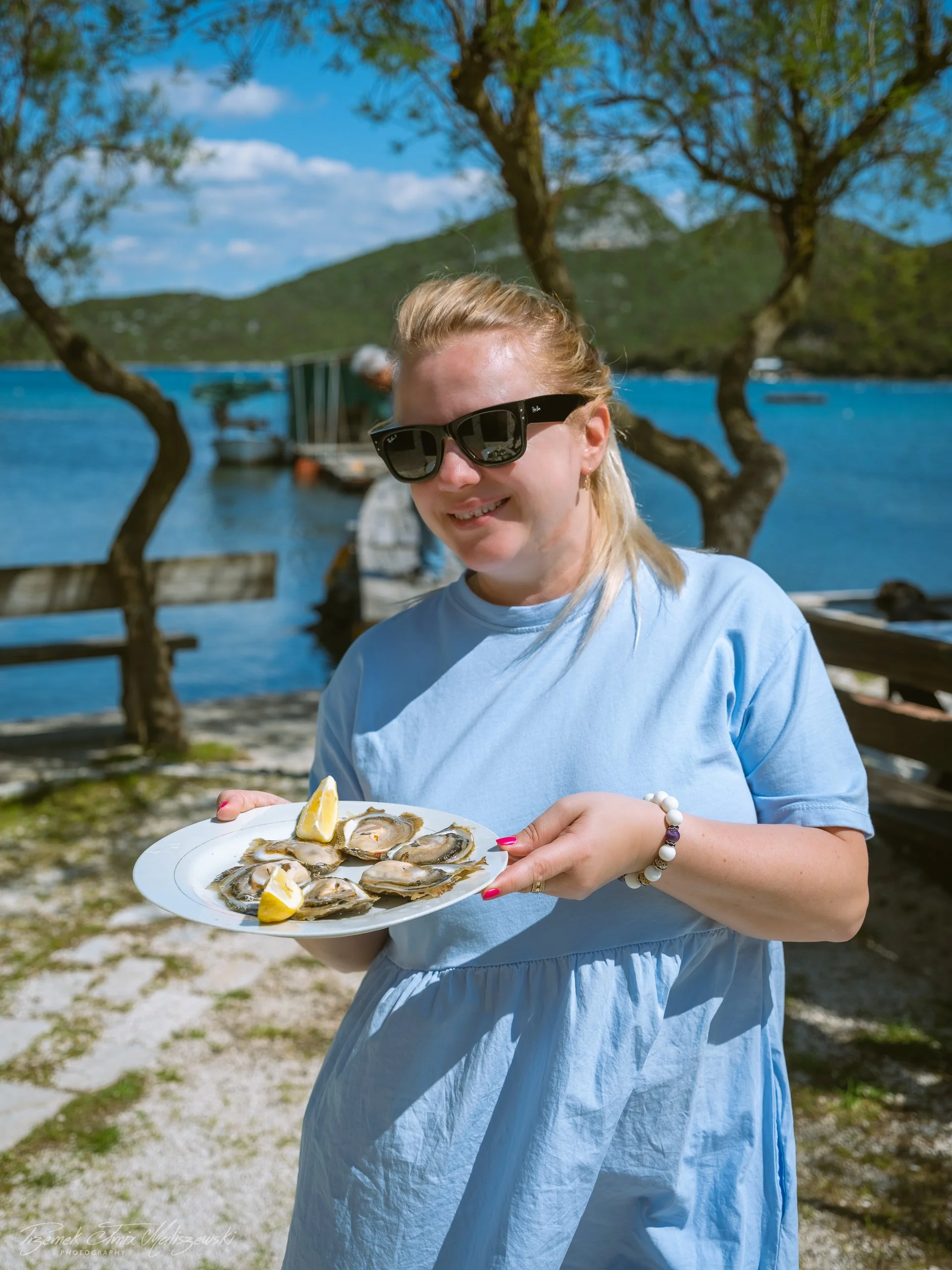
(above) Školjke Ledinić, just before the entrance to the village of Drače. We really love this place; we are always warmly welcomed here, and the host absolutely adores our Enzo (Instagram: ave_enzo).
Mussel farm. Below, aquaculture farms on the Malo More.
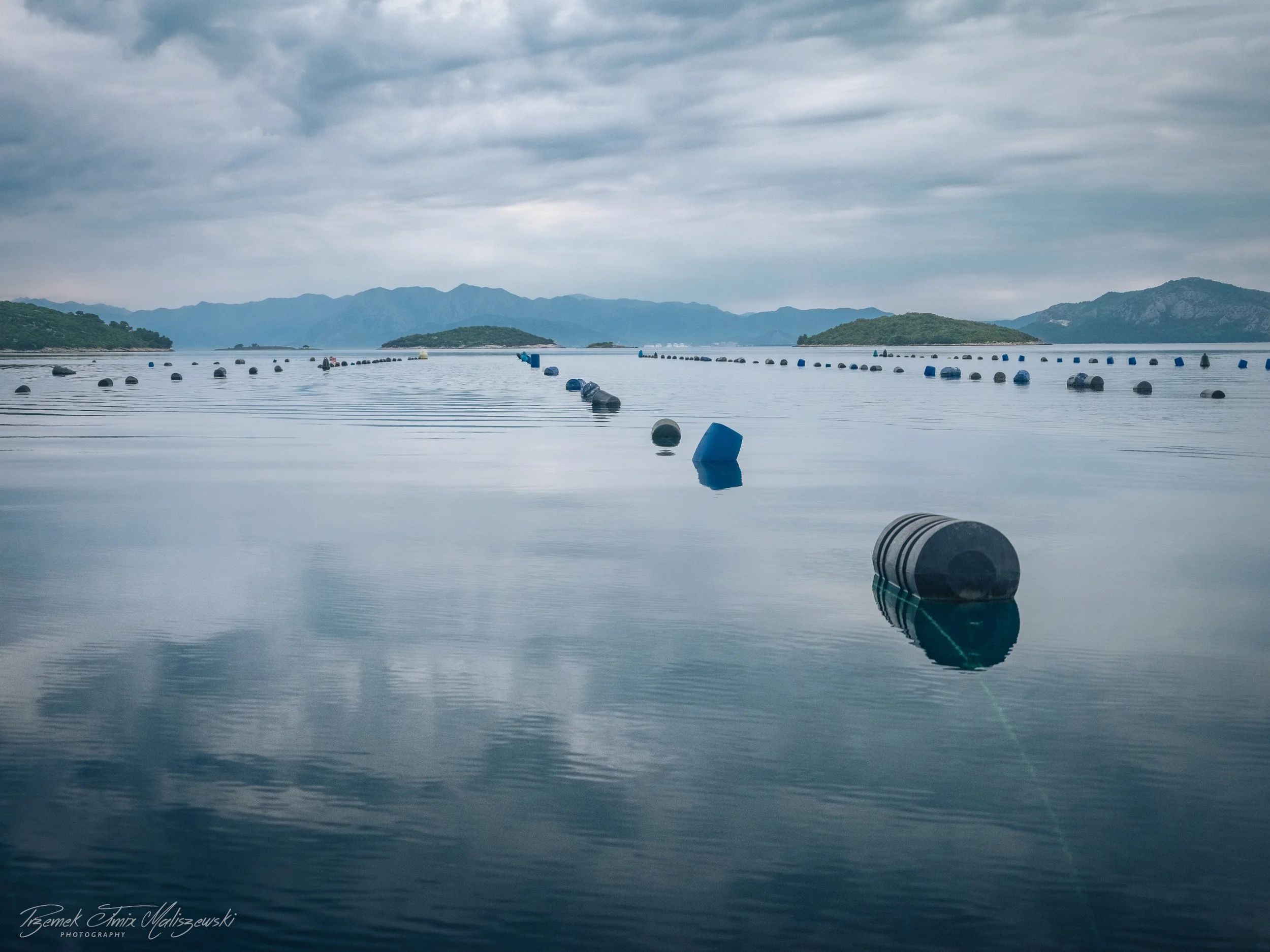
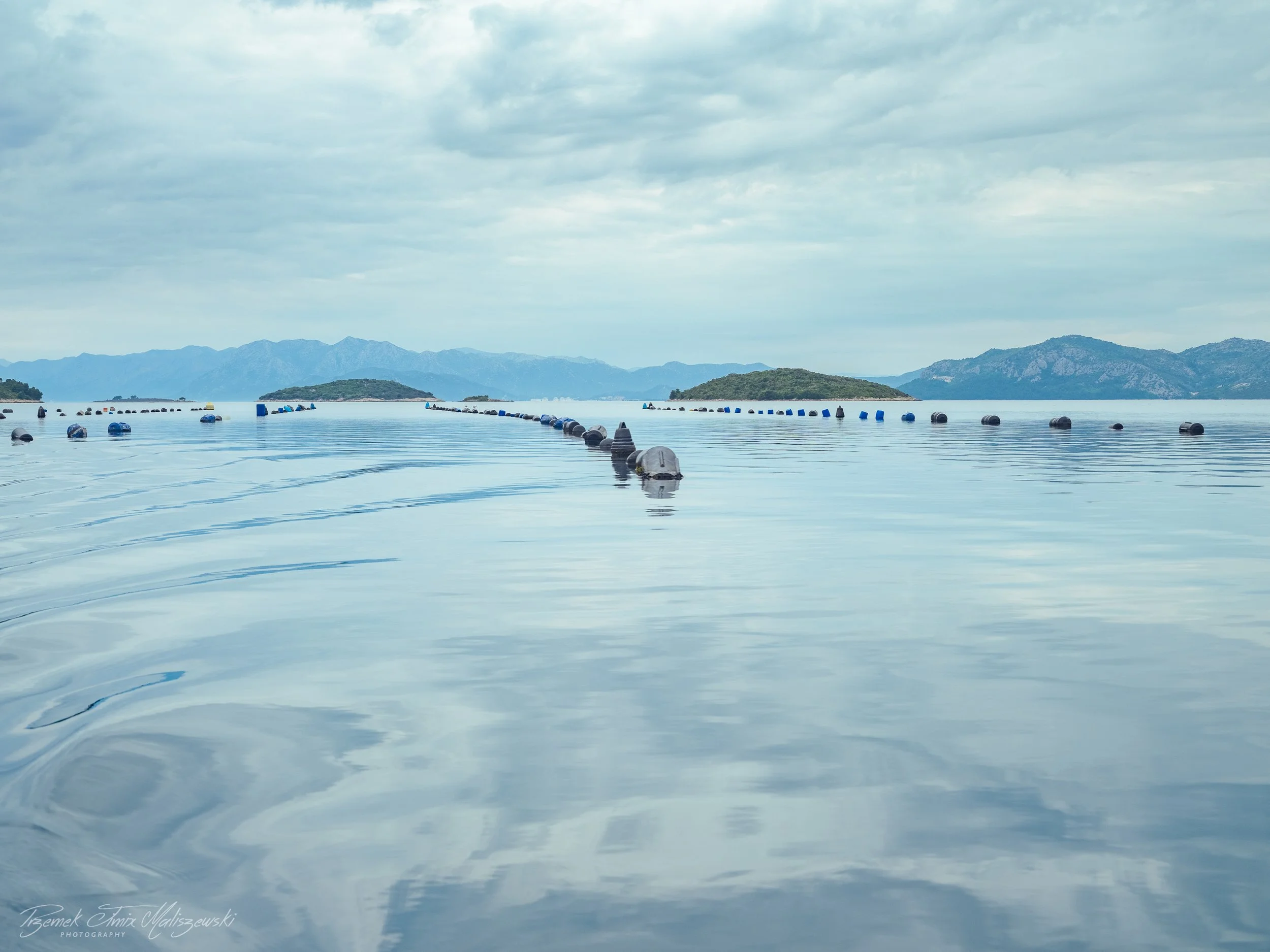
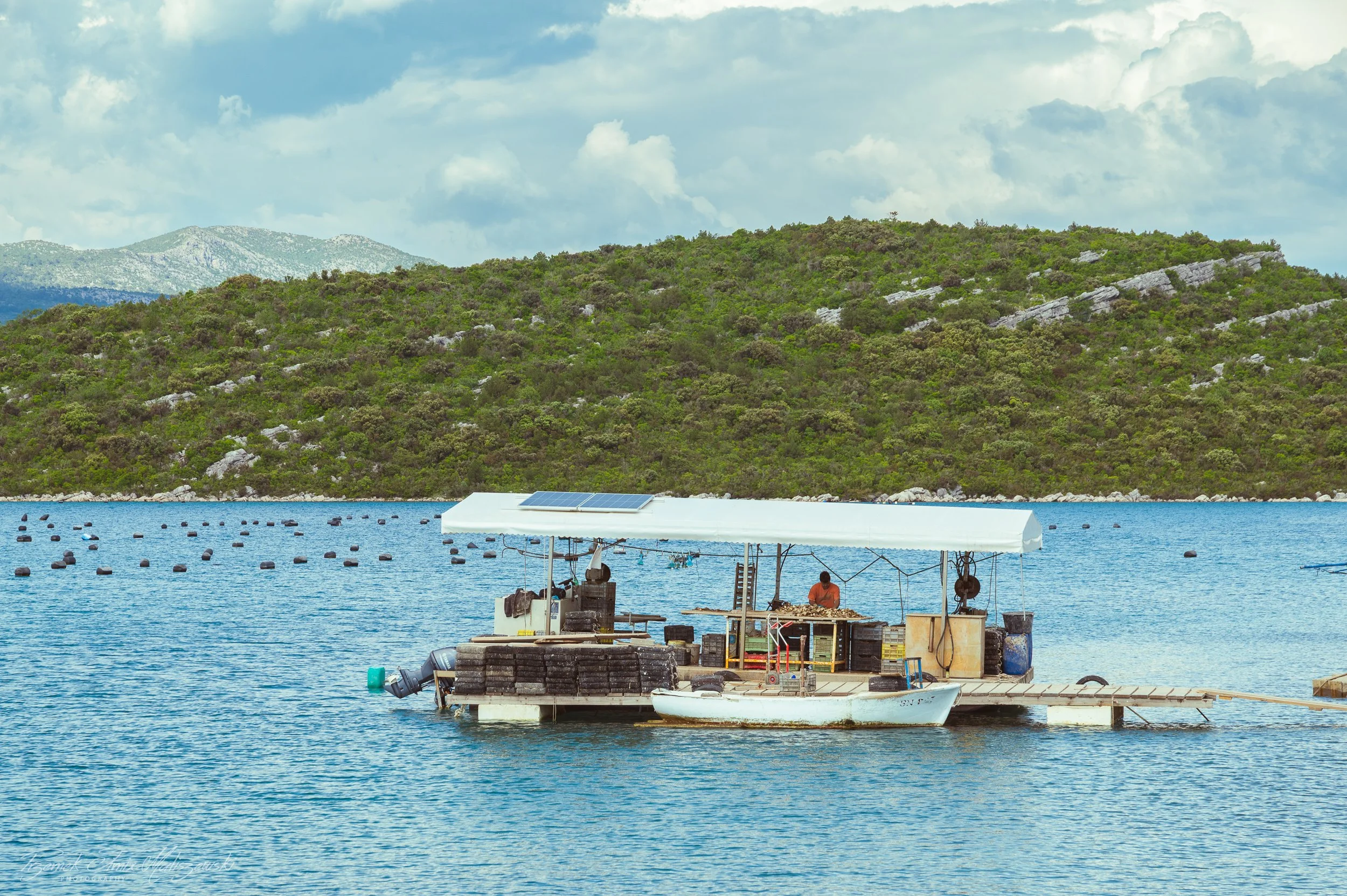
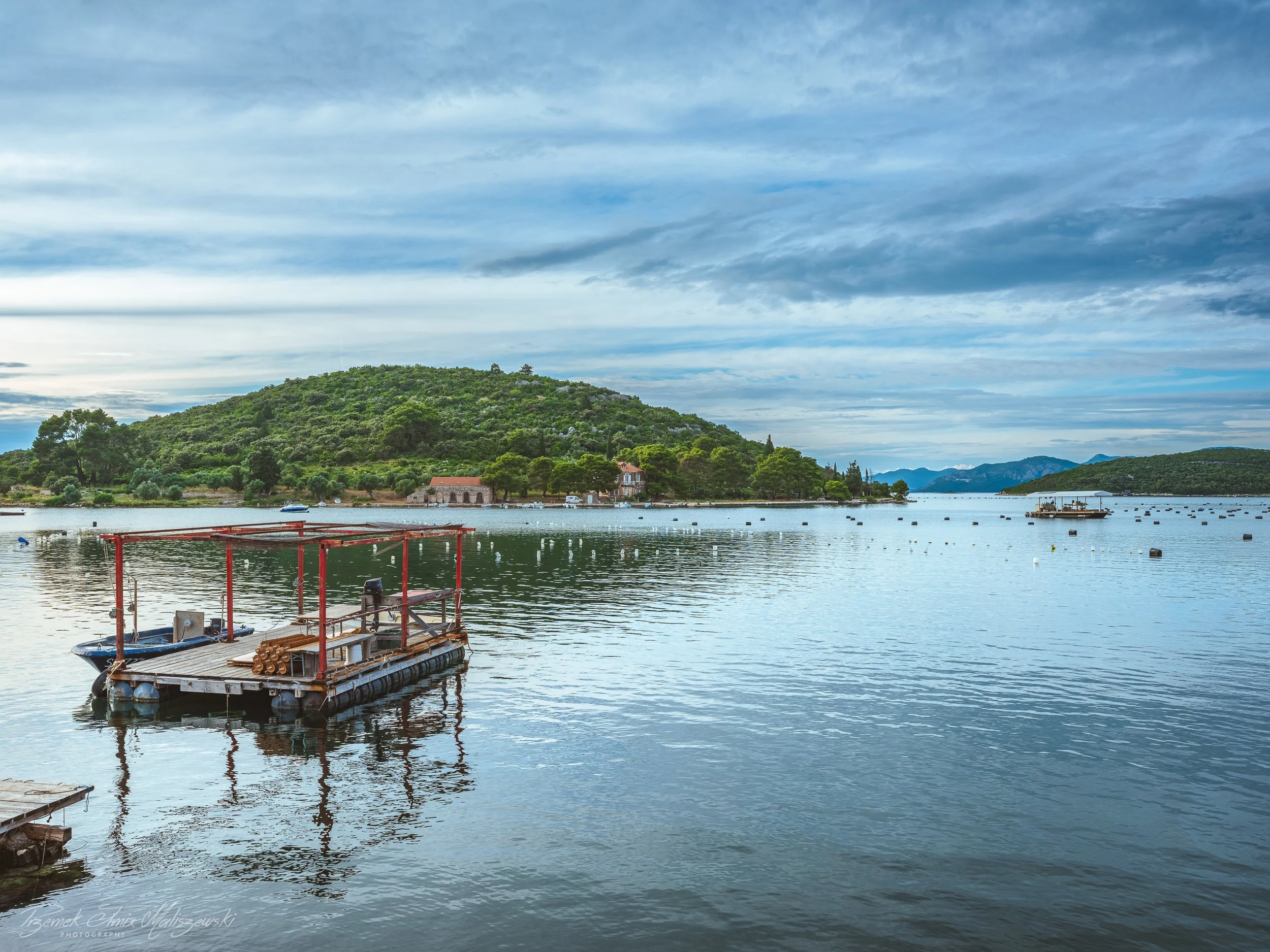
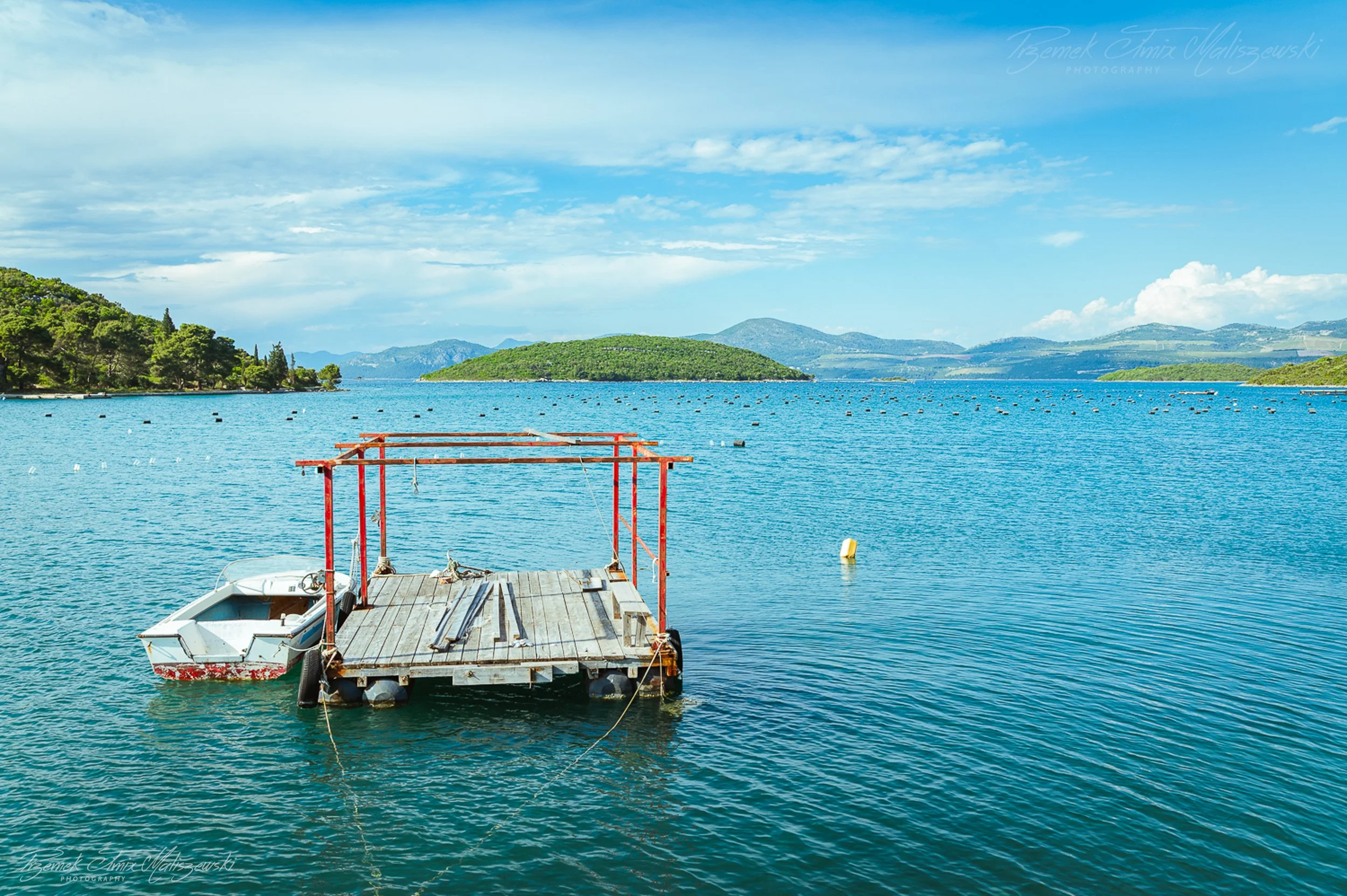
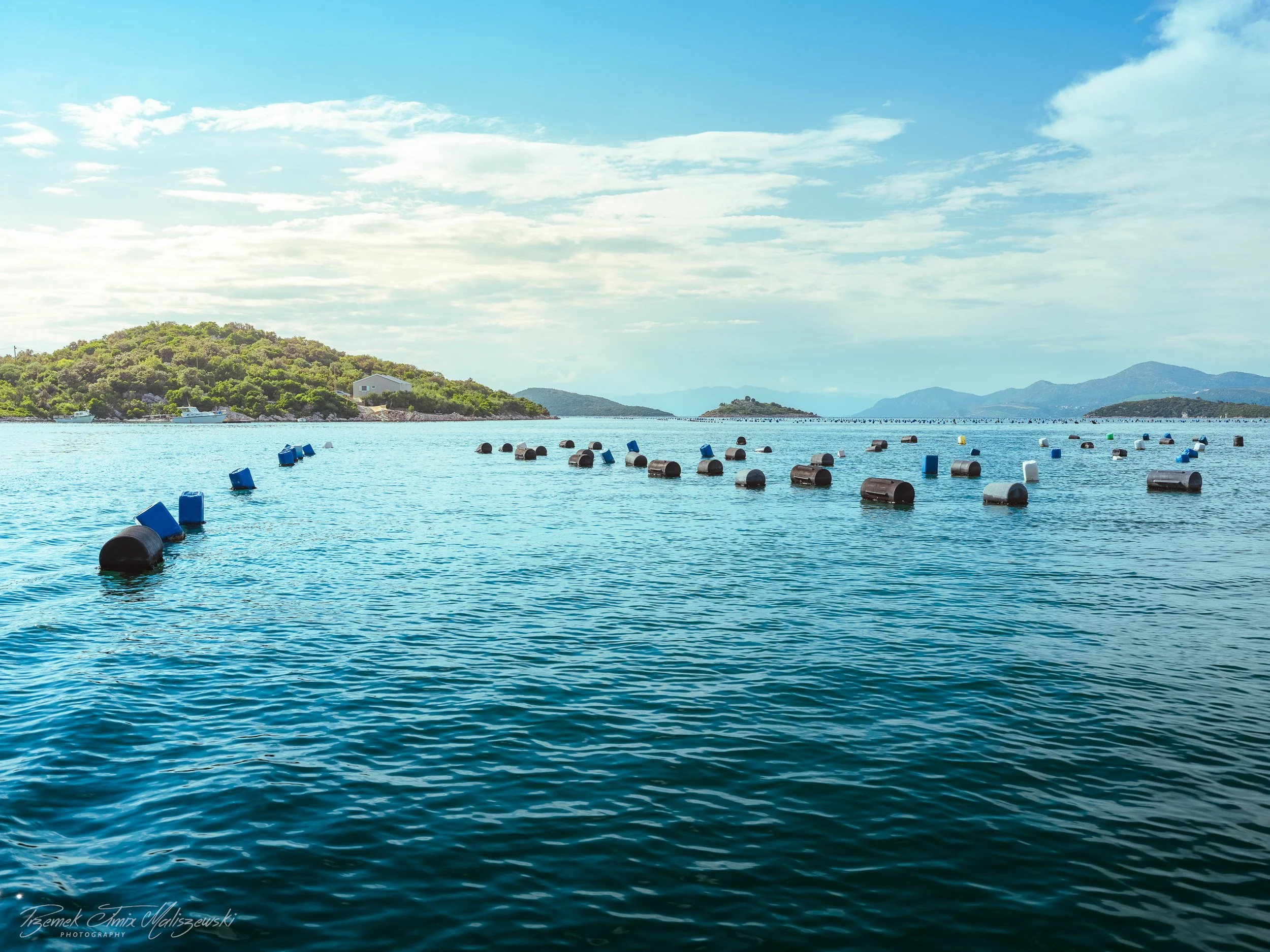
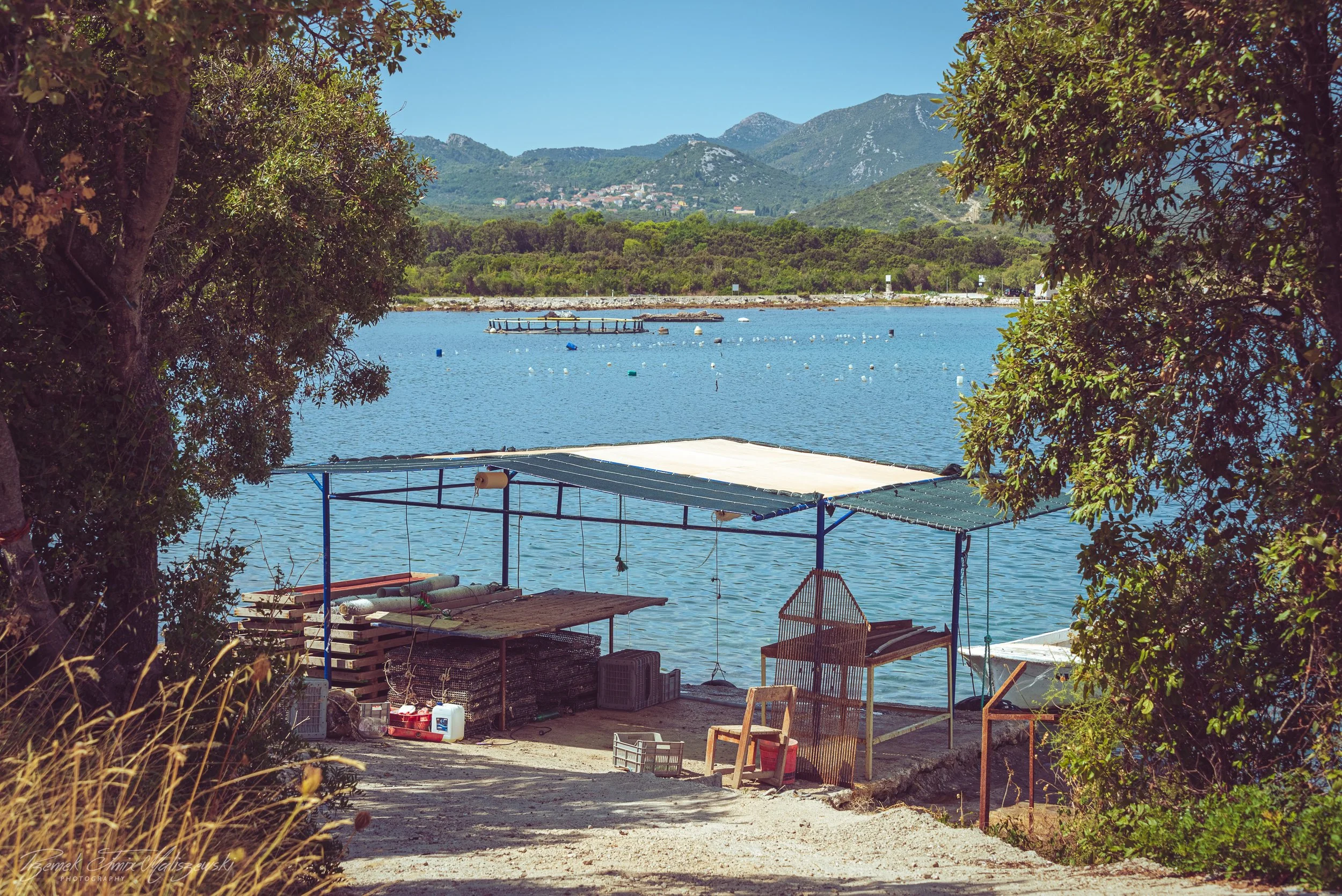
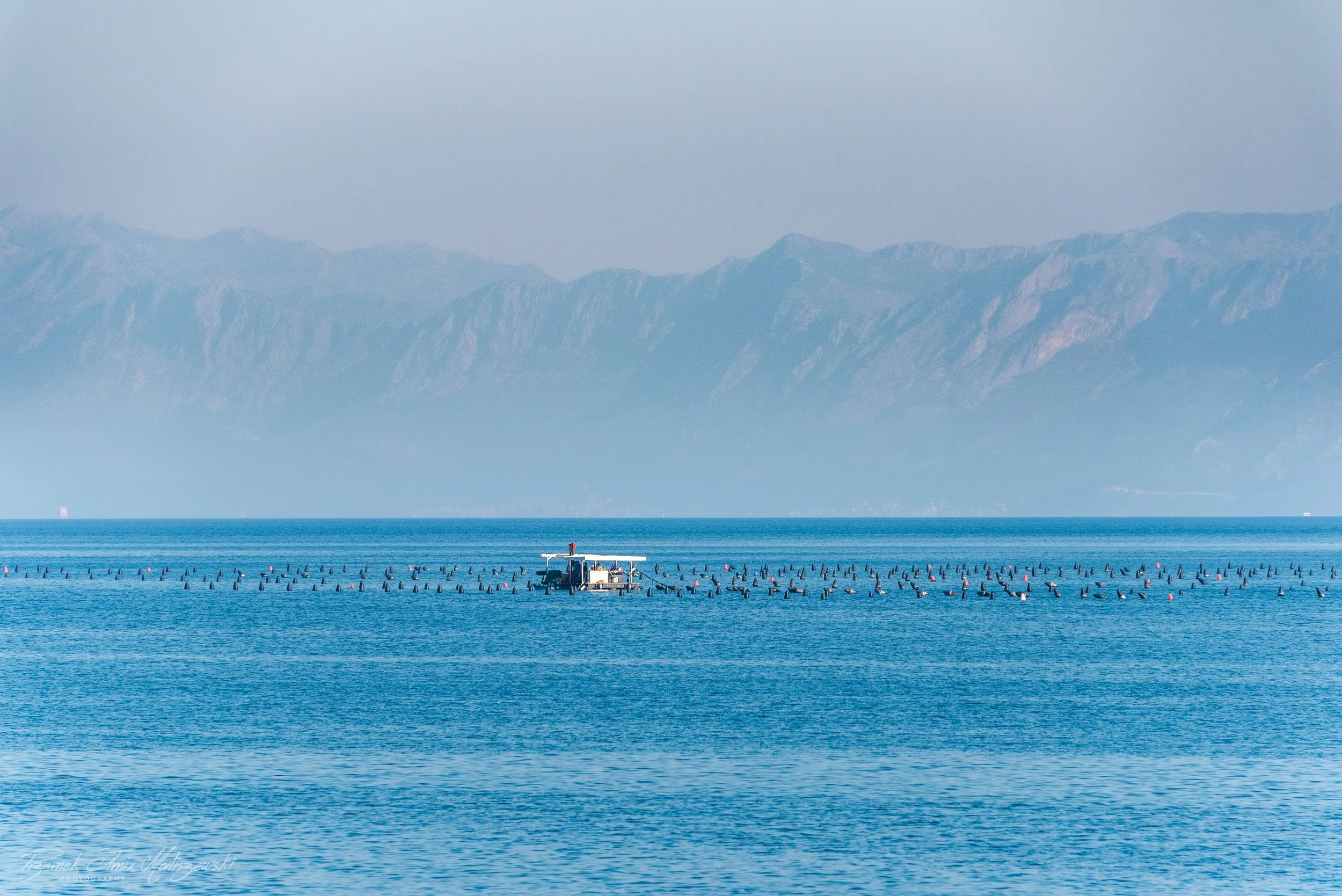
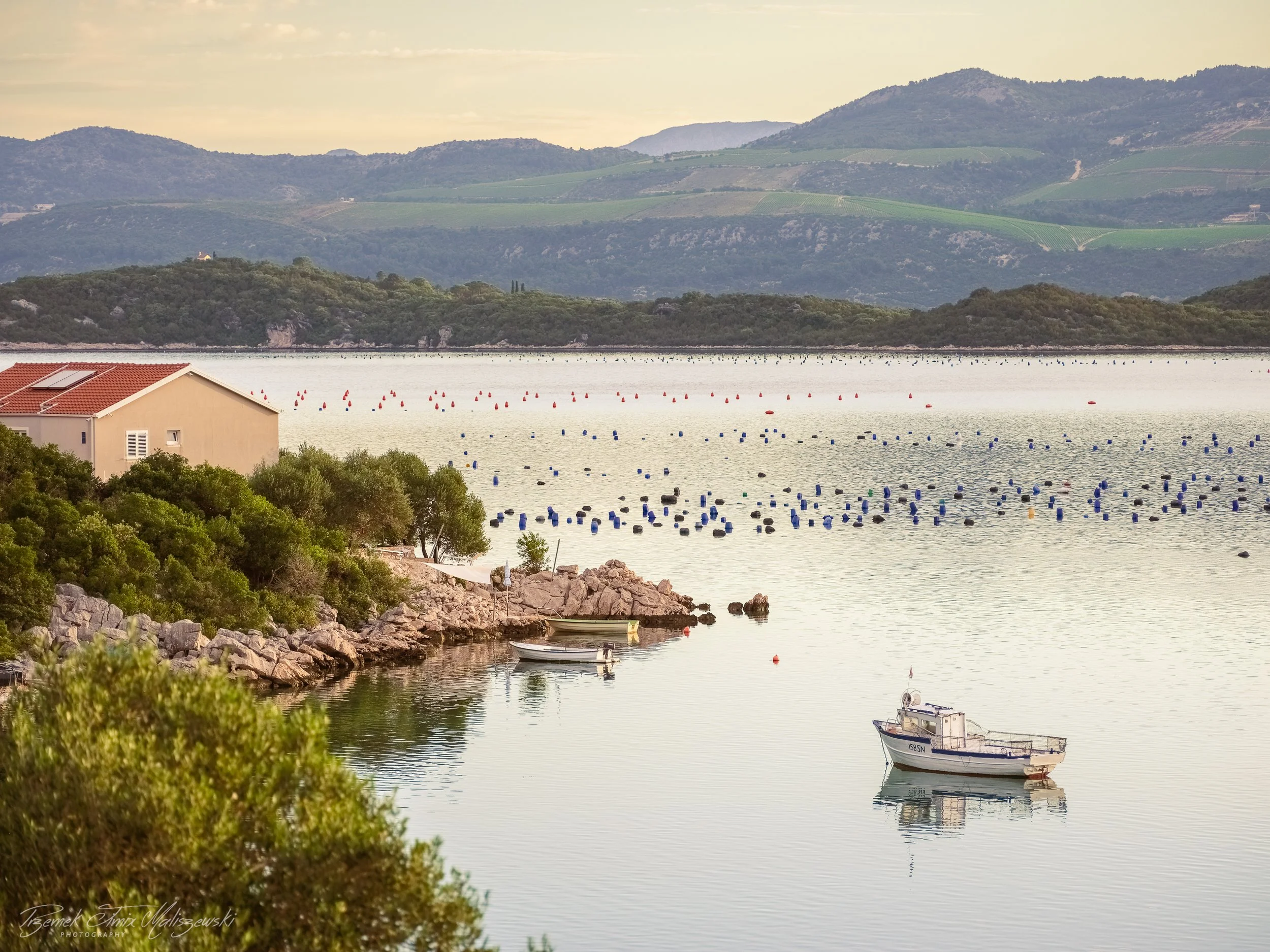
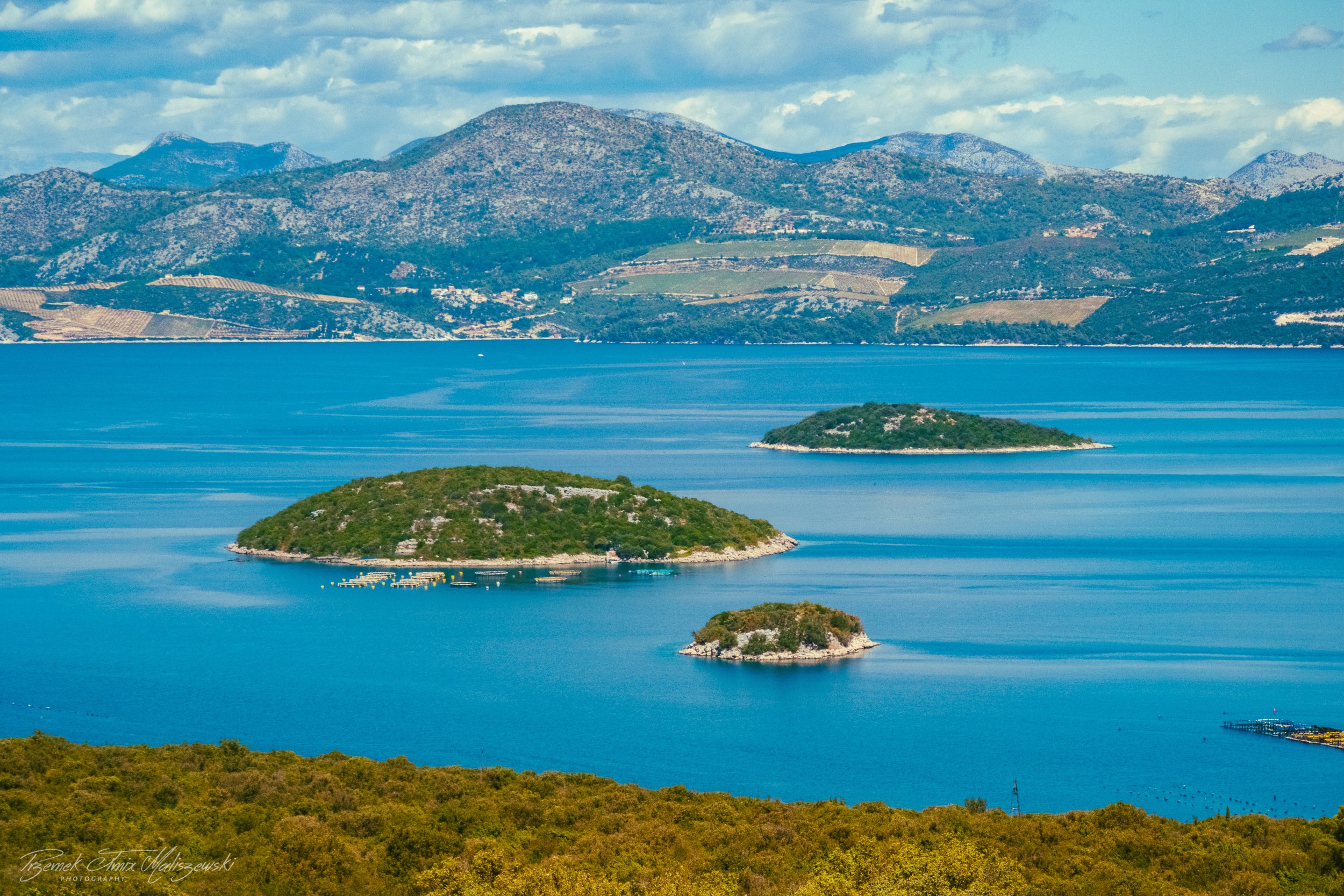
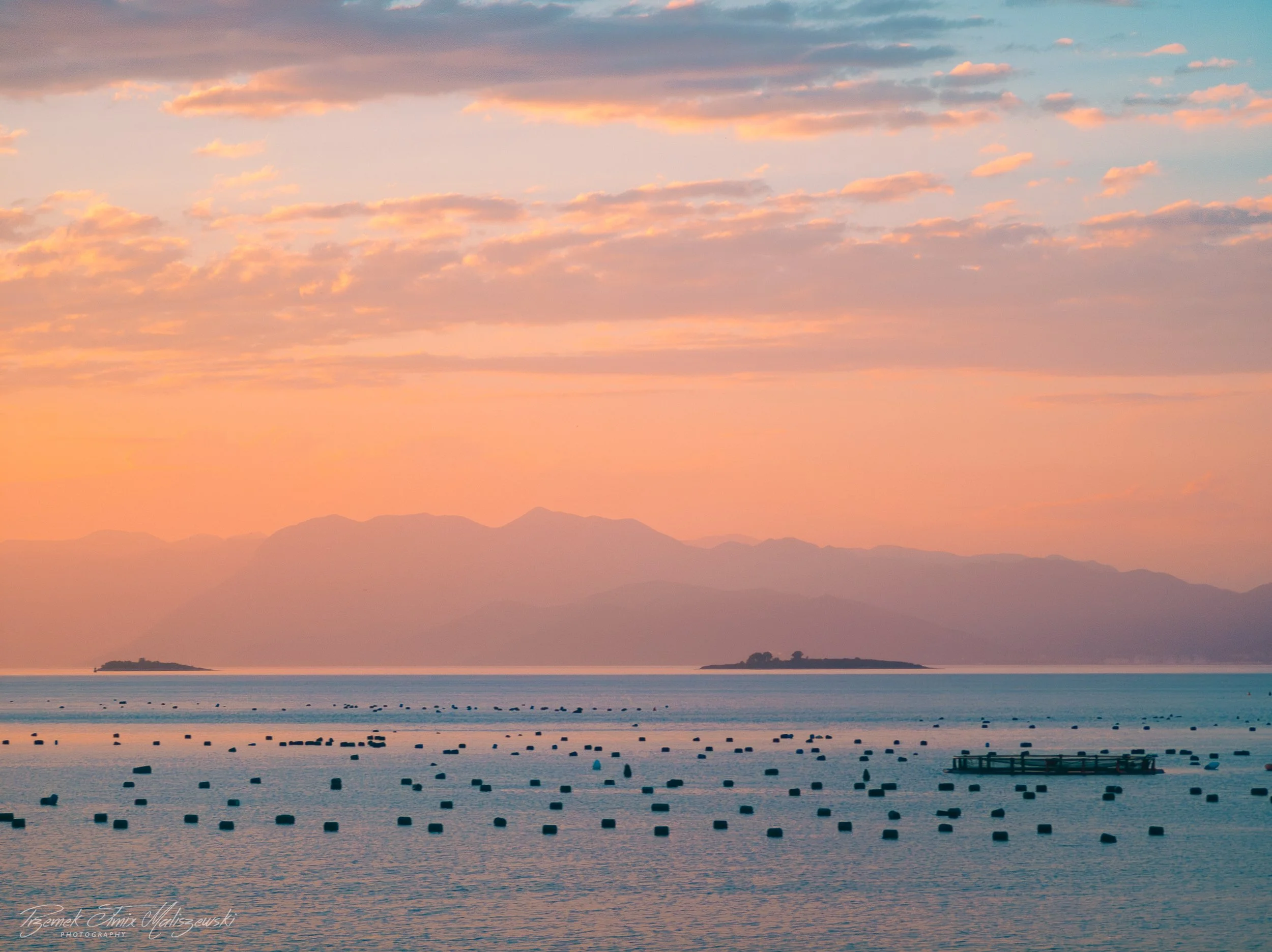
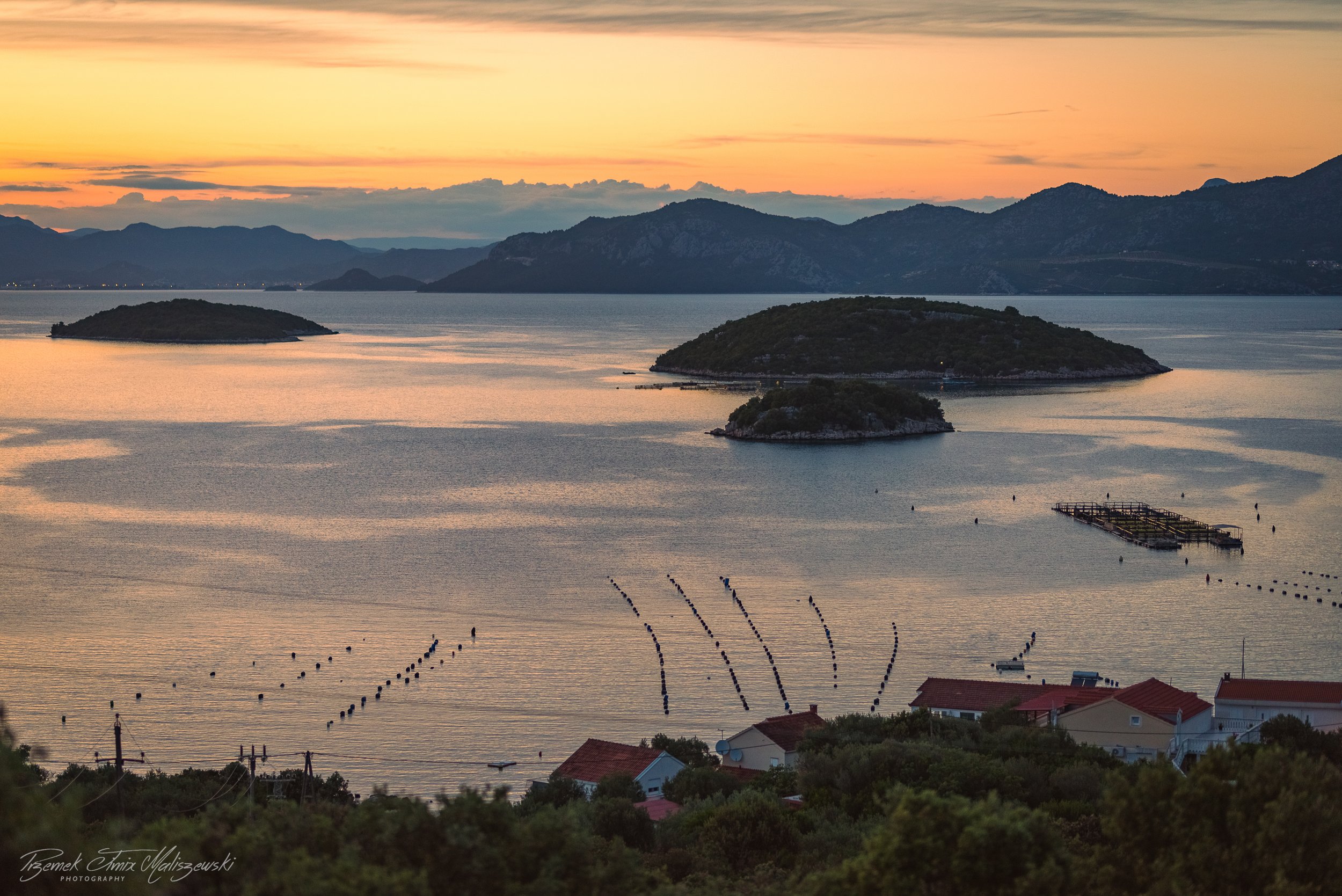
The farms look impressive when viewed from the surrounding hills and the new route, but their true scale is only visible from the deck of a boat. They require crystal clear water, and in this respect, Malo More is an ideal, regularly monitored environment.
Mussel farms in the vicinity of the village of Brijesta.
My friend and LOT Polish Airlines pilot, Oskar, and his mussels, fresh out of the sea, which are about to land in the pot, and then…
…straight into the plate.
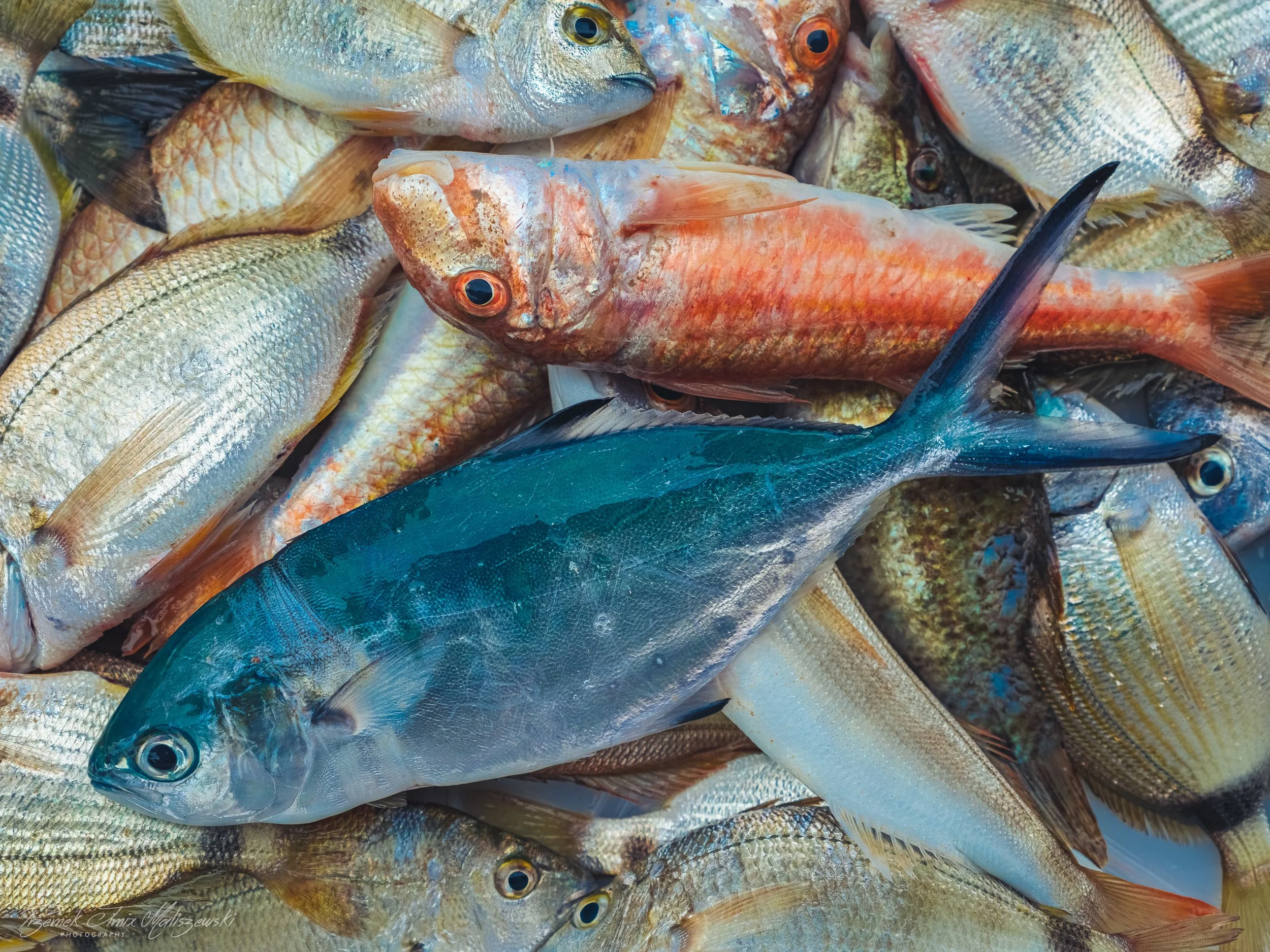
The region abounds in bistros and restaurants, especially in Ston, Mali Ston, and their surroundings, serving seafood of the highest quality. I often buy fresh mussels straight from the sea near the village of Drače and fresh fish straight from the sea from a friendly fisherman, Mr. Vinko. Such grilled fish is a true masterpiece, with which even the best and freshest fish from shops simply cannot compete. The second dish typical for the region, which is a must-try, is mušule na buzaru, or dagnje na buzaru – mussels stewed in an aromatic sauce based on olive oil, garlic, wine, parsley, and breadcrumbs. There are, however, two versions, both phenomenal: white and red – the latter differs from the first in that it features the addition of fresh tomatoes or tomato passata.
Dagnje na crvenu buzaru (mussels in a red buzara sauce) at the "Sea Food SUTVID".
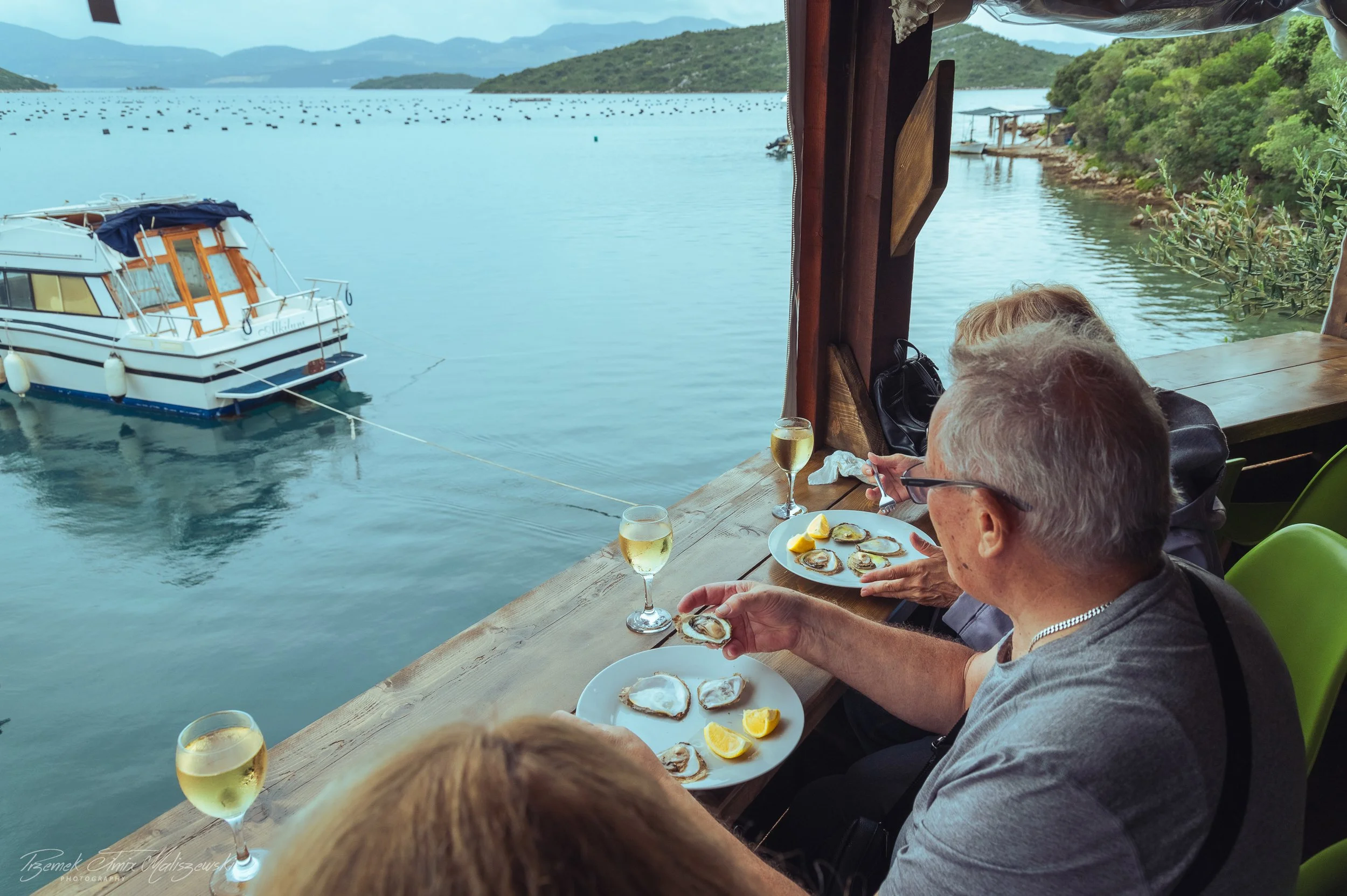
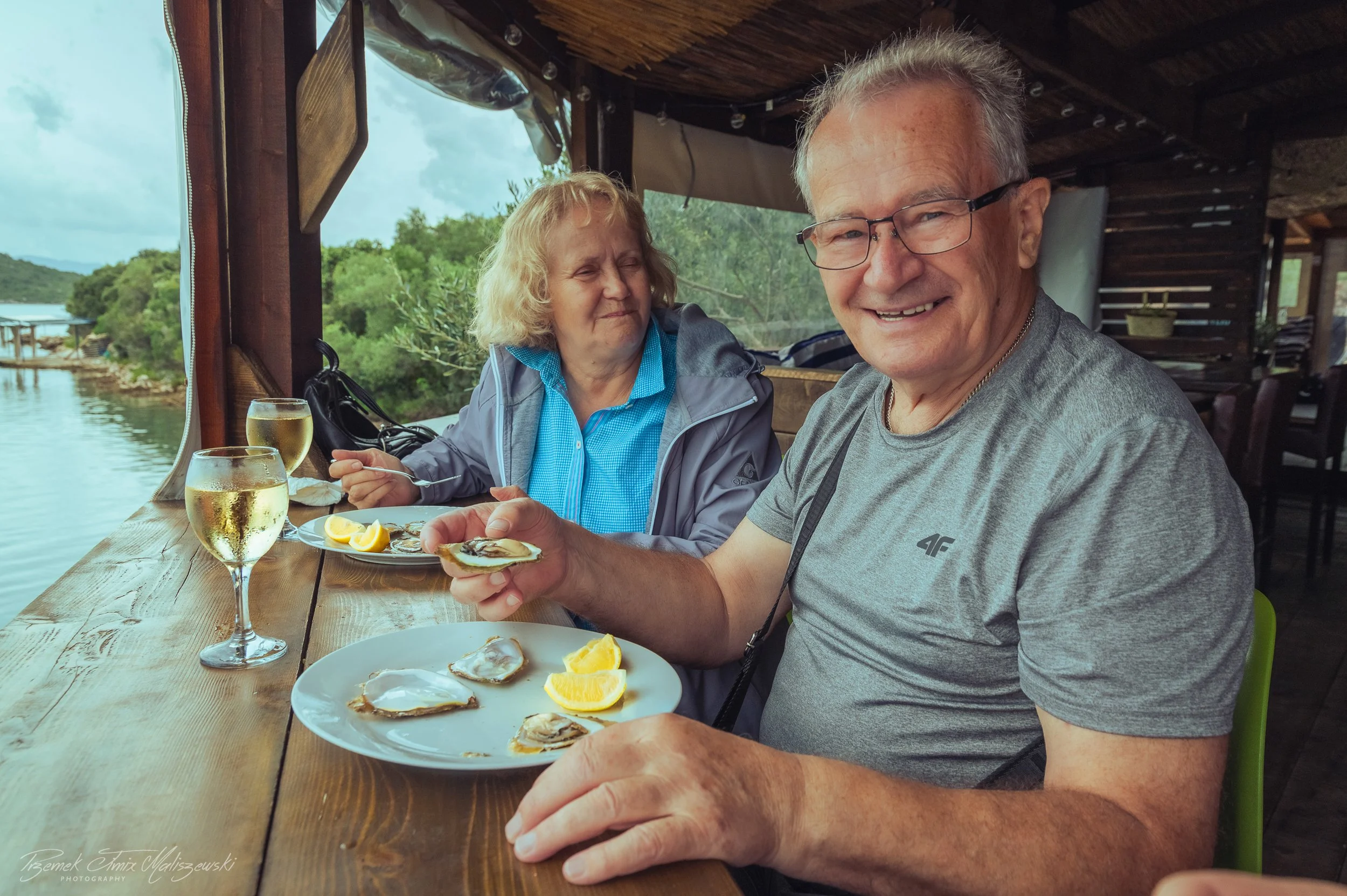
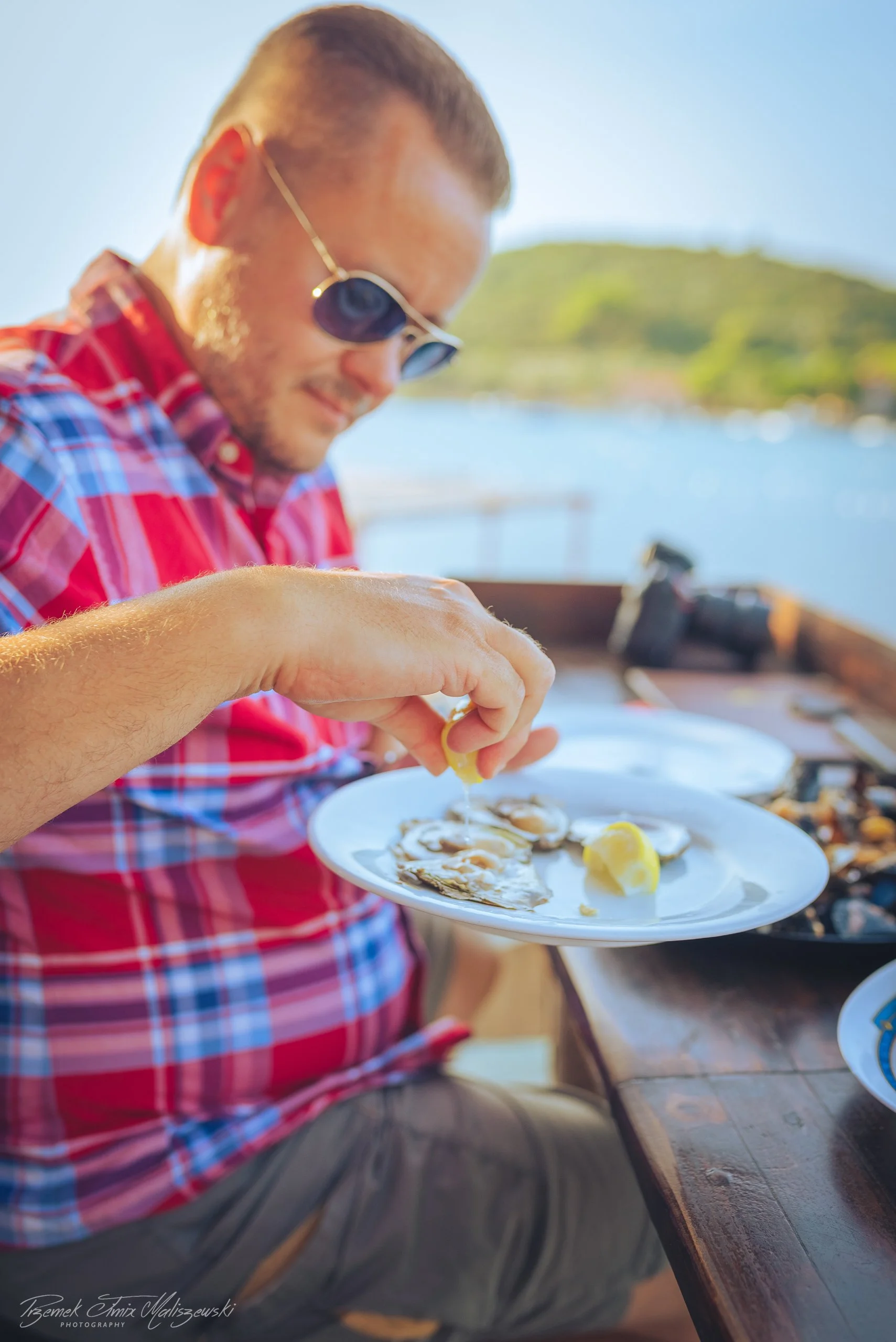
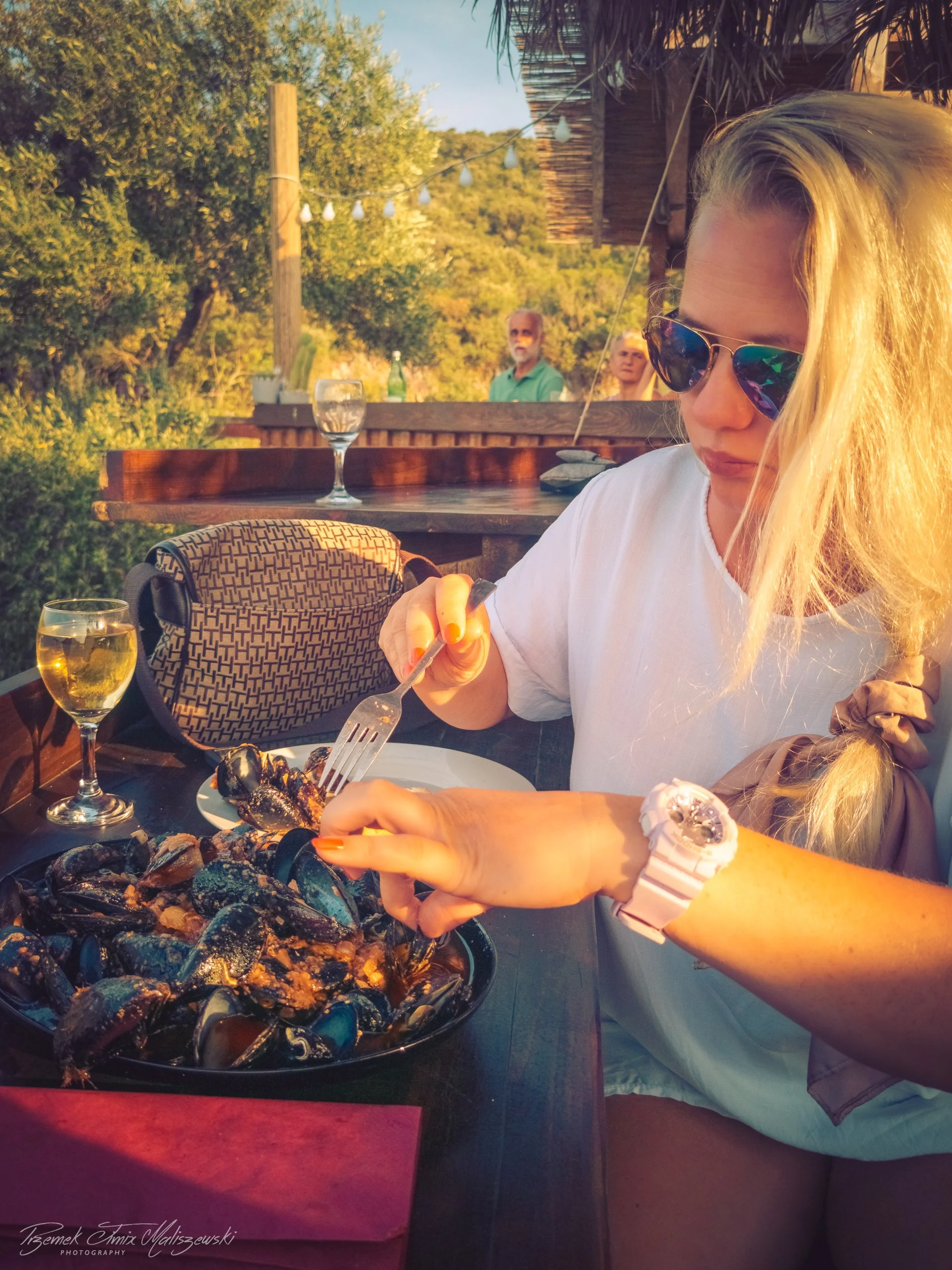
I love evenings at a table where fish caught just a few hours earlier takes center stage. Accompanied by blitva (Swiss chard) with potatoes, olive oil, and garlic, a good white wine, and the songs of the unforgettable Oliver Dragojević playing in the background. In such an ambiance, food takes on a different dimension. Furthermore, when the sky over Malo More blazes with gold, crimson, and juicy carmine, turning into cyclamen and the deep blue of twilight, the moment becomes almost mystical. For someone who appreciates authenticity and local terroir, it is an absolutely complete scene: the scenery, the props, and the music – everything in this opera of life harmonizes perfectly.
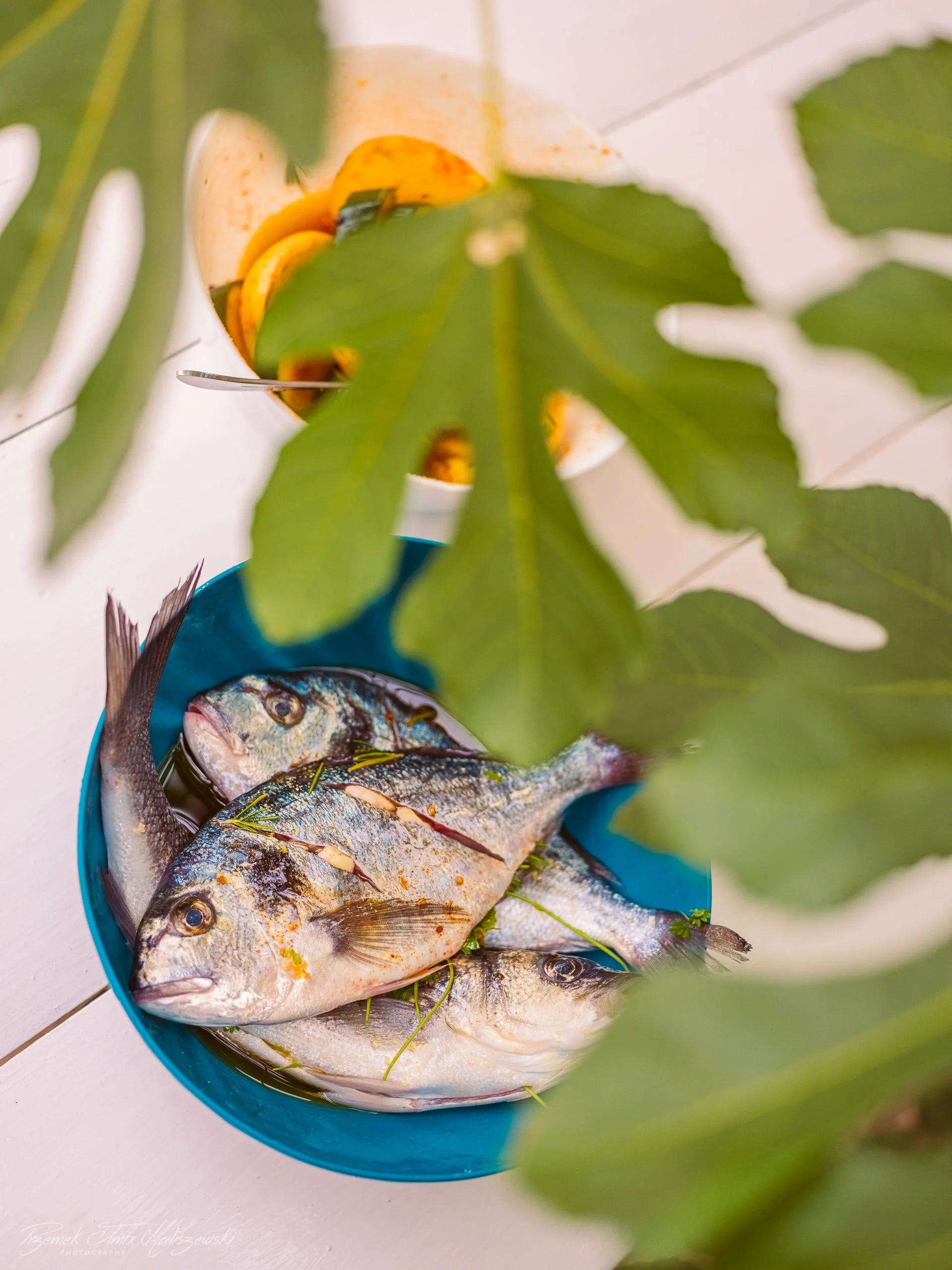
Brancin and orada from the grill – grilled sea bass and sea bream.
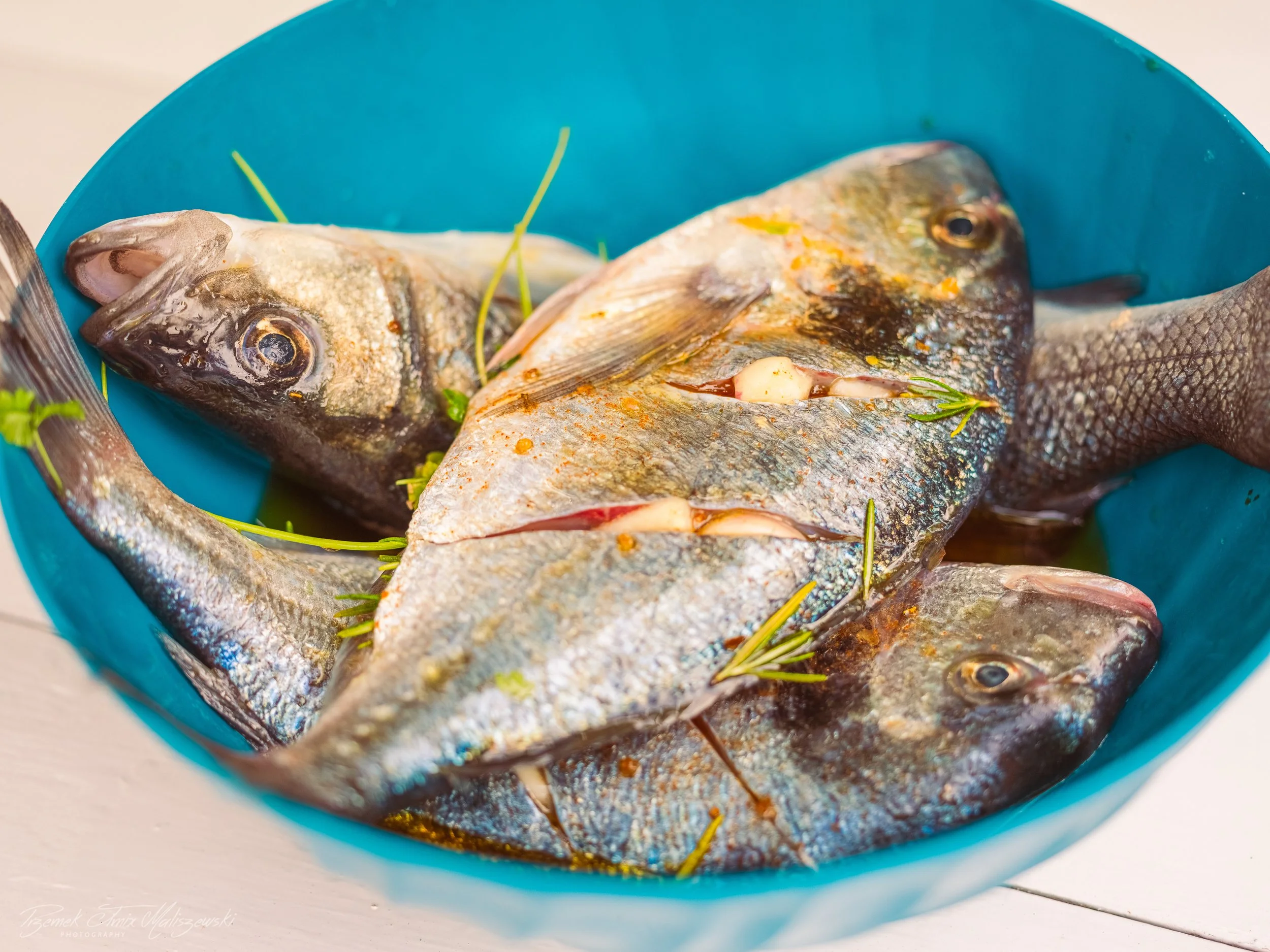
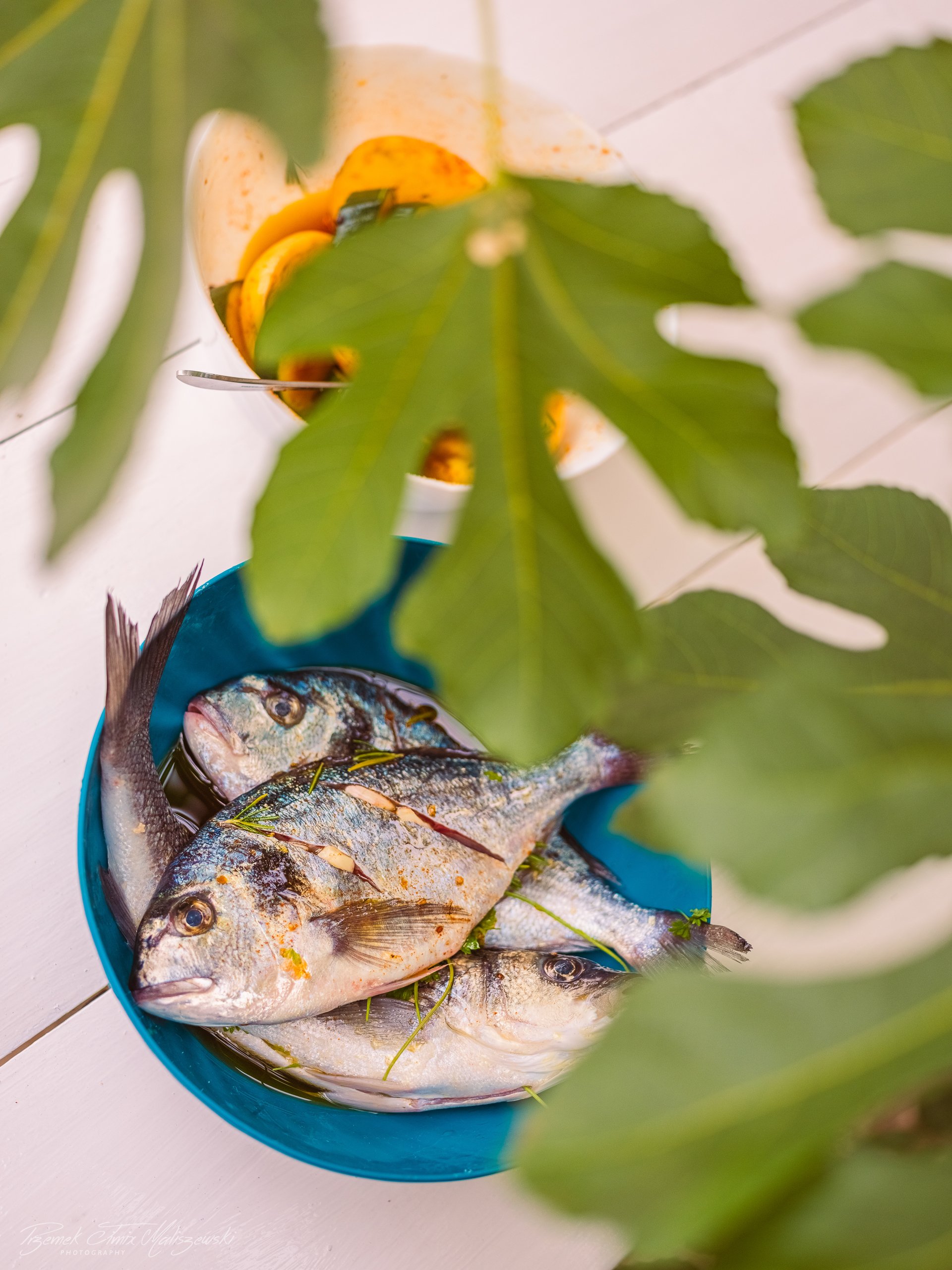
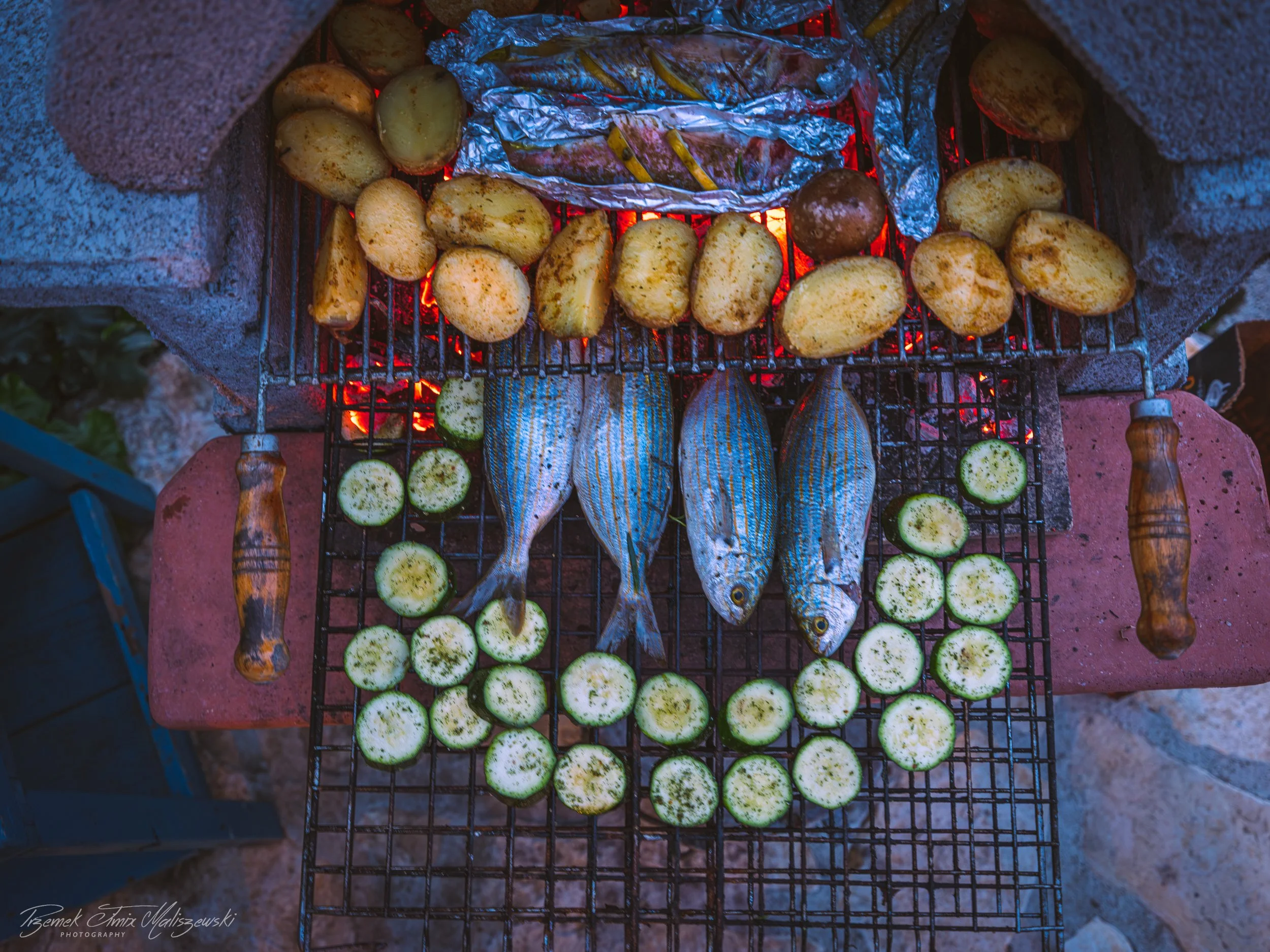
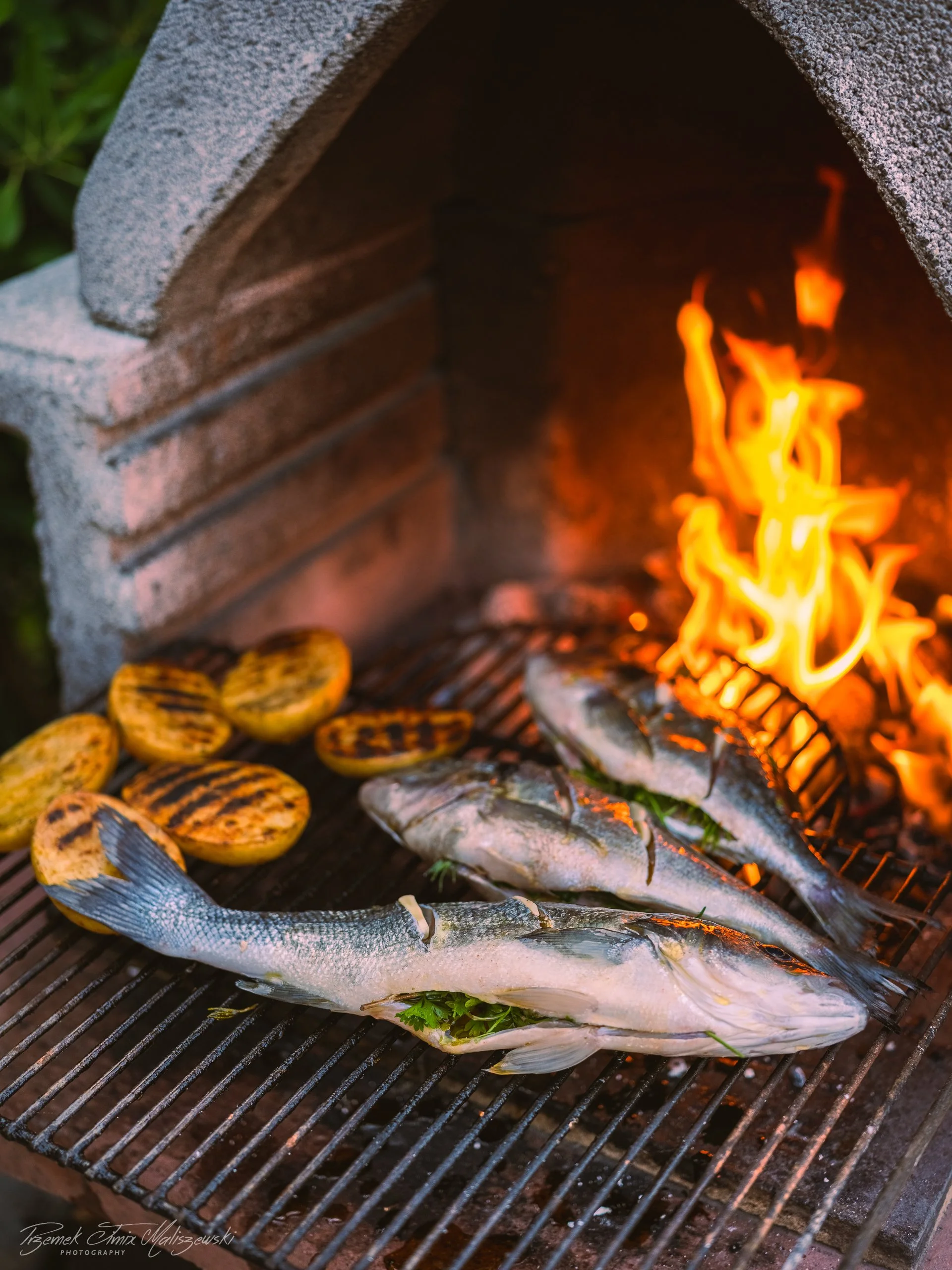
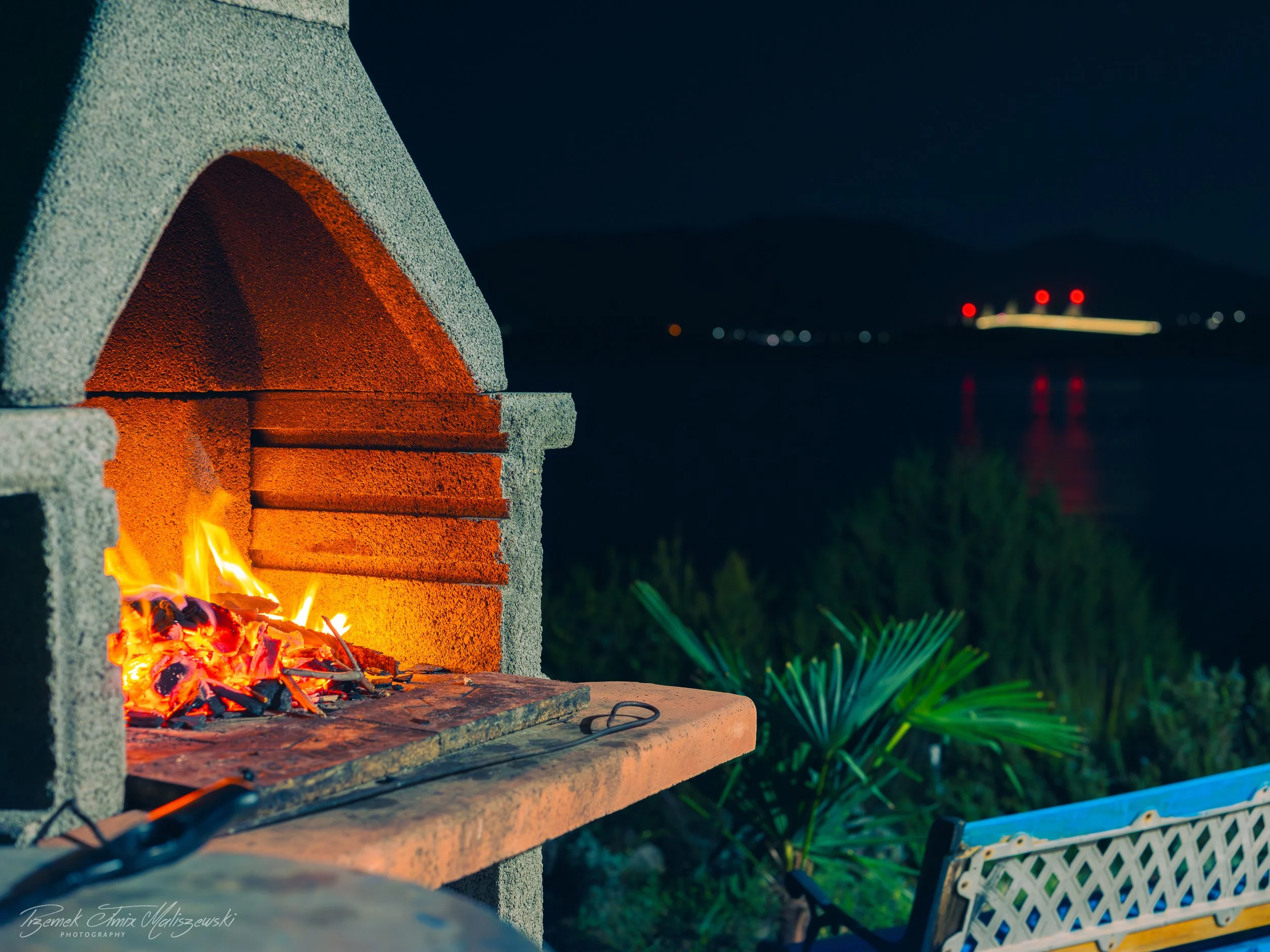
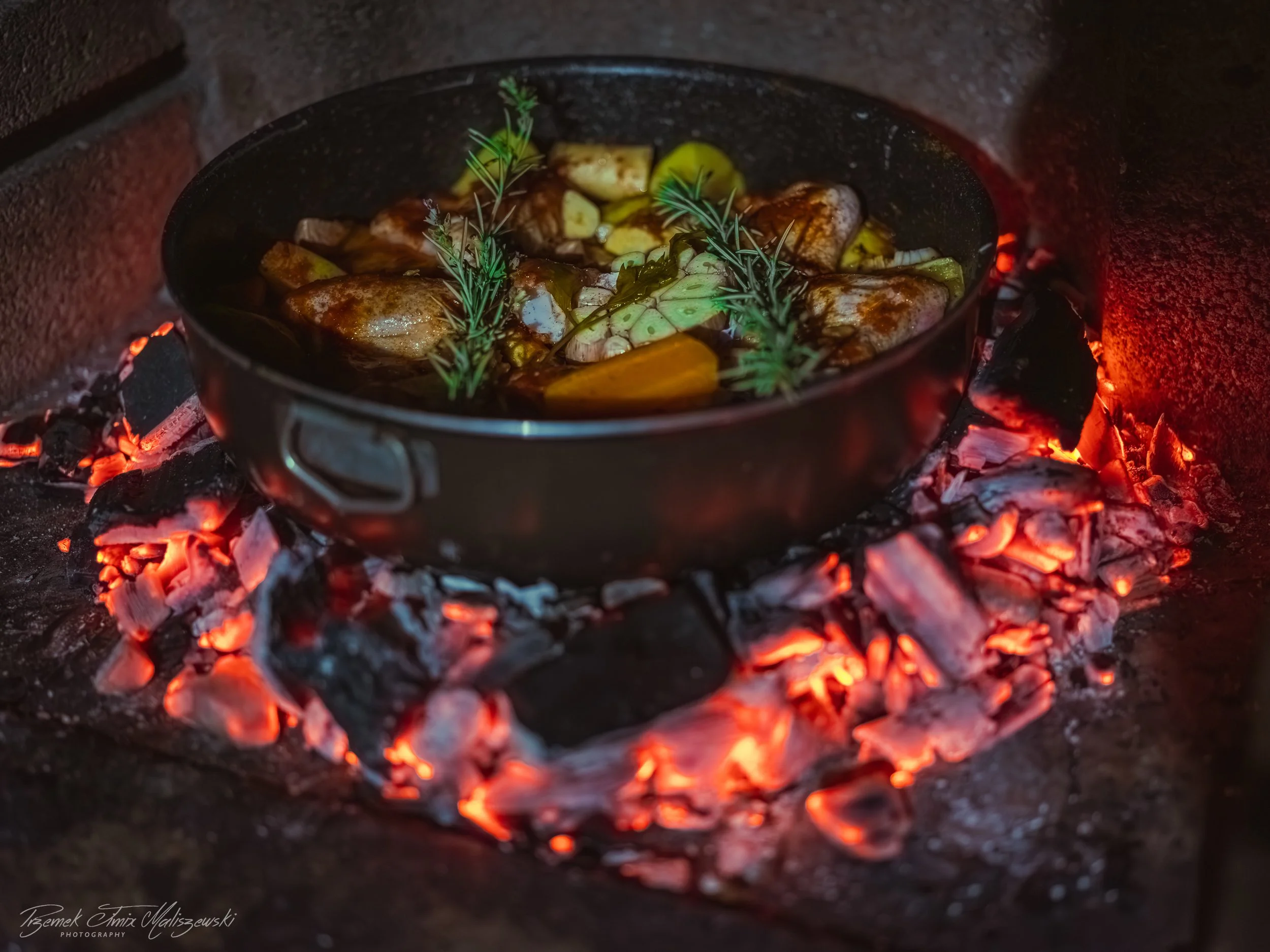
Malo More is a region that guarantees peace and closeness to nature. Most apartment houses stand right on the waterfront, offering direct access to the sea, a view, and something without which it is hard for me to imagine a stay not only in Malo More and Dalmatia, but generally in this part of Europe: a stone hearth with a grate, colloquially known as a grill, which we use very often. Preparing food on the grate (in Croatian: roštilj) is strongly linked to the local culinary culture. It is not just a long-weekend backdrop for sipping stronger spirits, but simply one of the forms of preparing local dishes that are already deeply embedded in the national culture. After all, it's hard to imagine a peka, fish, or lamb from a microwave. There must be embers, there must be fire, and there must be a grill. There must be glazba (music) and there must be wine. And it is best when all of this goes hand in hand with good company and singing.
In the area, it is worth visiting:
Ston and Mali Ston – "kingdoms of oysters" with an incredible history (I will dedicate a separate post to them), especially at the turn of February and March, or the beginning of March (you need to follow the exact dates) when the oyster festival is organized in Ston – an event with live music that has enjoyed huge popularity for years, dedicated strictly to oysters.
Drače and Sreser – villages with beautiful beaches, now connected by a new seaside promenade.
The Edivo Winery** in Drače – it offers unique wines, including plavac mali and dingač, aged in amphorae at the bottom of the sea. This is an unusual form of wine aging, and it is worth judging for yourself how it affects the bouquet. I recommend visiting the winery for a tasting. The difference in taste between a dingač aged in stainless steel (inox), in a barrel, or in an amphora at the bottom of the sea is quite significant.
Janjina – a charming village with a now-iconic café, atmospheric corners, a beautiful little church, shops, and wineries, among which I particularly recommend the Bezek winery***.
At the EDIVO winery in the village of Drače.
A café in the village of Janjina. It's best to come here in the morning when the locals gather for coffee and a long sit-down at the tables. Local color, lively discussions. The day begins lazily. Polako, polako! (Slowly, slowly!)
The promenade leading from the village of Drače to the neighboring village of Sreser is a very pleasant place for a walk or a bike ride. Below: views and spots directly along the promenade.
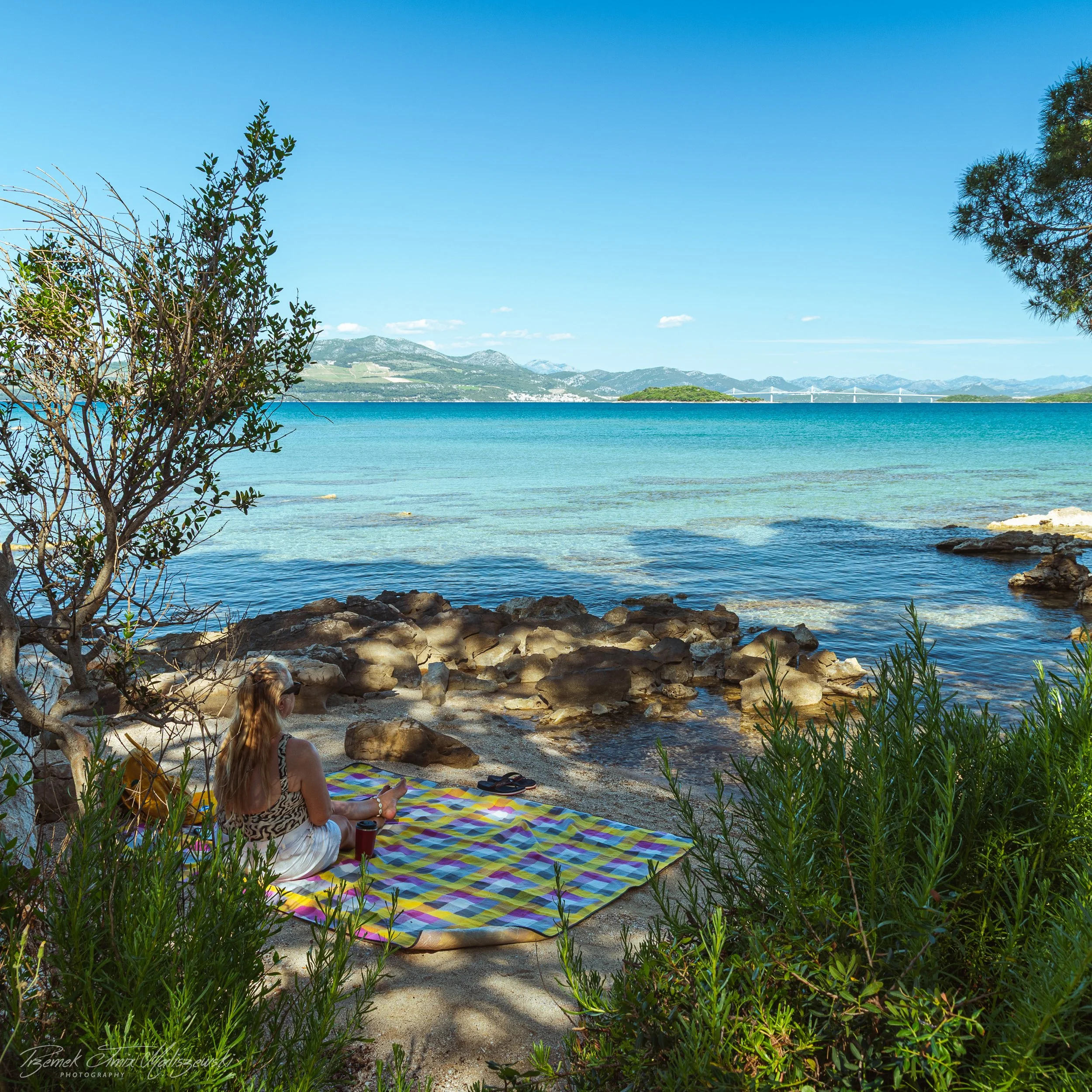
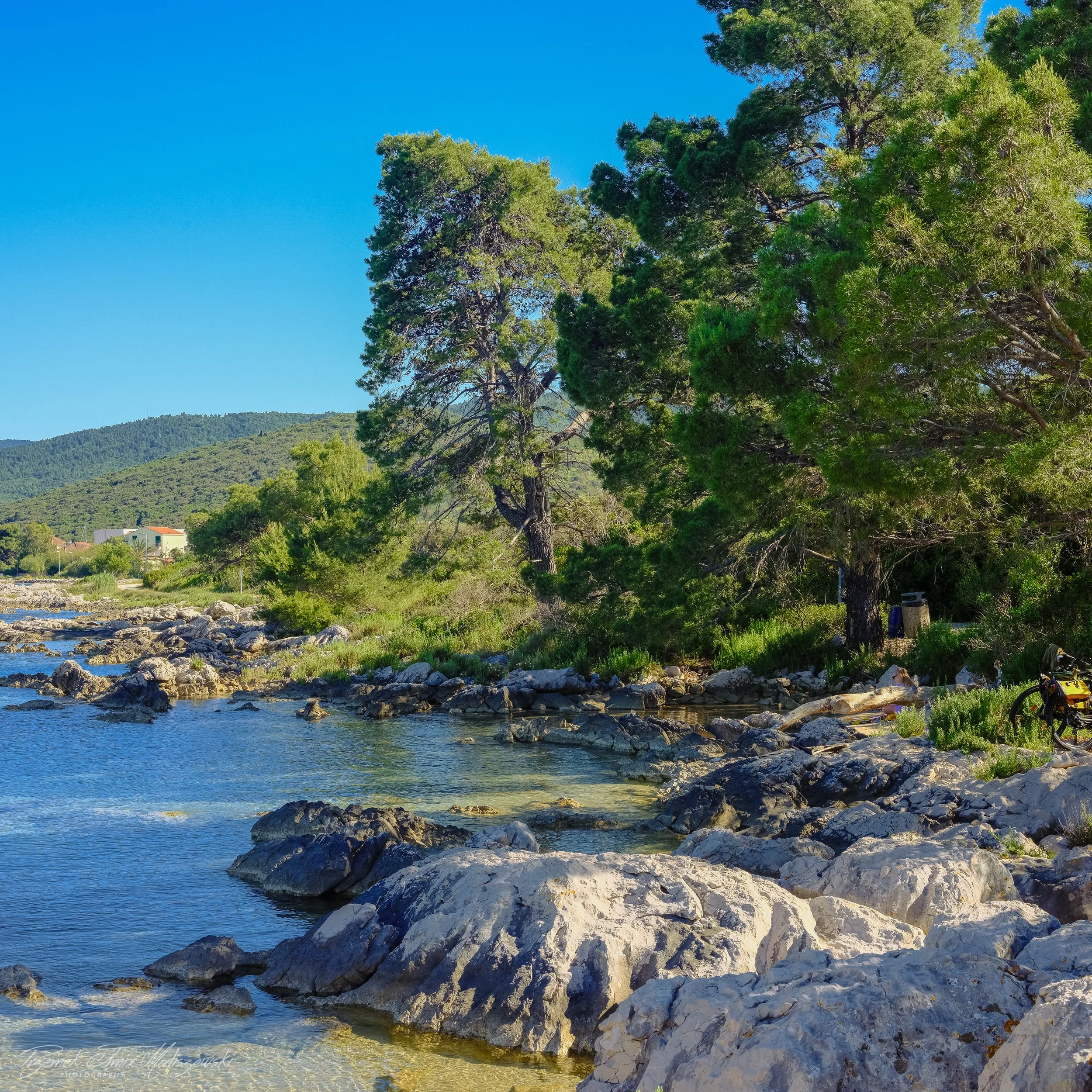
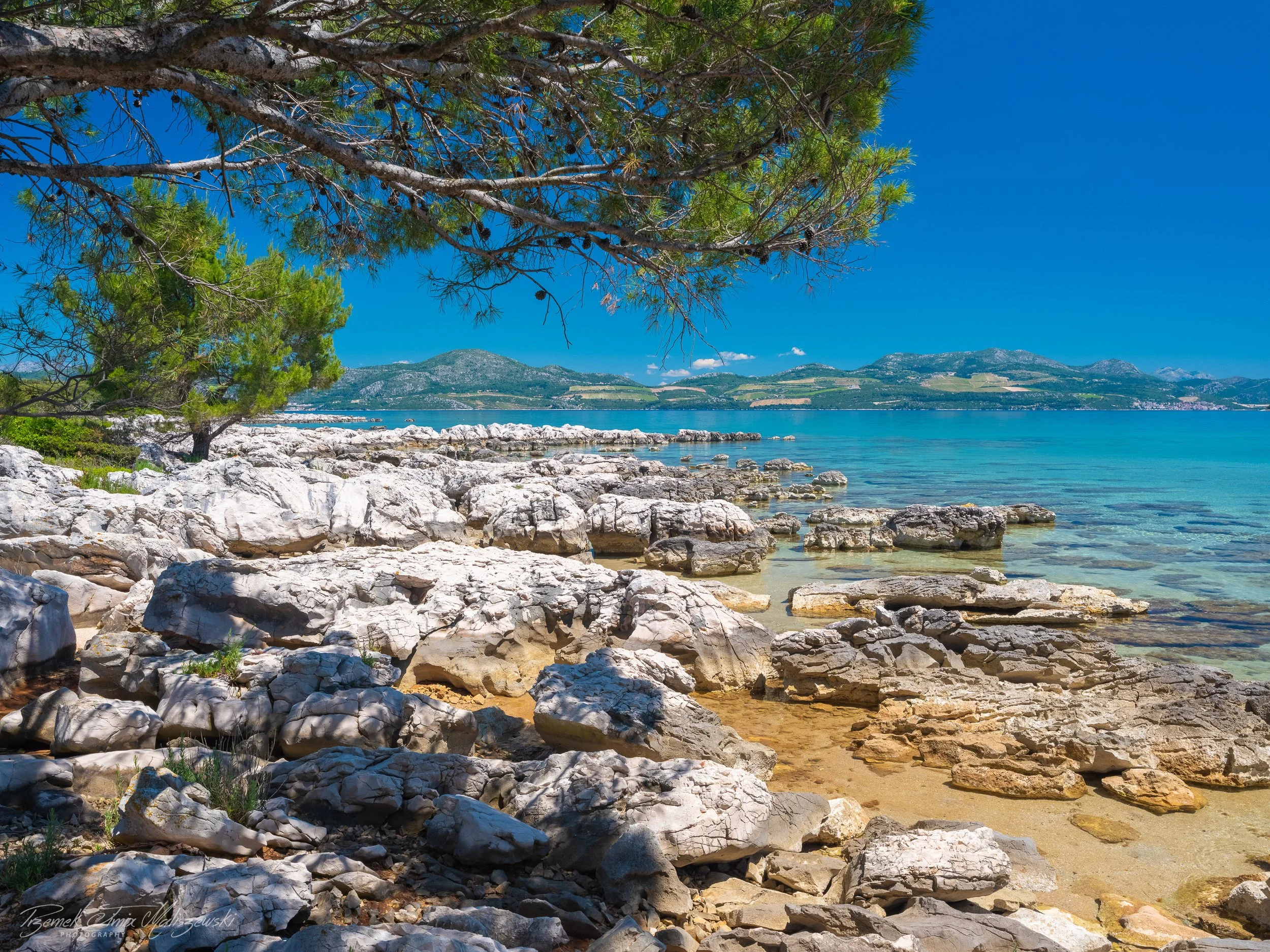
During a fisherman's evening in the village of Drače.
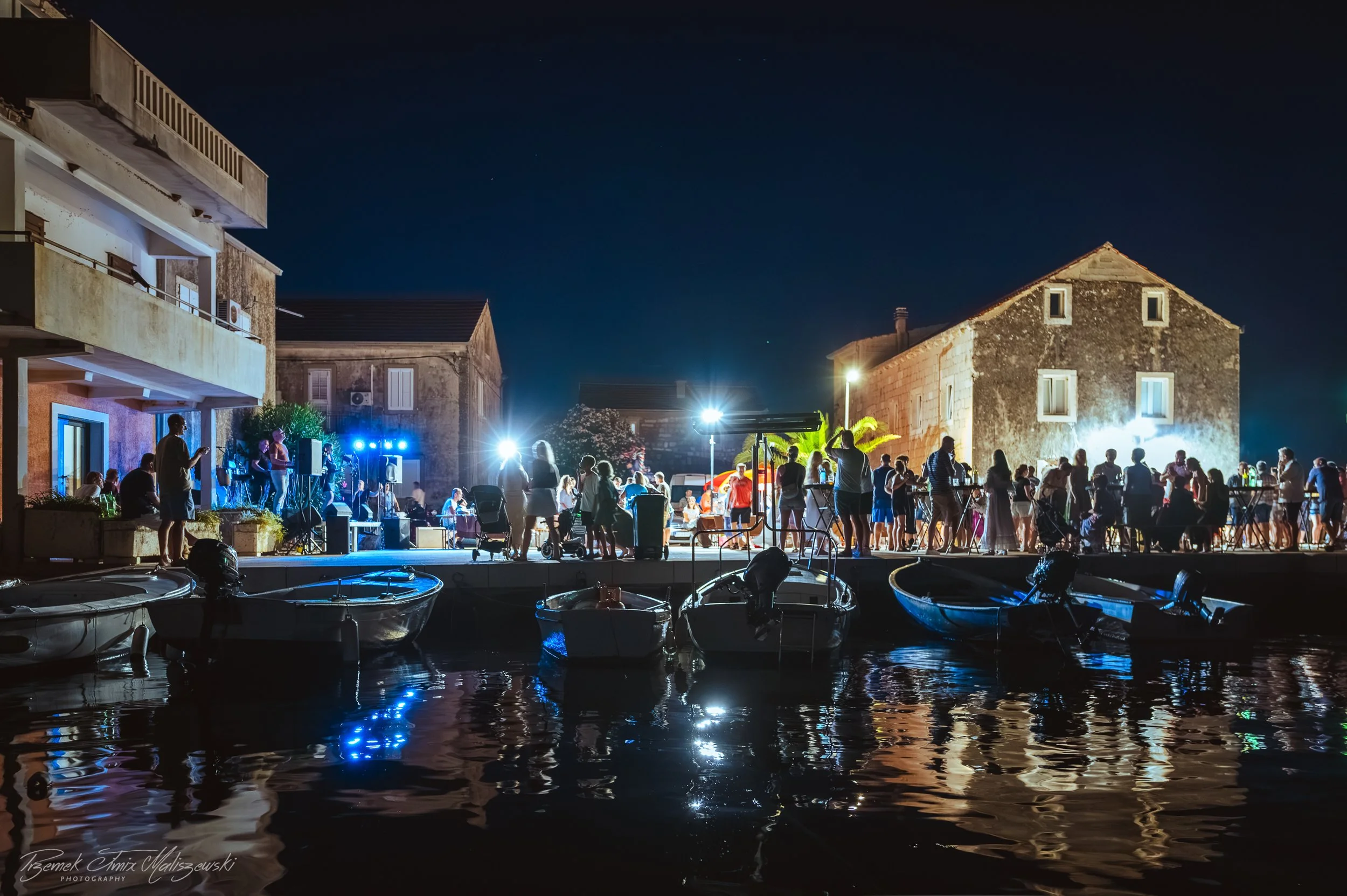
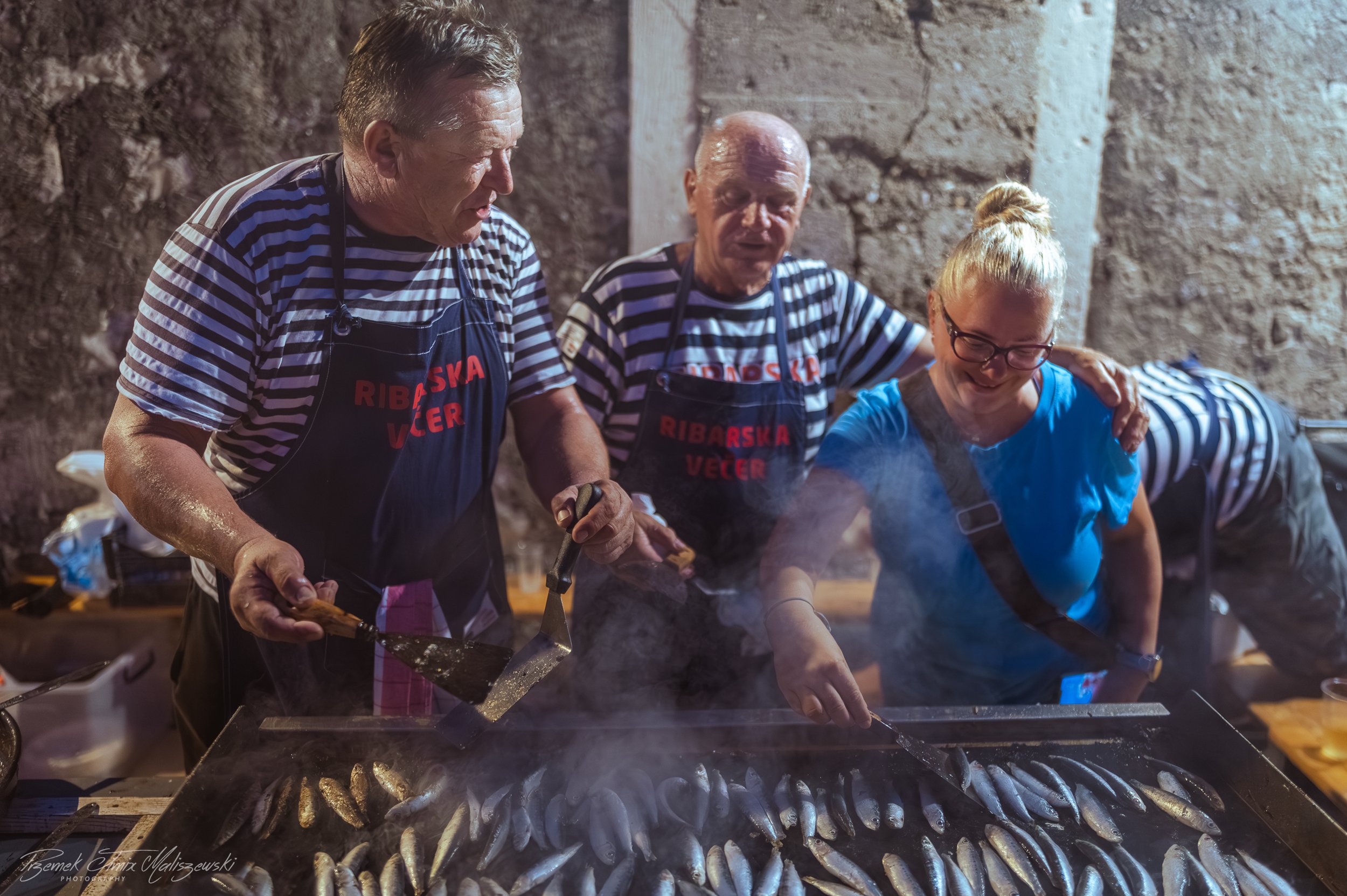
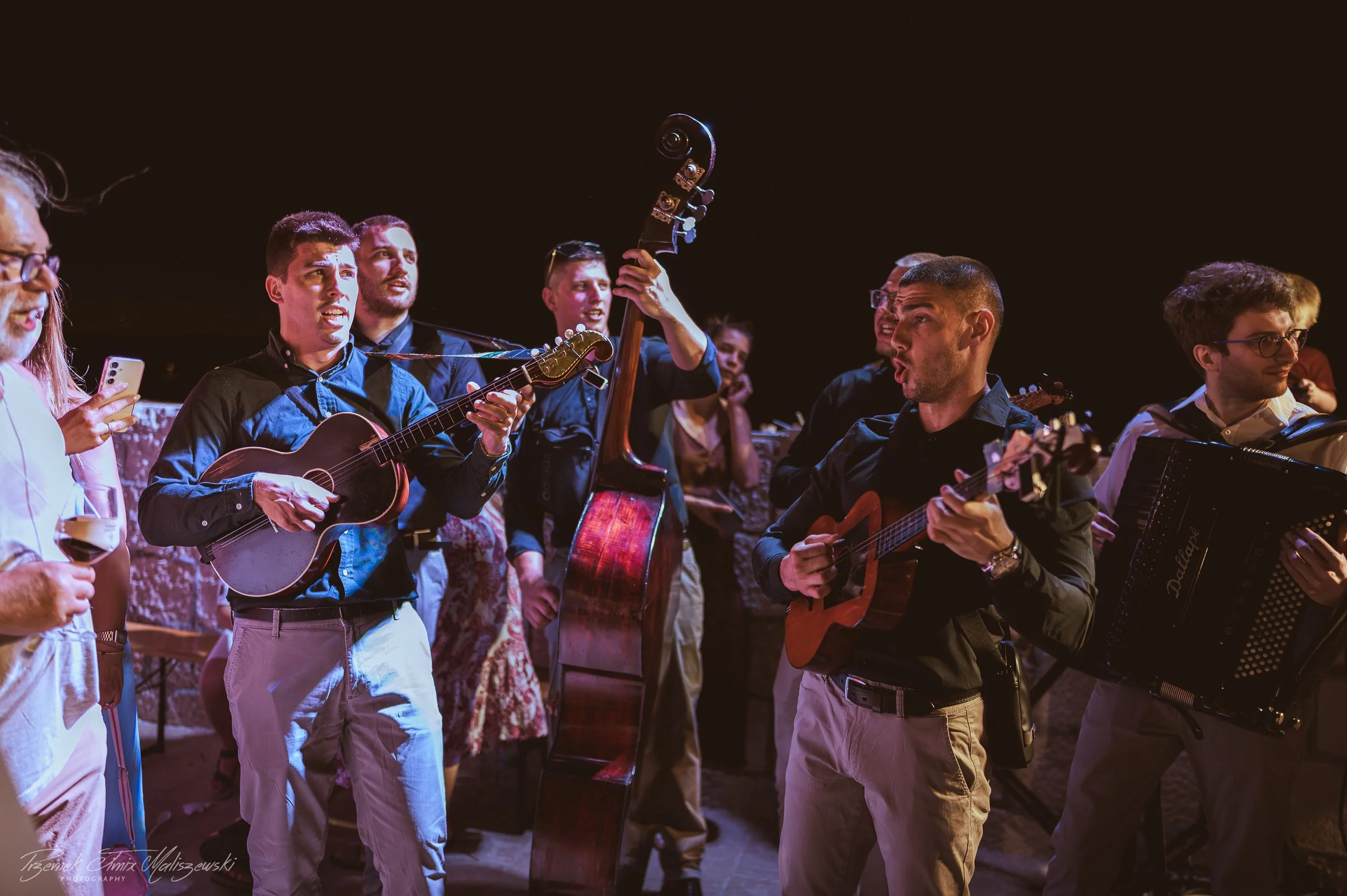
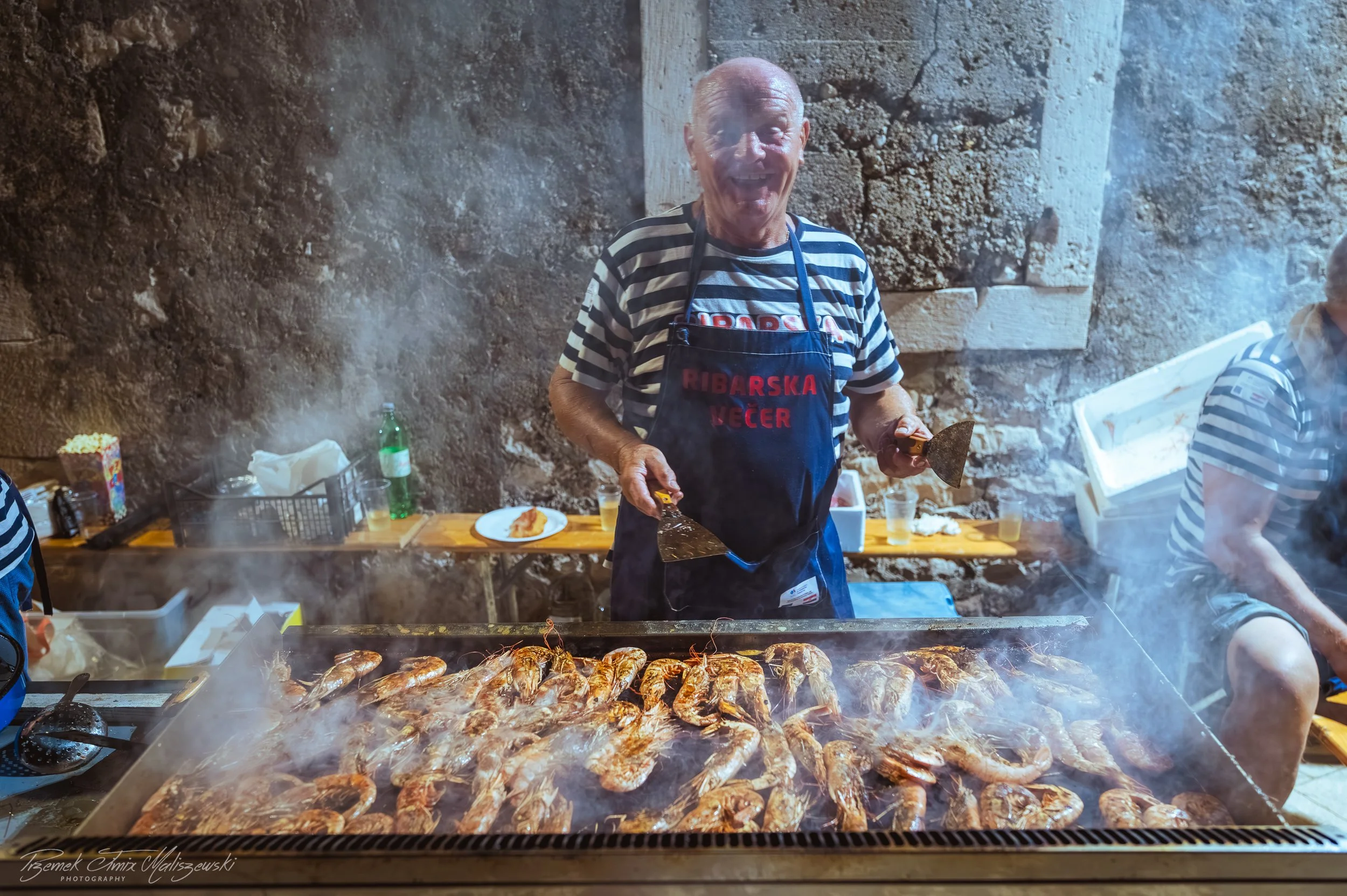
During the summer season, so-called ribarske večeri (fisherman's nights) are organized in Ston area, Brijesta, Drače and Sreser – evenings that combine tastings of local specialties, wine, and live music.
For lovers of active recreation, Malo More is a paradise for kayaking, snorkeling, or paddleboarding (SUP). I once went out in a kayak from Sreser to watch the sunrise. The water was as smooth as a mirror, like a flawless sheet of ice, and the sunrise itself was a beautiful spectacle of nature. The silence, the water, and those colors – an absolutely transcendental experience.
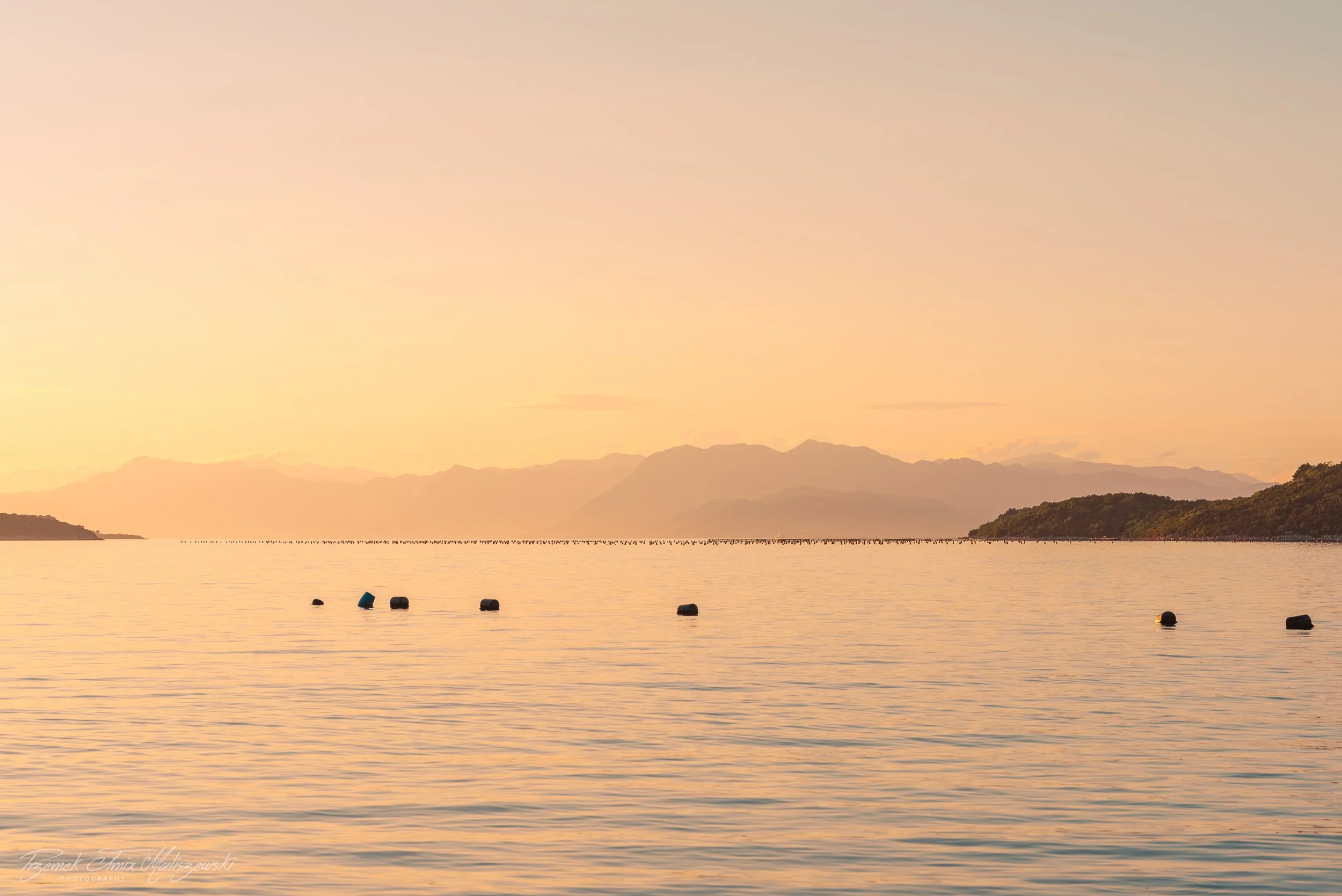
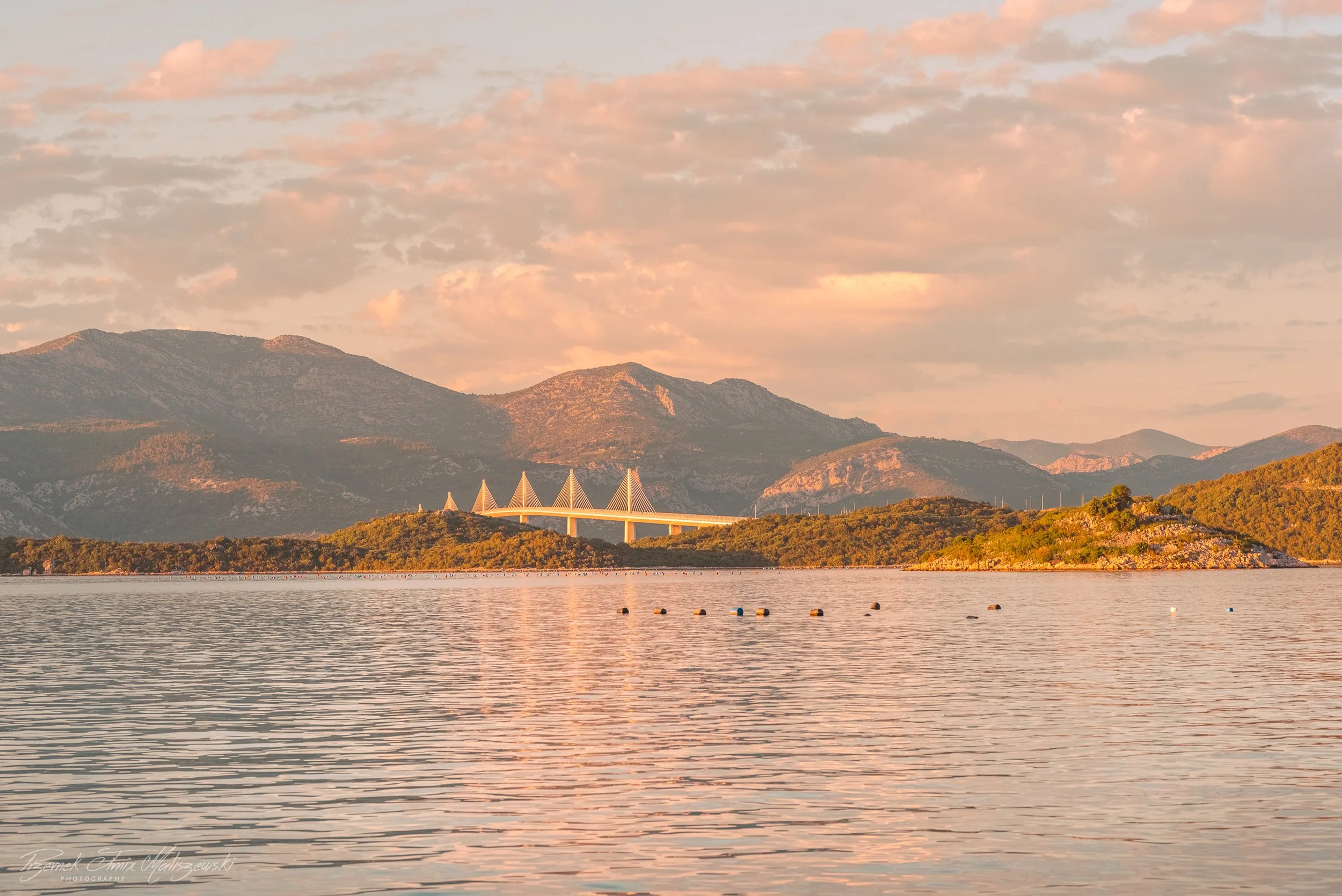
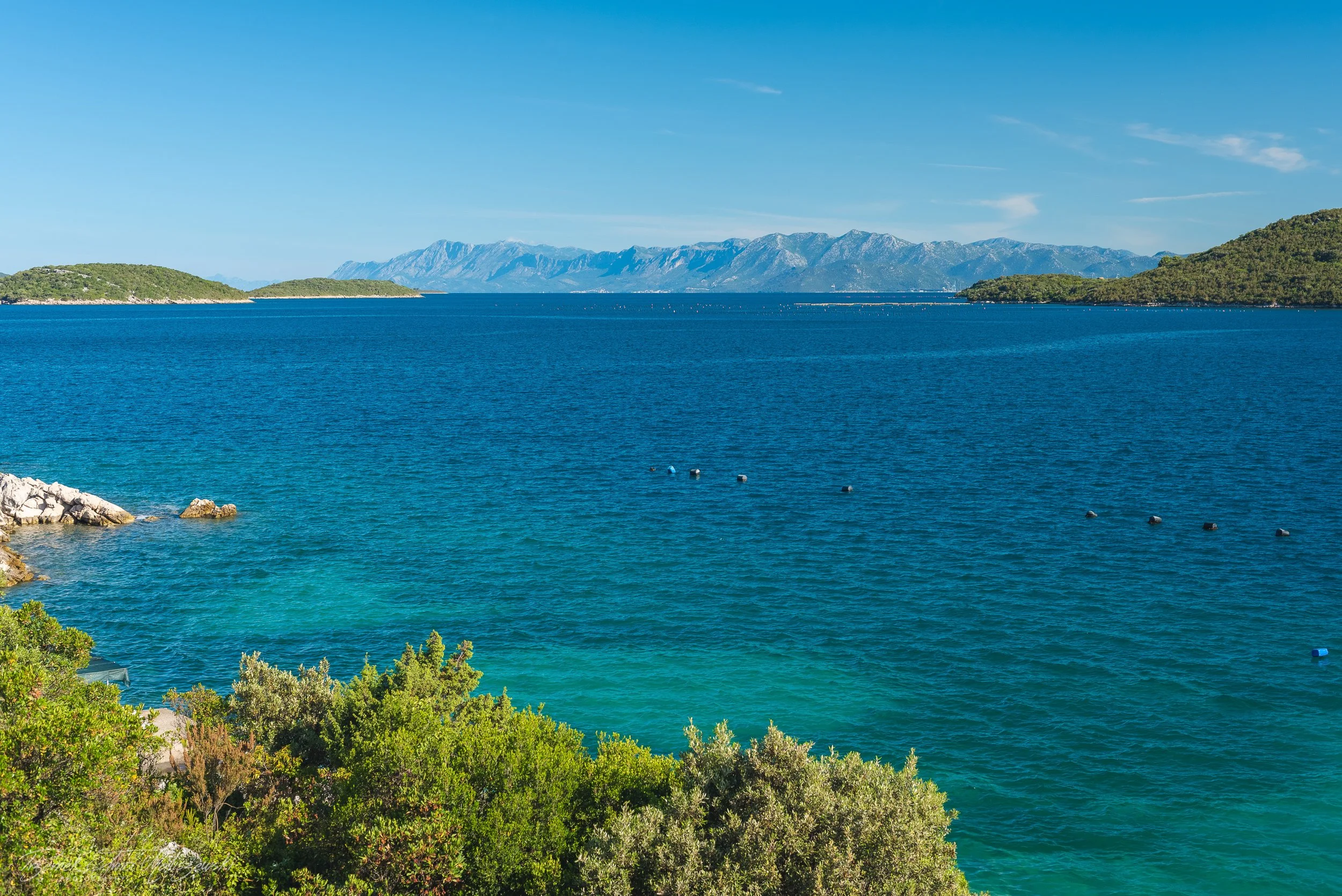
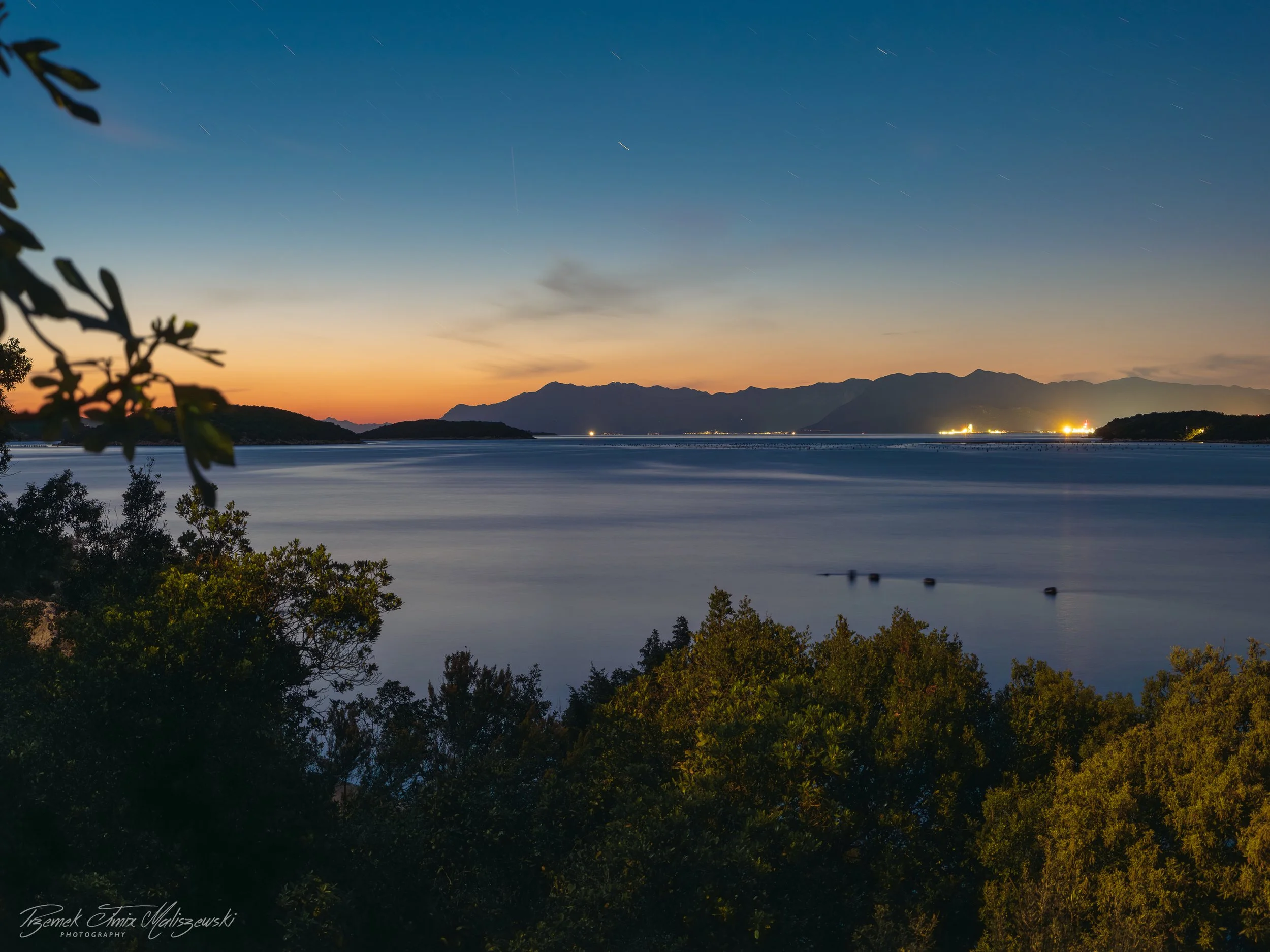
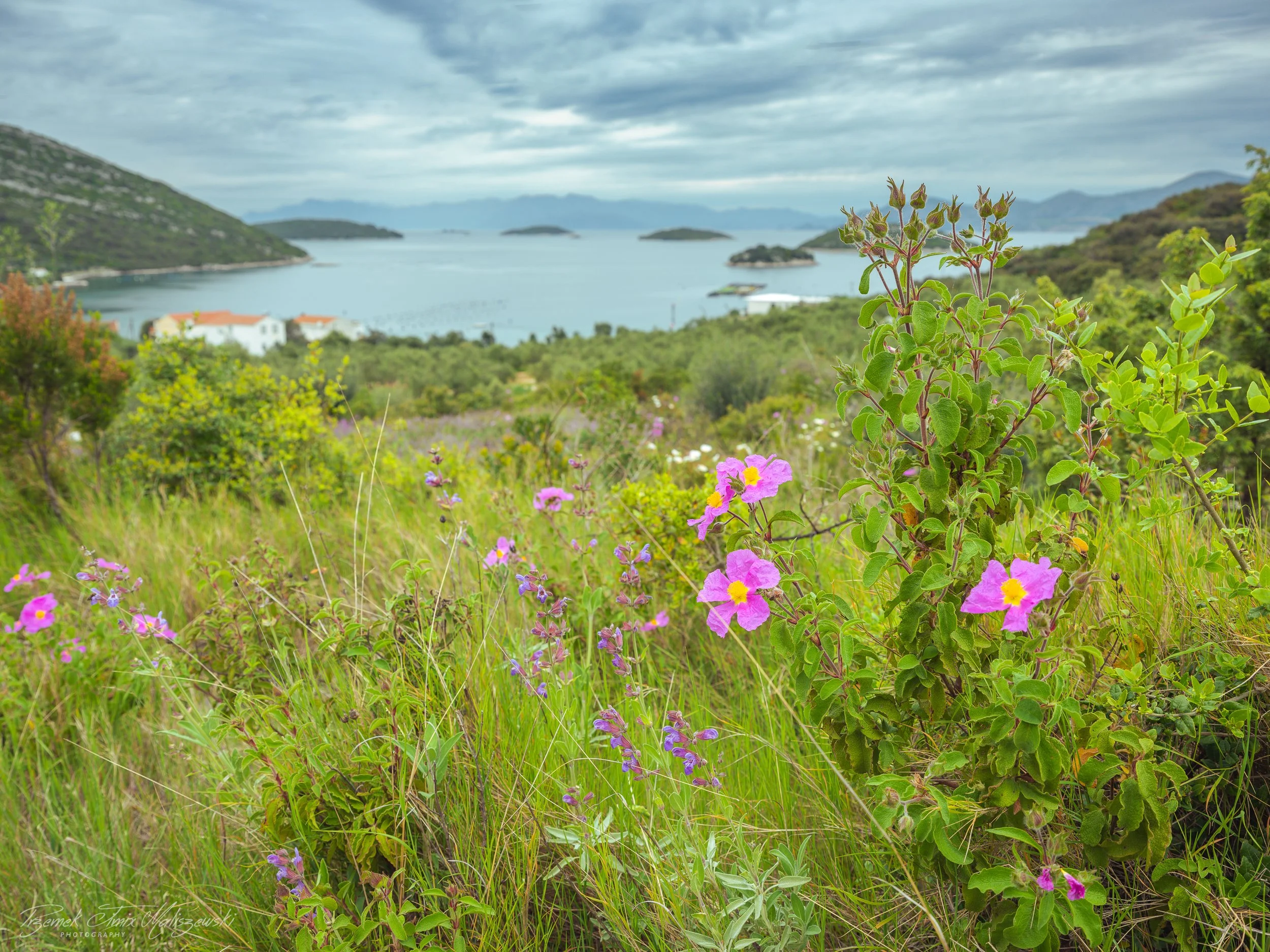
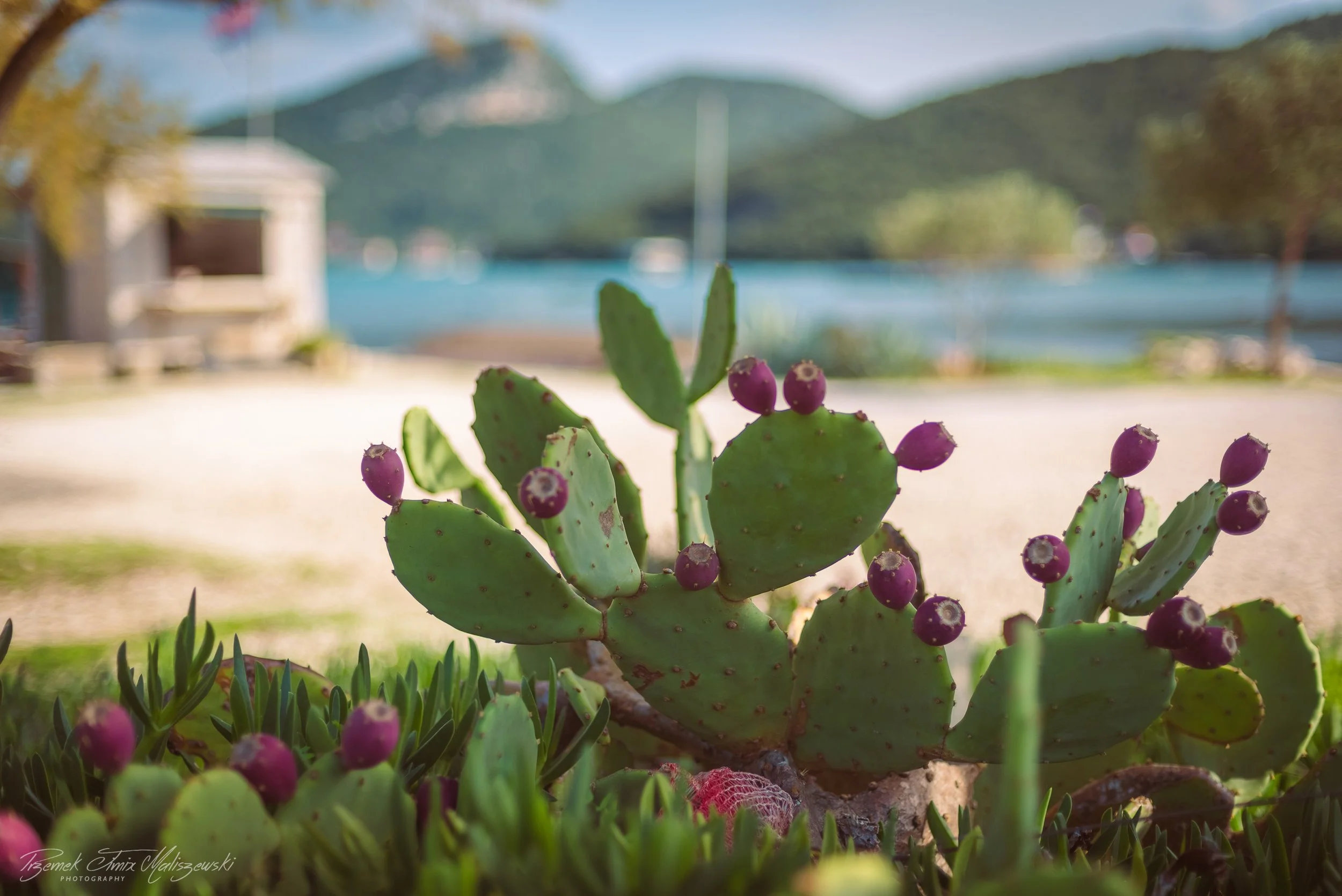
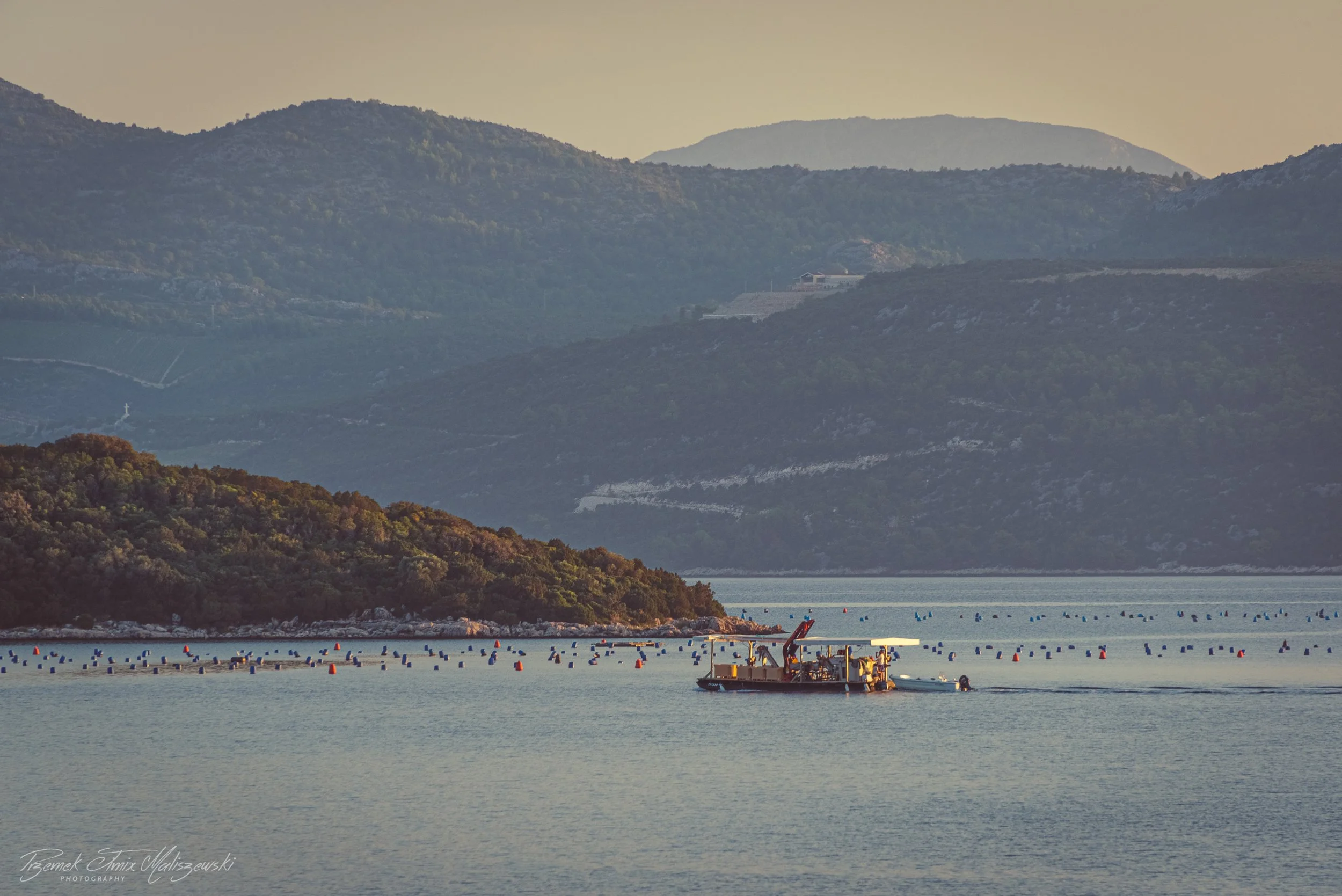
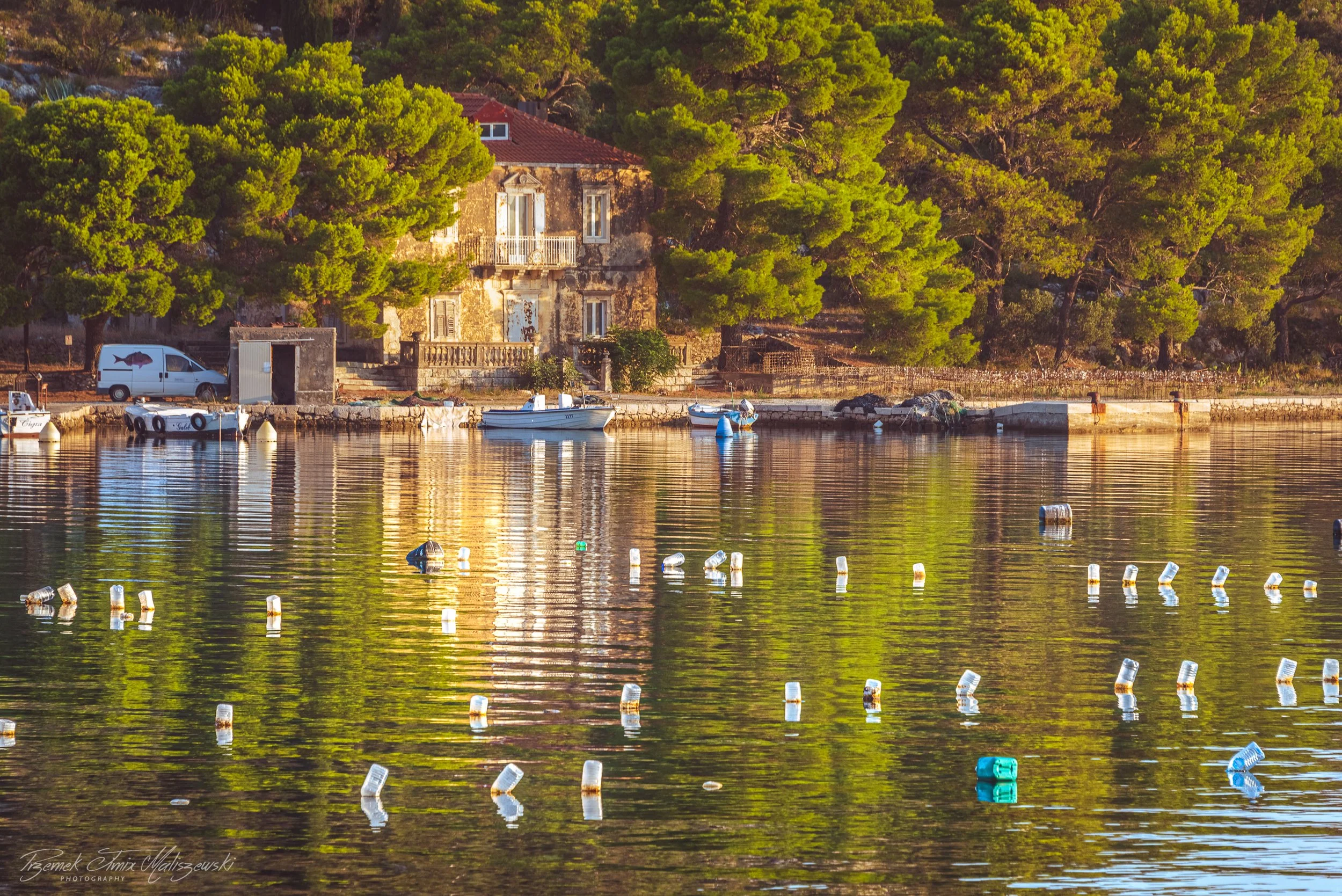
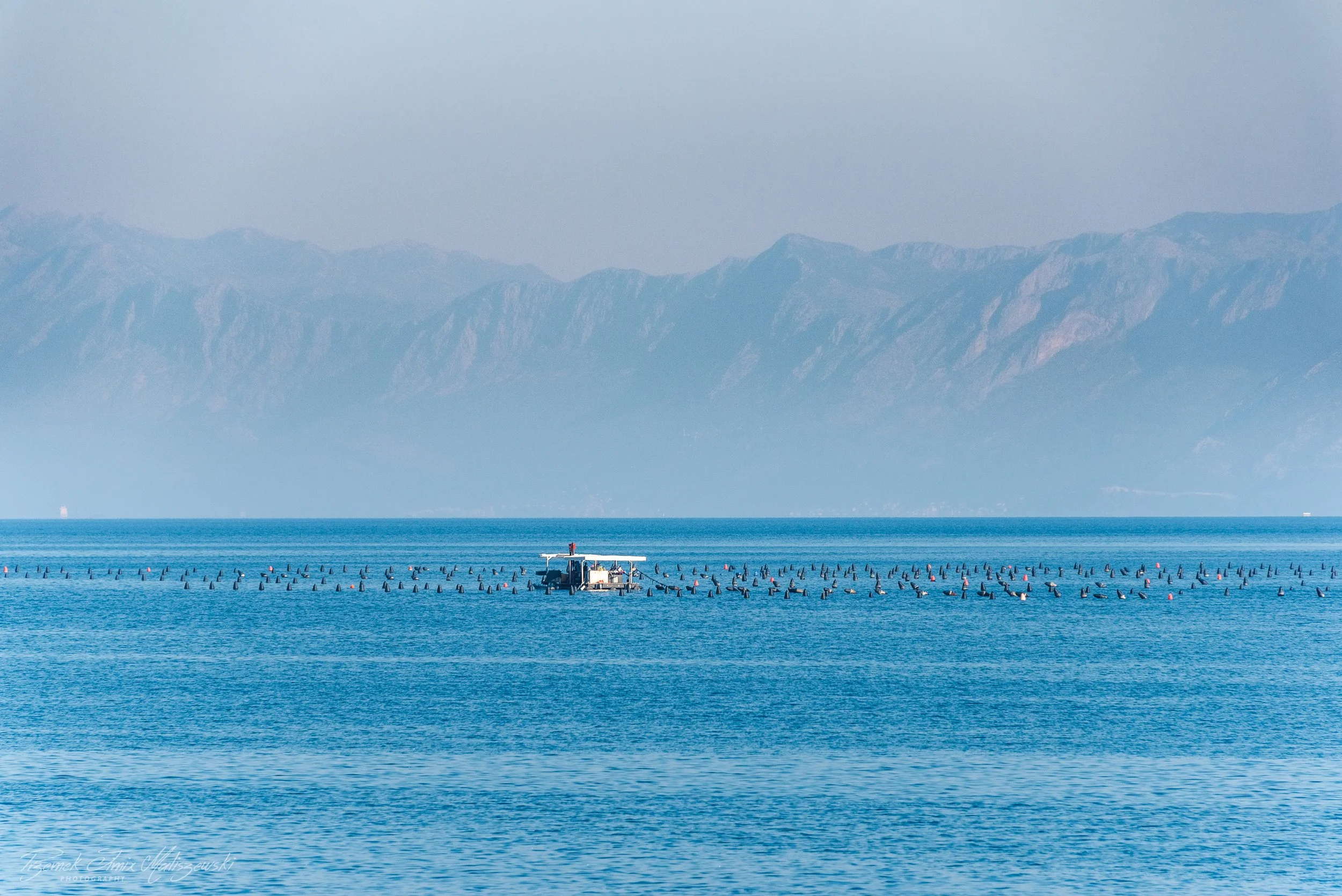
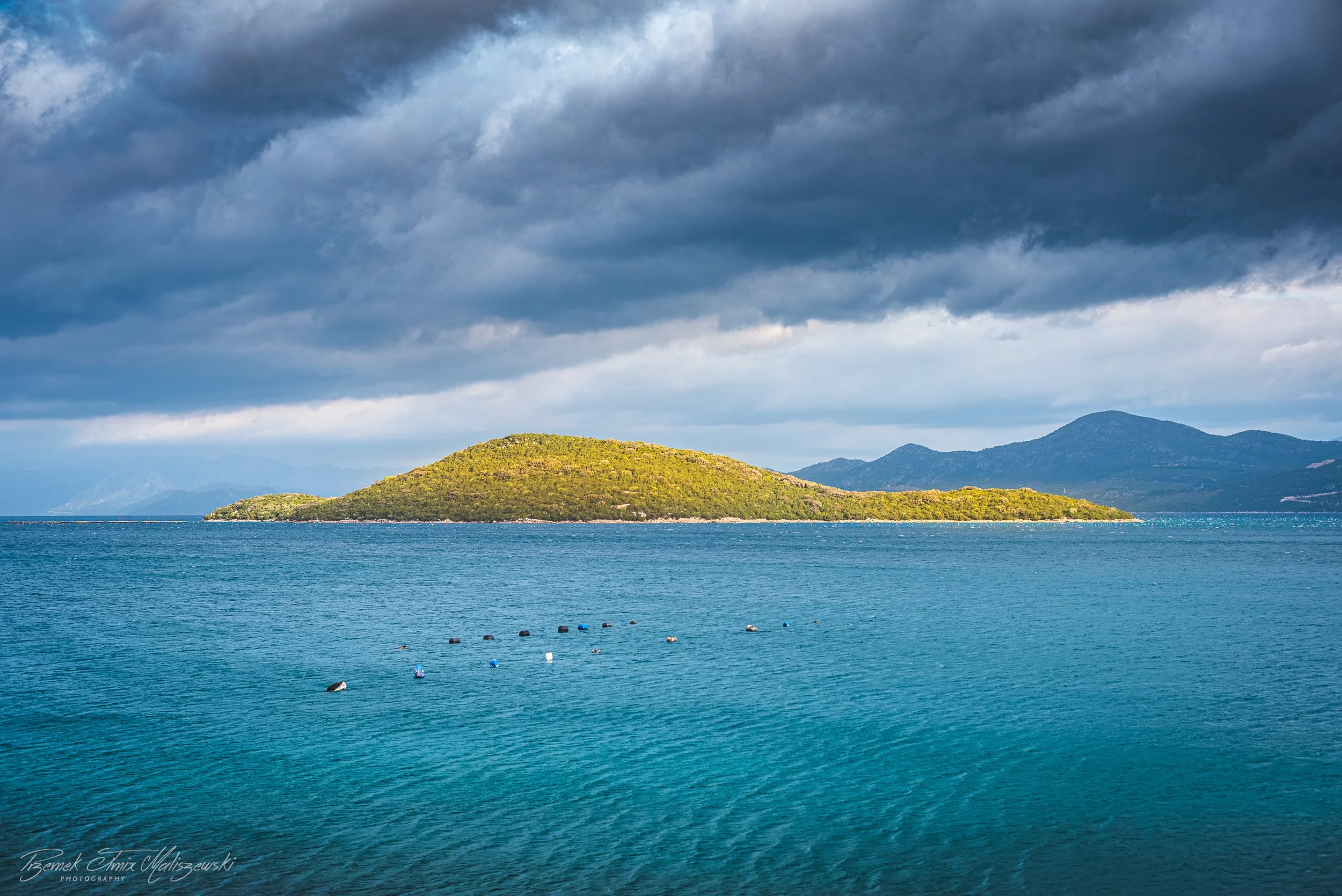
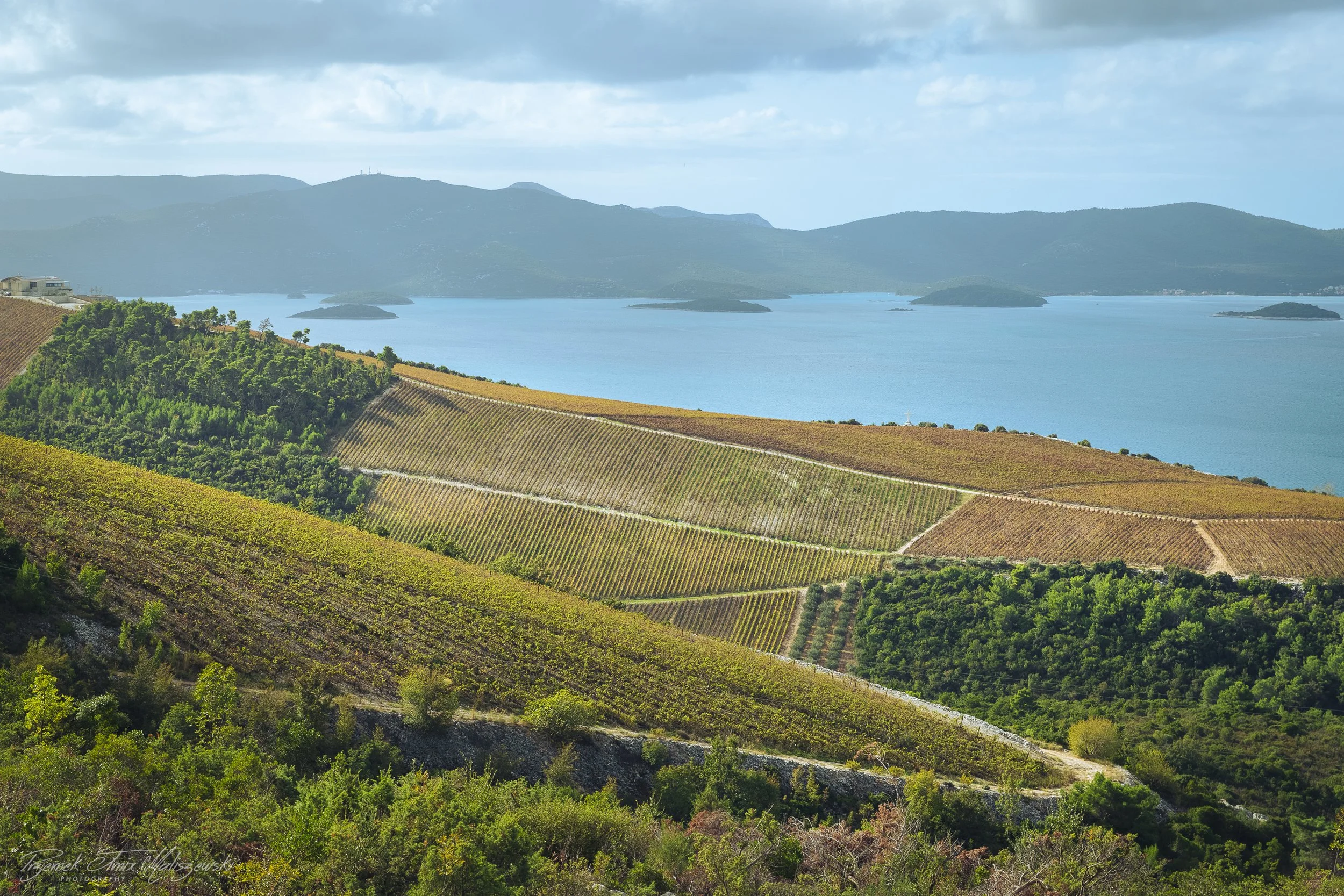
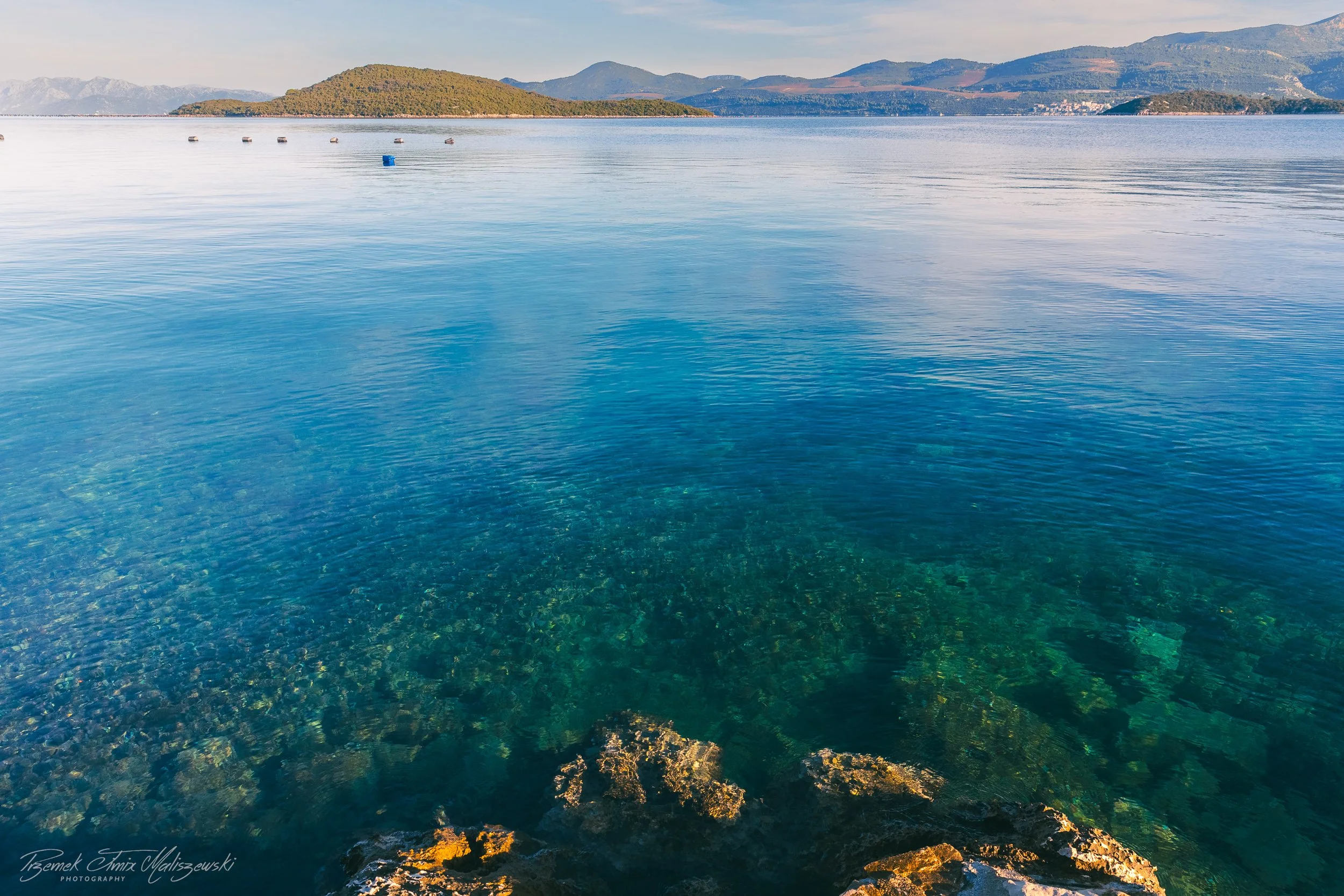
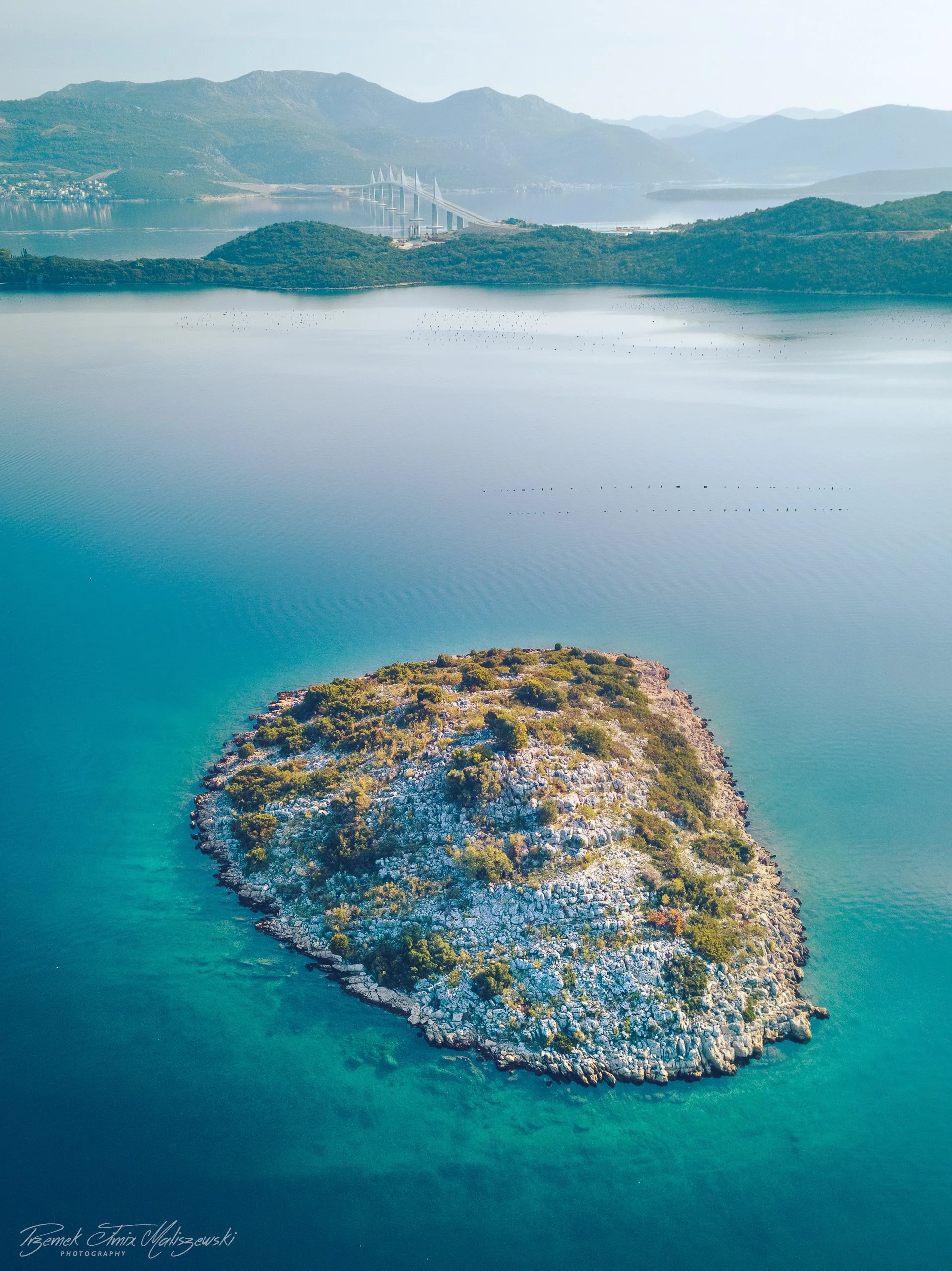
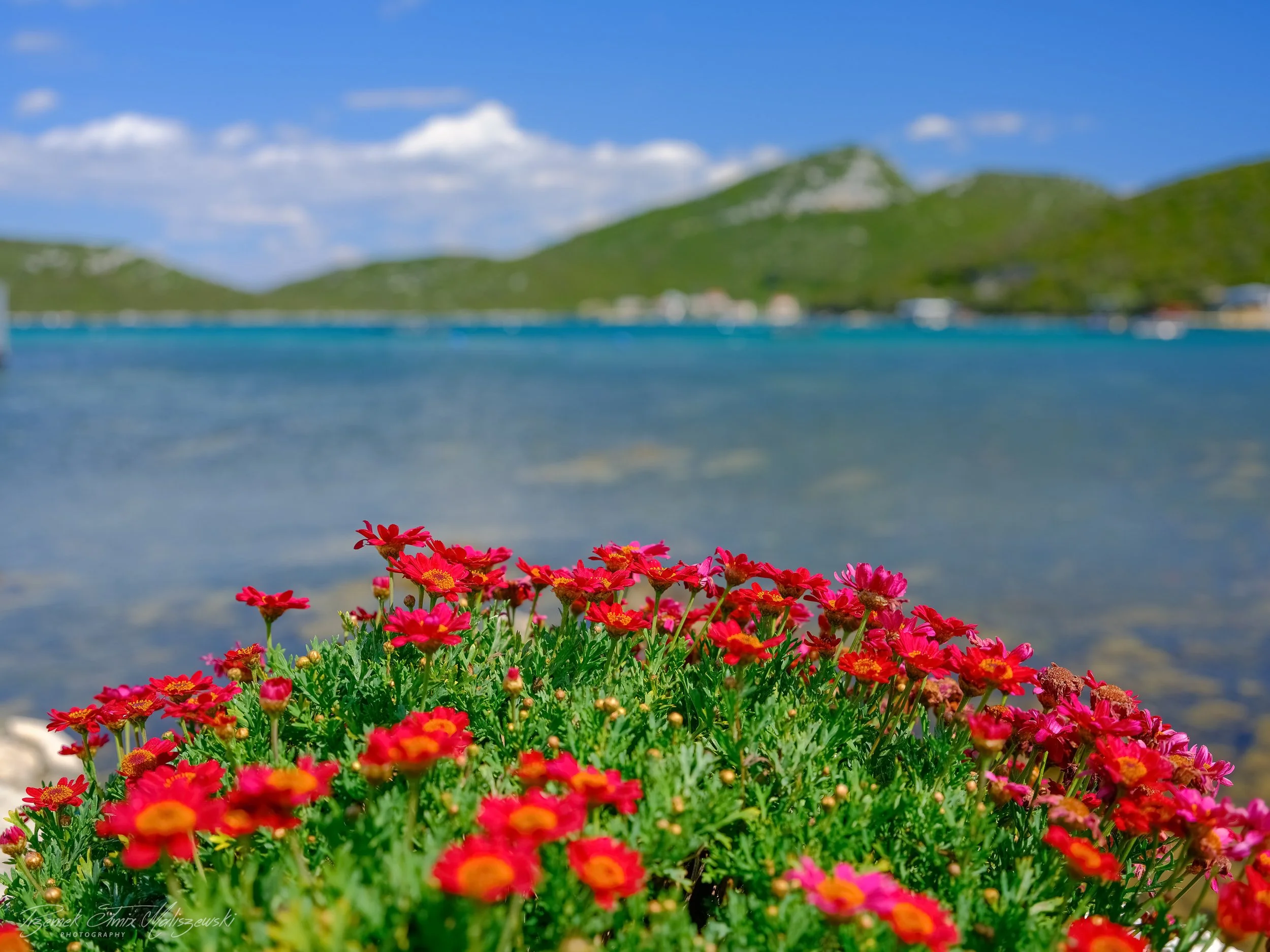
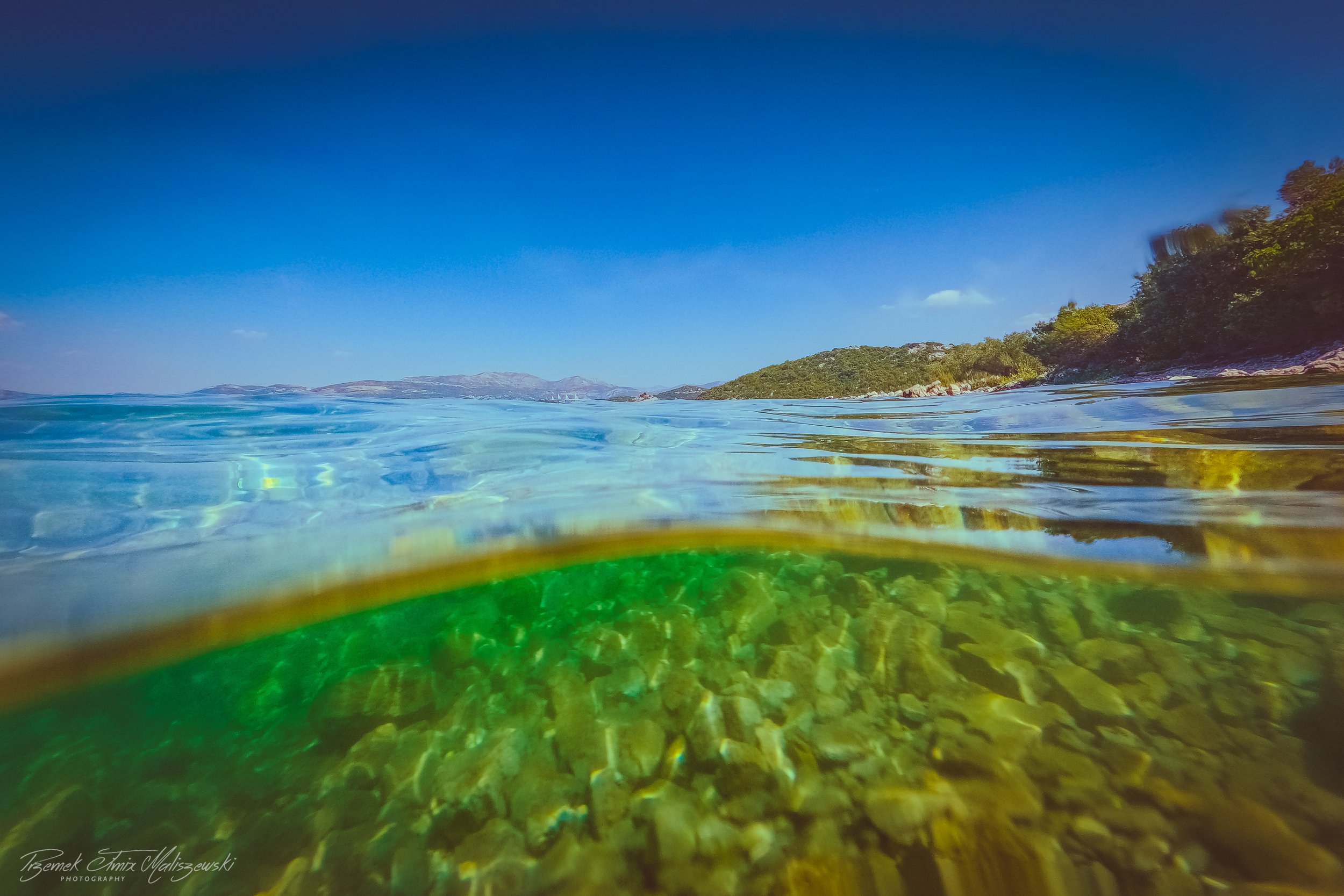
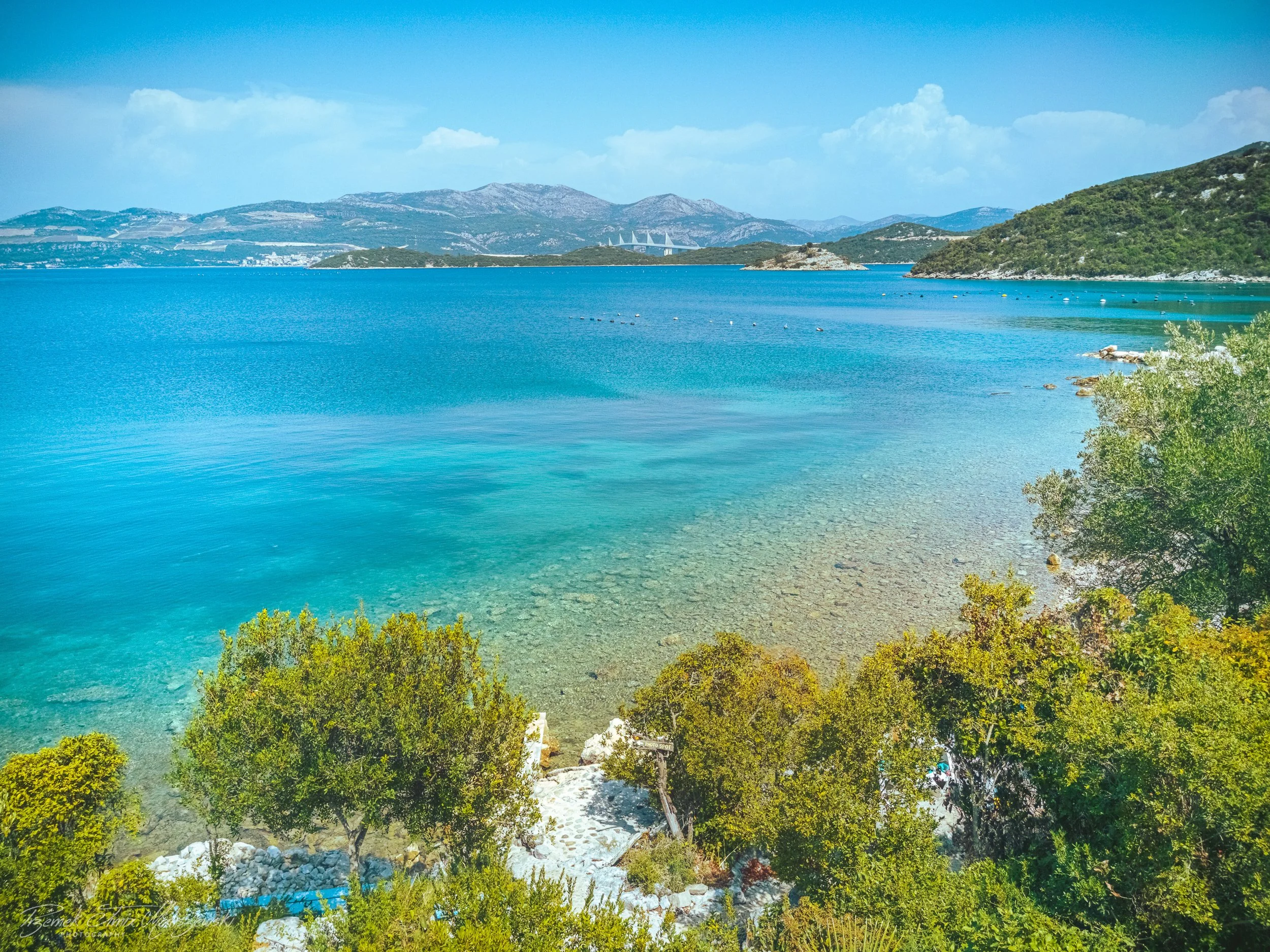
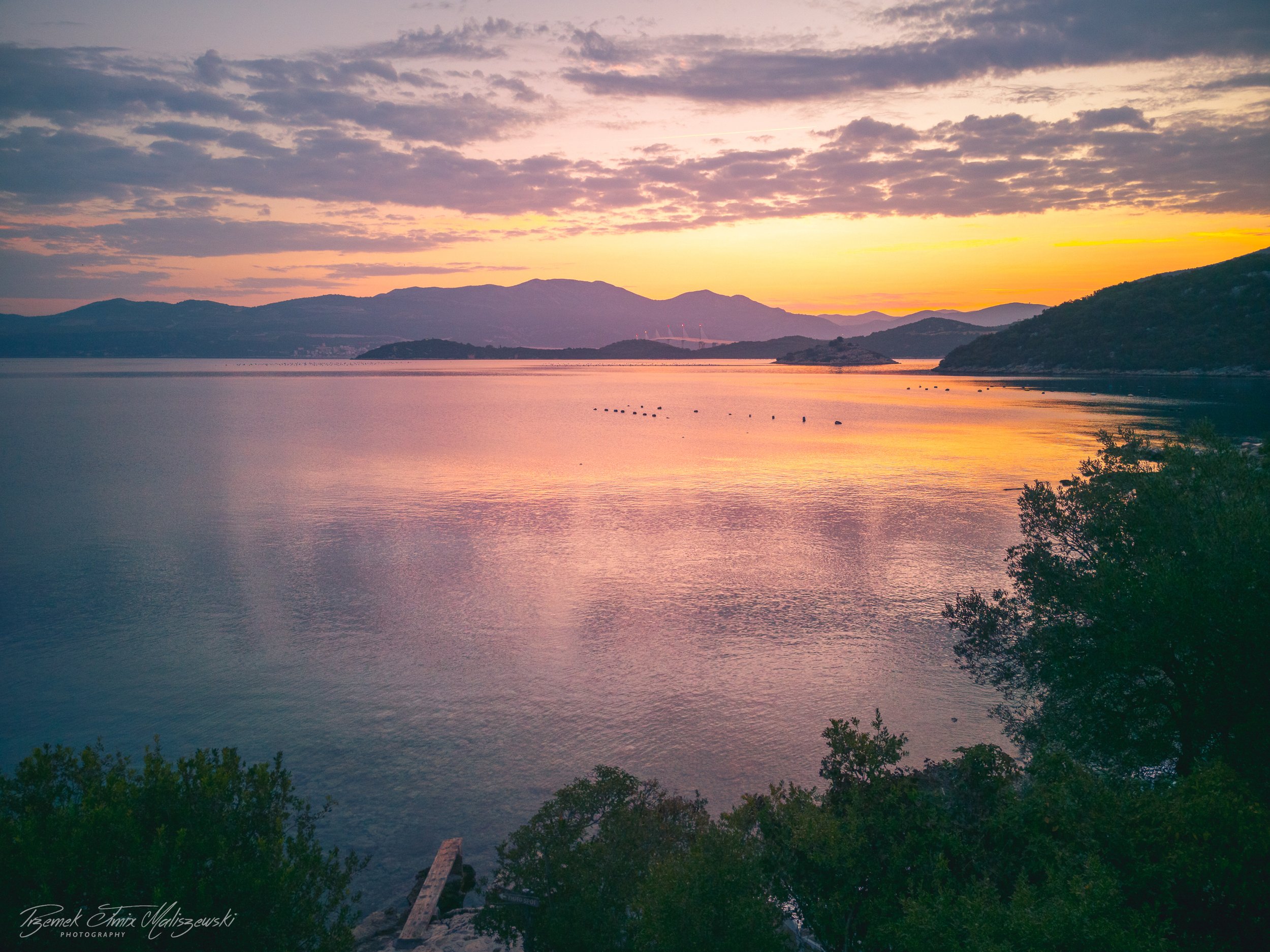
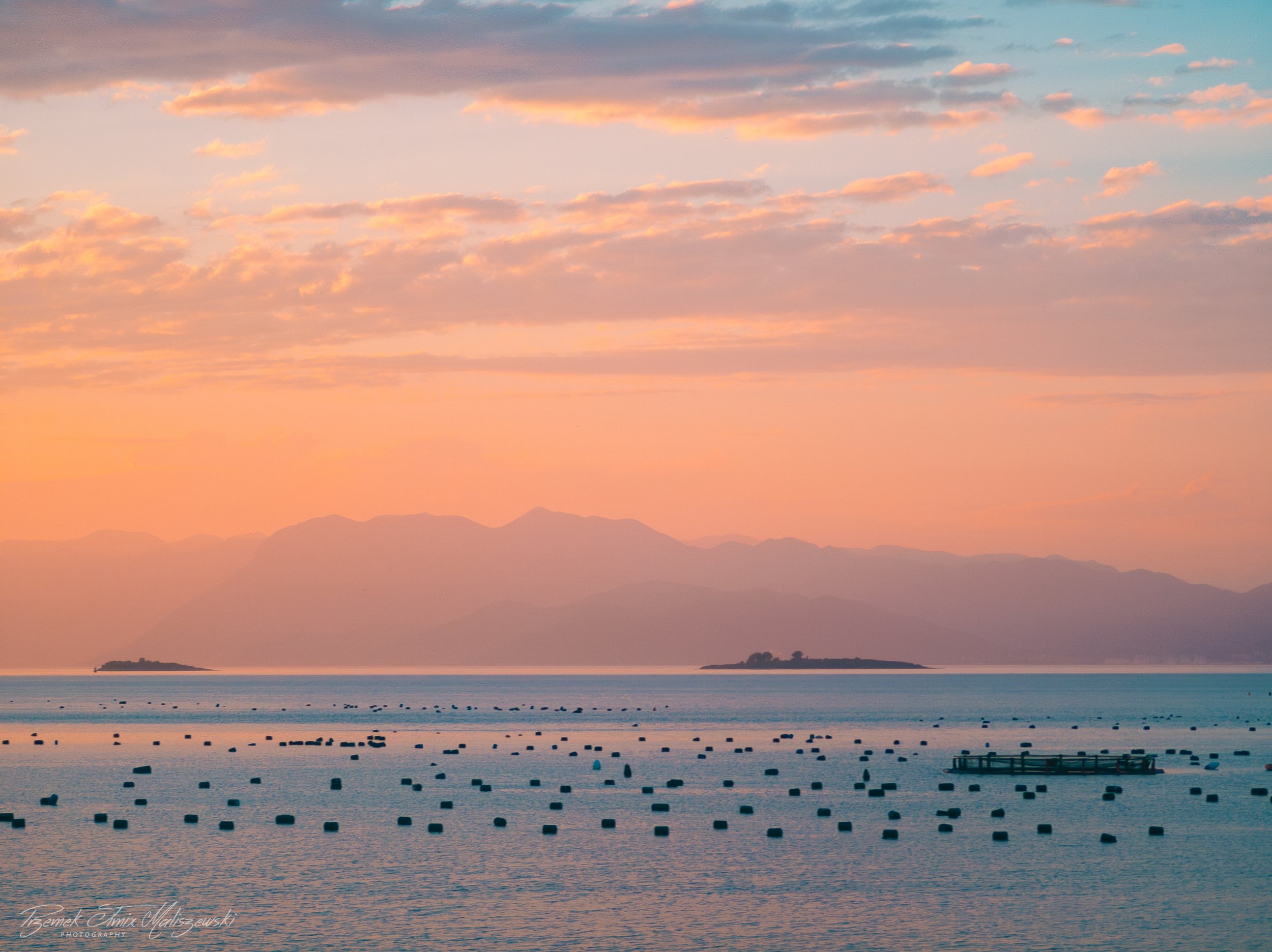
Gold, crimson, carmine, cyclamen, and navy blue. Such sunsets over the Malo More are by no means rare.
*Jadranska Magistrala, or simply Jadranka, is the "old" route leading from Slovenia, through Croatia, Bosnia and Herzegovina, to Montenegro, being a part of three European routes: E65, E80, and E851. Built in the 1960s and 1970s, it is slightly over 1,000 km long. It is one of the most beautiful coastal routes in Europe. After the construction of the A1 highway (the Adriatic Highway / Dalmatina), it lost its importance as the main route leading from the north to the south of the former Yugoslavia. Today, if we want to quickly cover the distance from the north to the south of Croatia, or if our final destination is further south than Croatia, we usually choose the A1 highway. Its undeniable advantage is travel comfort and a shorter time to reach the destination, but you cannot see the coast from it (except for a short section after passing through the Sveti Rok tunnel across the Velebit mountain range). Jadranka, on the other hand, offers beautiful views, especially, in my opinion, starting from Omiš and further south. However, it is a much slower route, so that needs to be taken into account.
